Quick Summary
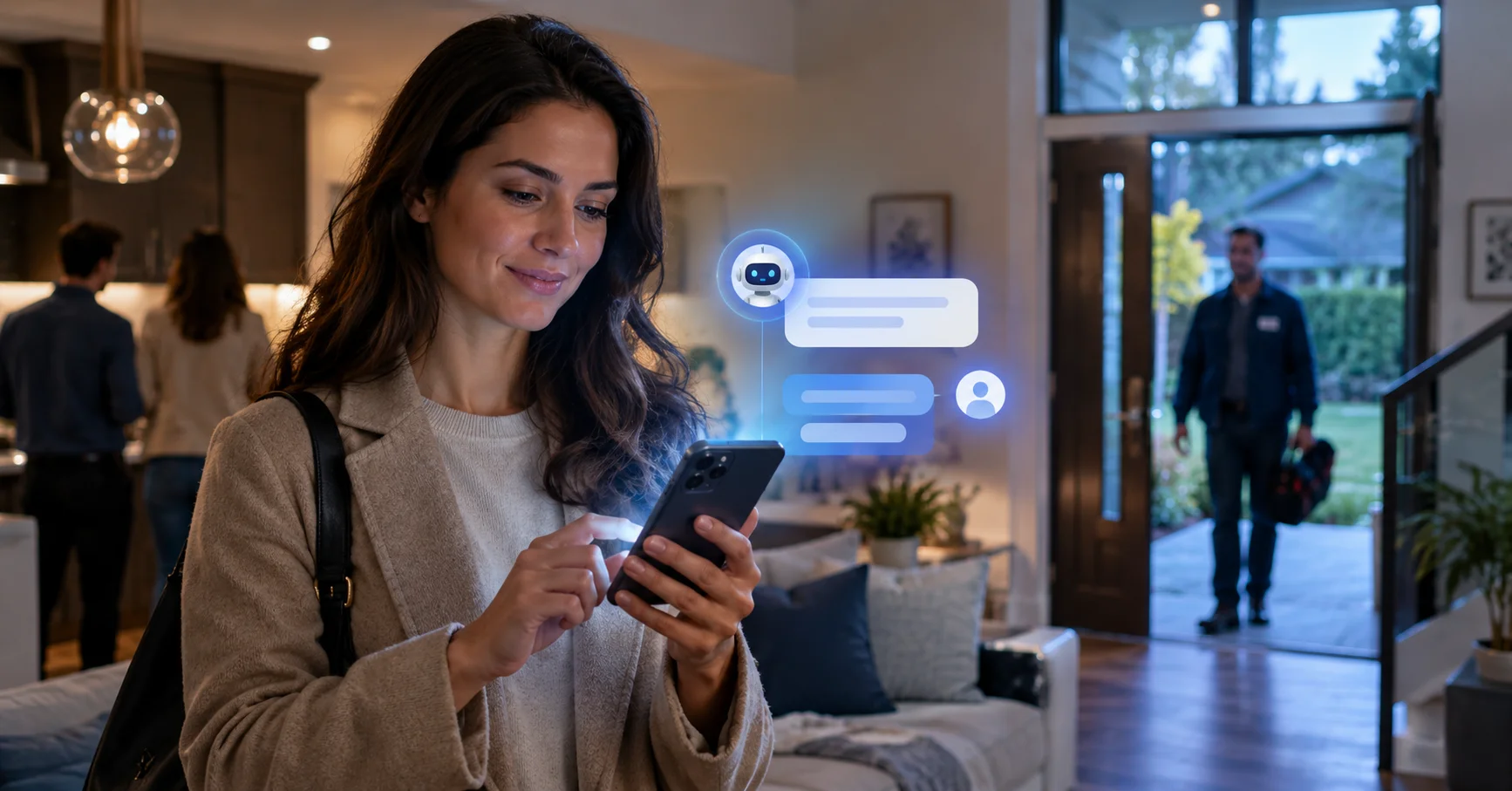
- An open house registration chatbot lets visitors scan a QR code, ask questions about the home on their phone, and register in a short conversation. It asks whether they are working with an agent, where they are in their search, and when they hope to move, then emails you the lead with the full chat.
- The open house itself rarely sells the house. NAR data cited in 2026 puts the share of buyers who found their home through a yard or open house sign at about 4%, while 52% found it online. The real value is the contact and the conversation.
- A chatbot supplements the sign-in sheet and does not replace it. Keep whatever sign-in or disclosure form your broker, MLS, or state requires, and use the chatbot for the questions and follow-up that paper cannot handle.
- Fair Housing rules apply to what your bot says. It should stick to objective listing facts, give every visitor the same information, and never describe who a neighborhood is "good for" or ask about household makeup.
- Follow-up speed matters. Harvard Business Review research found that companies reaching a lead within an hour were nearly seven times as likely to qualify it as those that waited even one more hour.
- Zappiq AI trains on your website, qualifies visitors, and starts with a 14-day trial including 100 conversations. Starter begins at $9/month equivalent billed annually for 350 conversations. It is website chat only and does not text visitors or run a sign-in kiosk.
The Weekend Visitor Problem
Anyone who has hosted an open house knows the pile. A clipboard, a pen that stopped working at noon, and a column of handwriting that was unreadable on a good day. Some visitors write a real email. Some write "n/a." A few write something you only notice on Monday when the first message bounces. You spent a Sunday on your feet and came home with a list you are not sure you can use.
There is a bigger issue underneath that one. The open house does not sell the house, at least not often. NAR's Profile of Home Buyers and Sellers has long shown that only a small slice of buyers, about 4% in the 2024 edition as reported in 2026 coverage, found the home they bought through a yard sign or open house sign. In the 2025 edition, 52% of buyers found their home on the internet and 27% found it through an agent. NAR also reports that 70% of buyers used a mobile device or tablet during their search, and 88% worked with a real estate professional.
Put those together and the job of an open house changes. Its value sits in the people who walk through, many of whom are still deciding what they want, who is representing them, or whether they are ready at all. A visitor who is not buying this house may buy another one from you, or list their own with you next spring. What you capture on Sunday, and how fast you follow up on Monday, decides whether the weekend was worth it.
Phones are the other half of the story. Visitors already carry the device that can register them, ask a question, and look up the listing. A QR code on the sign lets them do all three without picking up your pen.
Where a Website Chatbot Fits at an Open House, and Where It Does Not
First, the boundary. A chatbot like Zappiq lives on your website. It cannot see who is standing in your kitchen, it does not run a check-in kiosk, and it does not text anyone. What it can do is meet a visitor on their phone at a page you control, answer what that page says, ask a few sensible questions, and send you the result.
That fits into four moments around an event:
- Before. People who find your open house page online can ask about the price, HOA fees, taxes, parking, or the timing, and tell you whether they plan to come.
- During. A QR code on the sign, the flyer, or the kitchen counter takes visitors to a registration chat. They ask their questions and leave their details in one go.
- After. Visitors who could not make it can still ask for a private showing, and everyone else's conversation is waiting in your inbox with the transcript attached.
- Between events. The same chatbot keeps answering questions about the listing when no open house is on the calendar.
| Method | What it captures | Strength | Weak spot |
|---|---|---|---|
| Paper sign-in sheet | Name, phone, email, agent status | Familiar, and often required by your broker or MLS | Illegible, fake entries, slow to type up |
| Tablet sign-in app | The same fields, typed | Cleaner data, quick export | Someone has to supervise the device |
| QR code to a contact form | Name and email | Uses the visitor's own phone | No questions answered, no qualification |
| QR code to a chatbot (Zappiq AI) | Questions asked, search stage, timeline, contact details | Answers on the spot and qualifies in the same conversation | Visitors must scan, and it does not replace required forms |
Notice the last cell in that last row. If your brokerage, MLS, or state requires a particular sign-in or disclosure form, keep using it. The chatbot is an addition, and a good one, but it is not a legal substitute for paperwork you are required to have.
Who Actually Walks Through the Door
Not everyone who signs in is a buyer, and treating them all the same wastes your Monday. Six groups tend to turn up.
| Visitor | What they want | What to capture | Follow-up |
|---|---|---|---|
| Active buyer with no agent | To see if this home works and what else exists | Timeline, pre-approval status, what they are looking for | Prompt call, offer a private showing or similar listings |
| Buyer already with an agent | To look at this house | That they are represented, and by whom | Courtesy only. Respect the existing relationship |
| Early-stage looker | Ideas and a sense of prices | Rough timeline and what they like | Helpful email, check back in a few months |
| Neighbor | To see inside, or to gauge local prices | Whether they might sell someday | A friendly note, and a market update if they ask |
| Potential seller | A sense of how you work | Their own home and timing | Offer a free valuation conversation |
| Investor or other | Numbers, condition, comps | What they are buying for | Send listing facts and comps |
Open houses are also a listing tool. Neighbors who walk through often wonder what their own place would fetch, and a visitor who liked how you handled the day may call you before anyone else when they decide to sell. The conversation is the product. For the next step after registration, see our guide to qualifying real estate buyers by timeline, financing, and intent.
What a Registration Chat Should Ask
Keep it short. A person standing in a living room with their phone out will give you a minute, not ten. A workable order:
- Which home are you visiting? Only needed if you host several listings.
- Are you currently working with an agent? Say plainly that either answer is fine.
- Where are you in your search? Just starting, looking seriously, or ready to make an offer.
- Have you spoken to a lender, or are you paying cash? This sorts serious buyers quickly.
- What are you hoping to find in terms of price range, bedrooms, and the features that matter to you?
- When would you like to move?
- What is the best way to reach you? Then the name, email, and phone number.
Zappiq's qualification step screens for intent and asks about the situation and timeline before it asks for contact details. That order suits most website visitors. At a door, people expect to give their name first, so keep your paper or tablet sign-in for that, and let the chatbot handle the conversation that follows.
What not to ask
- Who lives in the household. Familial status is a protected class under the Fair Housing Act. Ask about bedrooms and features, not about children.
- Anything about background. Race, religion, national origin, disability, and the other protected categories have no place in qualification.
- "What kind of neighborhood do you want?" This invites the bot to start steering. Ask what they want in a home, then let the facts speak.
Fair Housing: What the Bot Must Not Do
Real estate is the one industry where a chatbot's good intentions can create legal exposure. The Fair Housing Act prohibits steering, which means directing buyers toward or away from an area because of a protected characteristic. A helpful sentence like "this is a great area for families" can read, to a regulator or a complainant, as exactly that.
The ground has shifted recently. In 2026, HUD issued a Dear Colleague letter saying that agents do not violate the Fair Housing Act merely by discussing neighborhood crime or school quality, and that investigators should not penalize agents who give school and crime data on an equal and consistent basis. NAR's own guidance, updated afterward, still tells agents to share the same kind of neighborhood information with every client and warns that racially coded comments about crime and schools can be evidence of discriminatory intent.
For a chatbot, the safe reading is simple. Objective, verifiable facts, offered the same way to everyone, are fine. Opinions, characterizations, and assumptions about the visitor are not. An early test of AI chatbots reported by Inman found they could say things no agent could, which is a good reminder to supervise yours like a junior agent.
| Visitor asks | Safer approach | Avoid |
|---|---|---|
| Is this a good neighborhood for families? | Share listing facts and links to official school district and city pages, the same for everyone, and offer to connect them with the agent | Calling the area "family friendly" or "great for kids" |
| Is it safe here? | Point to the same official crime data source for every visitor | Personal opinions or guarantees about safety |
| What are the schools like? | Link to the district's assignment tool and published ratings | Ranking schools or calling them "good" or "bad" |
| What kind of people live around here? | Decline politely and return to listing facts | Any answer based on who lives nearby |
| What are the HOA fees and taxes? | Answer directly from the listing | Guessing figures that are not in the listing |
This is not legal advice: Have your broker review your chatbot's answers before it goes live, and follow your brokerage's fair housing policy. Rules also vary by state and local ordinance, and some jurisdictions protect additional classes beyond the federal list.
Representation, Sign-Ins, and the Paperwork Question
Since the NAR settlement took effect in August 2024, agents working with a buyer must have a written agreement before touring a home with that buyer. Open houses are the common exception. NAR's consumer guidance says that a listing agent hosting an open house on behalf of the seller does not need a written agreement with visitors who attend. A different rule applies if you are bringing your own buyer client through, because then the agreement comes first.
Local practice goes further. Some MLSs and associations publish visitor non-agency disclosure and sign-in forms and call it best practice to have every adult visitor sign, which confirms the host represents the seller. Tahoe MLS, for example, says so in its settlement FAQ. State law can add its own requirements.
What this means for a chatbot:
- Keep any sign-in or disclosure your broker, MLS, or state expects.
- Let the bot say the host represents the seller if your forms say so, and leave advice about representation to people.
- Record whether the visitor is already working with an agent. NAR's Code of Ethics asks agents not to interfere with another agent's exclusive client relationship, so a visitor who answers yes should get courtesy, not a sales pitch. Ask your broker where the line sits.
- Never let the bot sign anyone up to an agreement or describe commission.
A Weekend Workflow, Before, During, and After
- Midweek: build the open house page. Address, time, price, bedrooms, bathrooms, square footage, year built, lot size, HOA fees, taxes, parking, and anything unusual about the property. The chatbot answers from what the page says, so a short page produces short answers.
- Before the weekend: share the page. Put the link in your listing, your social posts, and your email list, and let people ask questions ahead of time.
- At the door: sign plus QR. Print the QR code on the open house sign, a flyer, and a card on the kitchen counter, with a line like "Scan to ask a question or register."
- Keep the required sign-in. Use the form your broker needs for names and disclosures. The chatbot deals with the rest.
- Sunday night: read the transcripts. Sort each conversation into hot, warm, or other before you sleep.
- Monday morning: follow up. Hot leads first, within the hour if you can, using the buyer's own words from the chat.
- The weeks after: stay in touch. Zappiq emails you the lead, but nurture sequences live in your CRM or email tool, so make sure the lead lands somewhere that holds it.
Sort leads into three buckets
- Hot. Unrepresented, seriously looking, pre-approved or paying cash, moving within a few months. Call the same day.
- Warm. Early in their search or a few months out. Send useful listings and market information and check in.
- Courtesy. Neighbors, represented buyers, and the curious. Thank them and move on. A neighbor today is sometimes a seller next year.
Follow up while it is still warm: Harvard Business Review research on 1.25 million online leads found that firms contacting a lead within an hour were nearly seven times as likely to qualify it as firms that waited an hour longer, and more than 60 times as likely as firms that waited a day or more. Open house leads are not the same as web leads, but speed helps in every version.
Mistakes That Waste Open House Leads
- Relying on handwriting. If you cannot read it on Monday, you did not capture it.
- Treating every visitor as a buyer. Neighbors and early-stage visitors need a different message.
- Letting the bot talk about neighborhoods. Facts about the home are safe. Opinions about the area are not.
- Skipping the agent question. It shapes how you follow up, and it protects you from soliciting someone else's client.
- Waiting until midweek. Leads cool quickly. Monday morning beats Wednesday afternoon.
- Dropping the lead after one email. Early-stage buyers take months. Give them a reason to hear from you again.
How to Set Up an Open House Chatbot on Your Website
- Create a page for each listing you host. Include the facts listed above, plus a short note on how showings and offers work in your market.
- Make a QR code that points to that page. Print it on the sign, flyers, and a counter card. Test it from a phone before the day.
- Install the one script. Zappiq AI for real estate reads your site on signup and trains automatically. If your real estate website platform lets you add a script to a page, you are set.
- Send leads where you will see them. Every qualified lead arrives by email with the full transcript, and webhooks through Zapier, Make, or n8n can push it into a CRM, a Google Sheet, or a Slack channel.
- Test it with the awkward questions. Ask it whether the area is good for families, whether it is safe, and what kind of people live nearby. The replies should stick to facts, treat everyone the same, and hand the conversation to you.
- Have your broker review the answers. Fifteen minutes with a few transcripts is worth more than any amount of prompt tuning.
- Track the source. Ad attribution and separate QR links show which signs, flyers, and posts brought people in.
What the chatbot handles
- Answers listing questions from your open house page at any hour
- Asks about agent status, search stage, and timeline
- Gives you typed, readable contact details and the full conversation
- Tracks which campaign or link produced each lead
- Runs on flat monthly pricing with no AI credit meter
What stays with you
- Required sign-in forms, disclosures, and agreements
- Text messages and phone calls, since it is website chat only
- Follow-up sequences, which belong in your CRM
- Fair housing judgment, which needs a supervising human
Want every weekend visitor captured and sorted by Monday?
Zappiq AI trains on your website, qualifies each visitor, and emails you the lead with the full conversation while it is still fresh.
Start Free Trial →No credit card | No developer needed | No branding on any plan
What a Chatbot Costs Next to a Wasted Sunday
As an illustration, if each open house produced about 20 chats, which your own events may not match, the 14-day trial would cover five events and Starter would cover about 17 events per month. Growth would cover about 75 events per month and costs $324 across a year when billed annually at its $27/month equivalent. Compare that to a Sunday you spent on your feet and came home with a sheet you could not read. A chatbot will not bring people to the house. It makes sure the ones who come are captured, sorted, and easy to follow up with.
How to Tell If It Is Working
- Chat registrations versus sign-in sheet count. This shows how many visitors the QR code is catching.
- Share who answered the agent question. A higher share means smoother conversations.
- Hot leads per event. Track this over several weekends instead of reading too much into one.
- Time from event to first follow-up. Measure from the moment the lead email arrives.
- Clients within 90 days. Count buyers and sellers who started as open house chats.
Frequently Asked Questions
An open house registration chatbot is a website chat that visitors reach by scanning a QR code at the property. It answers questions about the listing, asks a few qualifying questions such as whether the visitor has an agent and when they hope to move, and sends the agent the contact details with the full conversation.
Not where your brokerage, MLS, or state requires a sign-in or disclosure form. Keep any required paperwork and use the chatbot as an addition that answers questions, qualifies visitors, and gives you typed contact details and a transcript. Ask your broker which forms are mandatory in your area.
It should ask whether the visitor is working with an agent, where they are in their search, whether they have spoken to a lender, what price range and home features they want, and when they hope to move. Contact details come last. It should not ask about household members or any protected characteristic under the Fair Housing Act.
Yes, if it steers visitors by describing neighborhoods in terms of who they suit or by making assumptions about the visitor. A safer chatbot sticks to objective listing facts, gives every visitor the same information, links to official school and crime data sources, and hands opinions to the agent. Have your broker review its answers before launch.
Under NAR's guidance, a listing agent hosting an open house for the seller does not need a written buyer agreement with attendees, though an agent bringing their own buyer client through must have one before touring. Some MLSs recommend a visitor sign-in with a non-agency disclosure, and state law may add requirements.
Rarely for the house itself. NAR data reported in 2026 shows only about 4% of buyers found their home through a yard or open house sign, while 52% found it online. Open houses still earn their keep by producing buyer and seller contacts for the agent, which is why capturing and following up on visitors matters more than traffic.
As fast as you can, ideally within the hour on Monday morning for the hottest ones. Harvard Business Review research on 1.25 million online leads found that firms contacting a lead within an hour were nearly seven times as likely to qualify it as firms that waited an hour longer. Use the transcript to open with the visitor's own words.
Zappiq AI offers a 14-day trial with 100 conversations. Starter is $9/month equivalent billed annually for 350 conversations; Growth is $39 monthly or $27/month equivalent billed annually for 1,500; Pro is $99 monthly or $69/month equivalent billed annually for 5,000. There is no AI credit meter or per-lead fee, and no plan adds Zappiq branding.
The Bottom Line
An open house is a weekend of conversations, and most of them end when the visitor walks out. The paper sheet catches a name and sometimes a phone number. It does not catch what they asked, what they are looking for, or whether they already have an agent.
Put a QR code next to the sign-in, send people to a page with real facts about the home, and let a chatbot ask the questions you would ask if you could be in three rooms at once. Keep the required forms, keep the bot to objective facts, and keep your broker in the loop on fair housing. Then spend Monday morning calling the hot leads first.
That is the job Zappiq AI does for real estate agents. You can try it free at zappiqai.com, no card needed, and test it with the awkward questions before your next open house.
Try it before your next open house
Start with a 14-day trial that includes 100 conversations. Zappiq AI reads your site, qualifies each visitor, and emails you the leads with the full transcript.
Start Free Trial →No credit card | No developer needed | No branding on any plan
References
- National Association of REALTORS. "2025 Profile of Home Buyers and Sellers." rirealtors.org (NAR report PDF).
- NAR Store. "2025 NAR Profile of Home Buyers and Sellers" overview. store.realtor.
- Opendoor. "Are Open Houses Worth It in 2026?" (citing the 2024 NAR Profile). opendoor.com.
- HousingWire. "HUD Says Agents Can Discuss Crime and School Data." housingwire.com.
- Cooley. "HUD Clarifies Scope of Fair Housing Act's Steering Prohibition for Real Estate Professionals." finsights.cooley.com.
- National Association of REALTORS. "FAQs on Steering, Crime and Schools." nar.realtor.
- Inman. "Will Chatbots Make Housing Discrimination Worse?" inman.com.
- National Association of REALTORS. "Consumer Guide to Open Houses and Written Agreements." nar.realtor.
- Tahoe MLS. "Open Houses in a Post-NAR Settlement World." tahoemls.com.
- Florida Realtors. "NAR Settlement FAQs." floridarealtors.org.
- Showable. "What the NAR Settlement Means for Open Houses." showable.co.
- Oldroyd, McElheran, and Elkington. "The Short Life of Online Sales Leads." Harvard Business Review, March 2011. hbr.org.

Ansar Ali
Ansar Ali founded Zappiq AI after noticing that most small businesses were paying for chat platforms designed around support desk workflows when what they actually needed was a smarter way to identify serious visitors in their traffic. He works on qualification logic, attribution, and keeping Zappiq fast and unobtrusive on any site it is installed on. Mentions of Zappiq in this guide come from the company that makes it, so weigh them accordingly.