Quick Summary
Short answer: Forethought was acquired by Zendesk in March 2026 and its historical ticket training requires 20,000 or more tickets to deliver accurate resolution. For teams that need ticket automation without the acquisition uncertainty, Intercom Fin is the strongest choice for per-resolution AI, while Zappiq AI is the most practical option for website lead capture without the Zendesk dependency or enterprise contract.
- Zappiq AI is the best Forethought alternative for teams that primarily need website visitor qualification and lead capture without historical ticket training requirements or enterprise contracts.
- Intercom Fin is the strongest choice for teams that want per-resolution AI at $0.99 with a 14-day trial and proven out-of-the-box resolution.
- Decagon is worth evaluating for enterprises that need precise workflow control with Agent Operating Procedures and a lower entry price than Sierra.
- Parloa and Maven AGI are the closest enterprise alternatives for contact center AI agent management and governed knowledge graph architectures.
- Lorikeet is the choice for compliance-heavy verticals like fintech and healthtech that need multi-step resolution with audit logging.
- Ada is the volume-deflection veteran with a reported median contract of $73,500 annually, roughly half Forethought’s typical enterprise deployment.
- Zendesk AI is the natural choice for teams already on Zendesk that want native AI without managing a separate vendor.
- Freshdesk Freddy AI, Tidio, and Crisp fill specific gaps for accessible AI support, SMB chat, and flat-rate omnichannel inboxes.
What Forethought Actually Is (And Why Teams Look Elsewhere)
Forethought built a genuinely differentiated AI customer support platform. Its multi-agent architecture handled the full support lifecycle autonomously: a Solve Agent resolved issues, a Triage Agent classified tickets by intent and sentiment, a Discover Agent filled knowledge gaps, and a QA Agent scored 100 percent of conversations without manual review. Historical ticket training produced more accurate product-specific responses than knowledge-base-only AI tools, with teams that had years of support history getting meaningfully better resolution quality for edge cases that documentation did not cover. With 70+ individually listed integrations across helpdesks, knowledge sources, connectors, and call center platforms including MCP, Forethought could layer over virtually any enterprise support stack without custom API work.
Then Zendesk acquired it. Zendesk announced its intent to acquire Forethought on March 11, 2026, and completed the acquisition on March 26, 2026. Computer Weekly reported it as Zendesk’s largest acquisition in two decades. The platform is now being integrated into Zendesk’s Resolution platform as Forethought AI Agents by Zendesk, with Zendesk stating it will accelerate its product roadmap by over a year. Zendesk said Forethought will remain available to new customers without requiring them to use the core Zendesk platform, but the procurement risk for standalone multi-year contracts is real.
The procurement reality: The AI Agent Index explicitly notes that the pending Zendesk acquisition creates procurement risk for standalone contracts, and advises enterprises evaluating Forethought to confirm roadmap continuity and whether capabilities will be absorbed into Zendesk AI before committing to a multi-year agreement. For teams making a three-year platform decision, that uncertainty matters.
There is also the training data reality. Forethought’s historical ticket training value scales with data volume, and teams with thin ticket history get materially less initial resolution accuracy than established operations. The platform requires 20,000+ historical tickets for optimal performance, and setup takes 30 to 90 days. For a growing support operation or a team migrating from a different helpdesk, that training gap means the platform underperforms until enough ticket history accumulates.
And there is the cost reality. Vendr procurement data shows mid-market deployments (15,000 to 50,000 tickets per month) typically range from $60,000 to $150,000 annually. Implementation fees of $10,000 to $50,000 are common, voice AI infrastructure adds $10,000 to $30,000 to initial deployment, and overage charges for exceeding contracted volume can be 20 to 50 percent higher than base rates. For an SMB or mid-market team without that budget, the entry point is the reason they look elsewhere.
Where Forethought Users Are Actually Looking in 2026
Forethought users are not all looking for the same replacement. Teams that used Forethought primarily for ticket triage and routing are evaluating different options than teams that used it for autonomous resolution or agent assist. The important distinction is between replacing the ticket intelligence function and replacing the specific job Forethought was doing for your team.
For teams that need per-resolution AI with proven deployment, Intercom Fin is the natural comparison. For enterprises that need precise workflow control with plain-English agent authoring, Decagon covers that job. For teams already on Zendesk, adding Zendesk AI is the path of least resistance. For teams that need website lead capture and qualification without the enterprise complexity, that scope is different entirely.
- Website lead capture and qualification: Zappiq AI for automatic training, visitor qualification, and lead delivery without historical ticket requirements or enterprise contracts.
- Per-resolution AI with proven deployment: Intercom Fin for $0.99 per resolution, 76% average resolution rate across 12,000+ customers, and a 14-day trial.
- Precise workflow control: Decagon for Agent Operating Procedures written in plain English, Git-tracked, with per-conversation billing.
- Contact center AI agent management: Parloa for enterprise contact centers covering the full agent lifecycle from design through scaling.
- Governed knowledge graph architecture: Maven AGI for agents that reason over customer data with quality checks.
- Compliance-heavy verticals: Lorikeet for fintech, healthtech, and insurance with multi-step resolution and 100% post-resolution QA.
- Volume deflection at scale: Ada for a decade of high-volume containment work with a reported median contract of $73,500 annually.
- Zendesk ecosystem: Zendesk AI for teams already on the platform, with verified resolution billing and Agent Copilot.
- Affordable AI support: Freshdesk Freddy AI for teams that want similar AI features at more transparent pricing.
- Accessible SMB chat: Tidio for Lyro AI handling customer conversations with a free tier and fast setup.
- Flat-rate omnichannel inbox: Crisp for workspace pricing and bundled AI credits.
What Forethought Actually Costs vs the Alternatives
The tools below replace different pieces of what Forethought does. No single product does everything Forethought does for every team, because Forethought itself is being stretched across jobs that range from enterprise ticket automation to helpdesk intelligence. The honest answer is matching your actual use case to the tool built for it.
Quick Comparison: 11 Forethought Alternatives
| Tool | Starting Price | Best For | Setup Time | Free Option |
|---|---|---|---|---|
| Zappiq AI | Starter from $9/mo equivalent billed annually | Website lead capture and qualification | Under 10 min | 14-day trial with 100 conversations |
| Intercom Fin | $0.99/resolution + seats | Per-resolution AI with proven deployment | Hours to days | 14-day trial |
| Decagon | ~$50,000/yr platform fee | Precise workflow control | 2 to 12 weeks | No |
| Parloa | Quote only | Contact center AI agent management | Weeks to months | No |
| Maven AGI | Quote only | Governed knowledge graph architecture | Weeks to months | No |
| Lorikeet | ~$0.80/resolution, $500/mo min | Compliance-heavy verticals | Weeks | No |
| Ada | ~$73,500/yr median | Volume deflection at scale | Weeks | No |
| Zendesk AI | From ~$19/agent/mo | Teams already on Zendesk | Hours to days | Yes, trial only |
| Freshdesk Freddy AI | Free, paid from $19/agent/mo | Affordable AI support | 30 to 60 min | Yes |
| Tidio | Free, paid from ~$24/mo | Accessible SMB chat | 30 to 60 min | 50 conversations/mo |
| Crisp | $45/mo (Mini) | Flat-rate omnichannel inbox | 15 to 30 min | Yes, 2 seats |
Before picking a replacement: Decide which job Forethought was doing for your team. If it was capturing and qualifying website visitors, the tools at the top of this list were purpose-built for that. If it was ticket triage and routing across a mature support operation, Intercom Fin and Decagon are the natural comparisons.
1. Zappiq AI: Best for Website Lead Capture Without Historical Ticket Requirements
Zappiq AI
zappiqai.com | AI lead generation chatbot for small and medium business websites, no historical ticket training or implementation partner required
- Live setup in minutes
- Automatically trains on your website
- Qualifies leads and tracks ad source
- No engineering-led deployment
- No branding on any plan
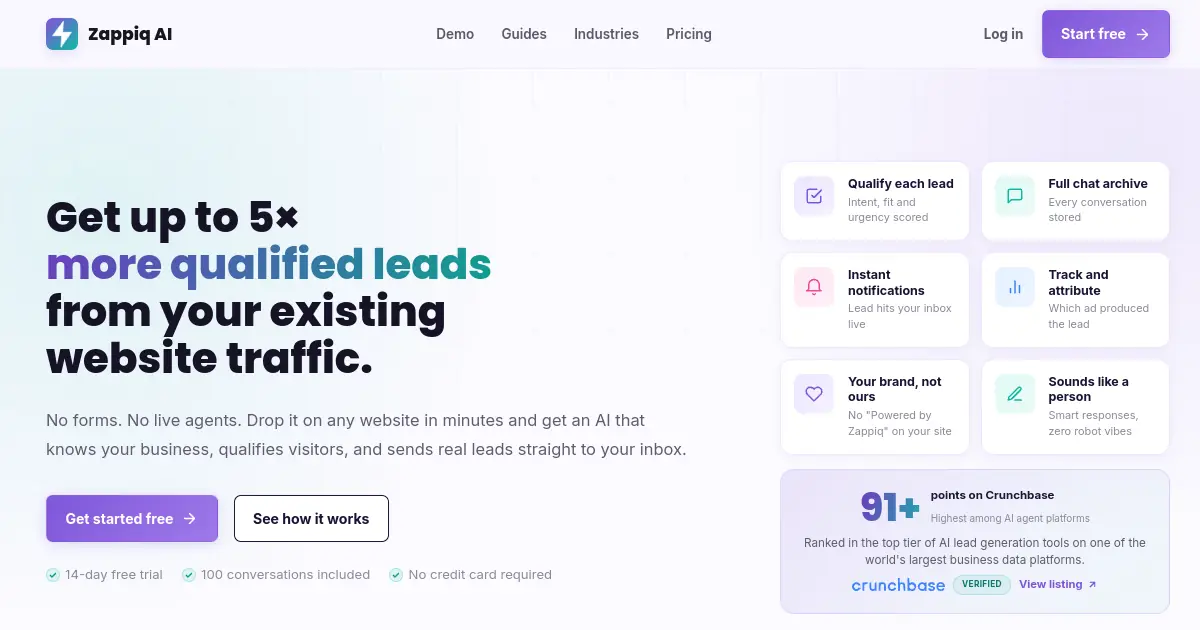
The comparison between Forethought and Zappiq AI is almost entirely about scope and training data. Forethought is built to resolve tickets across helpdesks, with historical ticket training that requires 20,000+ tickets to work well. Zappiq AI is built to do one thing well: turn website visitors into qualified leads and deliver them to your team while the conversation is still relevant, training on your website content rather than your ticket history.
For an SMB, that narrower scope is the point. You install a script, Zappiq reads your website, and there is a working chatbot answering visitor questions within minutes. There is no 20,000-ticket requirement, no 30 to 90 day setup, no implementation fee before the first conversation. The AI trains itself on your content and starts from there. If something needs adjustment, you adjust it. The base state is already functional.
Forethought’s setup process requires integration, knowledge base training, and historical ticket data before the platform does anything useful. For enterprise support operations with years of ticket history and dedicated resources, that is expected. For SMBs that just need a chatbot that answers questions and captures leads, that overhead is the reason they look elsewhere.
The moment a visitor qualifies, Zappiq emails you the full lead: contact details, intent summary, and the complete conversation transcript. That combination of speed and context matters because website visitors who are ready to buy do not stay ready for long. A lead that sits in a shared inbox for three hours is a different lead than one that arrives with context while the conversation is still fresh.
Pricing is structured around conversation volume rather than per-agent seats or historical ticket commitments. The same traffic spike that would trigger an overage conversation at Forethought does not change your Zappiq bill. For an SMB running paid traffic, that predictability matters more than it might seem until the first month you run a campaign and watch volume spike.
Integration options: Zappiq connects to Zapier, Make, and n8n, which means a qualified lead can be pushed into your CRM, a Slack channel, or any other tool your team already uses without touching a line of code. Ad attribution is tracked per lead, so you know which campaign or keyword brought a visitor before they became a contact.
Pricing
Best for: SMBs that need website visitor qualification and lead capture without historical ticket training requirements, implementation fees, or enterprise contracts. Service businesses, agencies, clinics, legal, real estate, home services, and anyone running paid traffic who wants to know exactly what a lead cost them.
2. Intercom Fin: Best for Per-Resolution AI with Proven Deployment
Intercom Fin
intercom.com | AI agent that runs inside Intercom and 8+ other helpdesks with per-resolution pricing
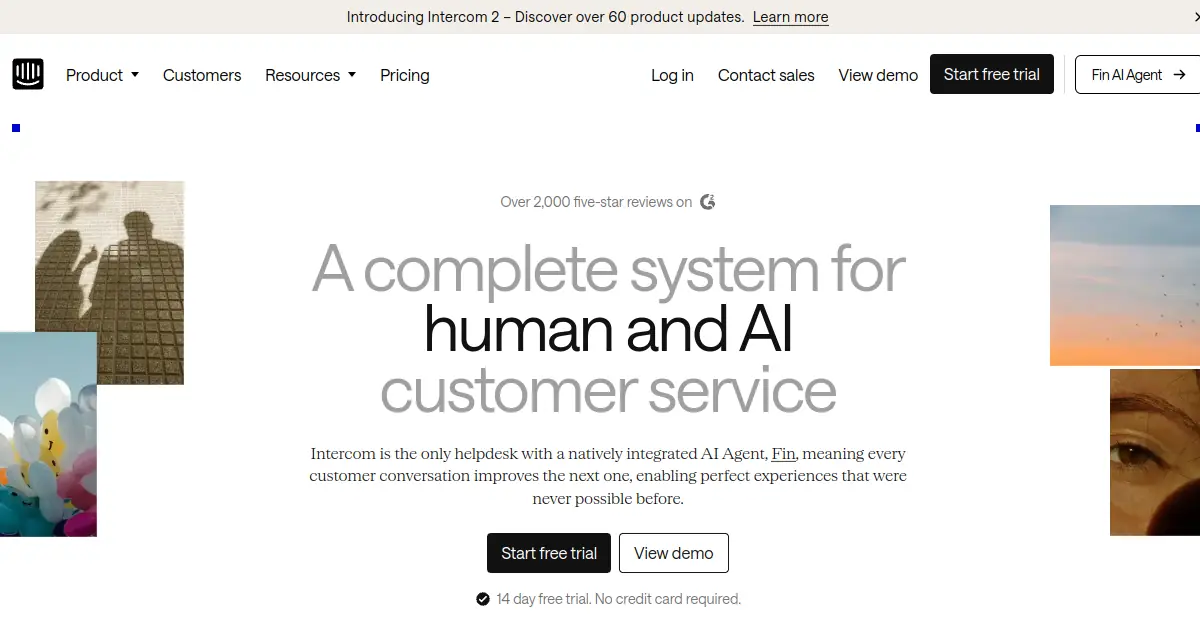
Fin is the proven default for teams that want AI resolution without enterprise procurement. The agent runs on 8+ helpdesks, including Intercom’s own, and prices at roughly $0.99 per resolution with seats ranging from $29 to $132. Fin claims a 76 percent average resolution rate across 12,000+ customers. A 14-day trial with unlimited outcomes is available, which Forethought does not offer.
The architectural difference from Forethought is significant. Forethought layers ticket intelligence and resolution on top of an existing helpdesk. Fin lives inside the helpdesk or runs over an existing one. For teams that do not want to manage a separate AI vendor alongside their existing support stack, Fin eliminates that layer. The tradeoff is less control over agent behavior than Forethought’s multi-agent architecture provides.
There is also the acquisition context. Salesforce signed a definitive agreement to acquire Fin in June 2026, which is relevant context for long-term platform decisions. Both Forethought and Fin now sit inside larger suite vendors, and teams evaluating either should weigh whether they want their support AI to live inside one platform ecosystem.
Pricing
Best for: Teams that want proven out-of-the-box AI resolution with per-resolution pricing and a trial before committing. Strong for organizations that value predictability and do not need deep custom agent behavior control.
3. Decagon: Best for Precise Workflow Control
Decagon
decagon.ai | Enterprise AI customer service agent platform with Agent Operating Procedures

Decagon is the sharpest head-to-head comparison to Forethought for enterprises that need precise workflow control. Both are standalone AI agent platforms that front the conversation. Both are sales-led with no public pricing. The difference is how agent behavior is authored and controlled.
Decagon uses Agent Operating Procedures written in plain English, with Git-tracked version control that lets non-technical CX staff edit agent behavior without engineering involvement. Forethought uses a multi-agent architecture with Solve, Triage, Discover, and QA agents, with historical ticket training driving resolution accuracy. Decagon holds a 4.9 out of 5 rating from 18 reviews on G2 as of mid-2026, with customers including Eventbrite, Notion, Bilt, Webflow, Substack, Vanta, Rippling, and Curology.
The pricing difference matters. Decagon reports an annual platform fee of roughly $50,000/year with a usage layer billed per-conversation or per-resolution at around $0.50 per resolution, with third-party benchmarks putting the median annual contract at approximately $386,000 to $400,000. That is a higher ceiling than Forethought’s mid-market range but a lower floor than Forethought’s enterprise voice deployments. For technical SaaS companies with engineering bandwidth and support volume concentrated in chat and email, Decagon is structurally a strong fit.
Pricing
Best for: Technical SaaS companies with engineering bandwidth that need precise workflow control with plain-English agent authoring. Strong for support operations with chat and email as primary channels.
Need website leads without historical ticket requirements?
Zappiq AI trains on your site in minutes, qualifies every visitor automatically, and sends you the lead before the conversation goes cold. No 20,000-ticket requirement. No implementation partner.
Start Free TrialNo credit card | No developer needed | No branding on any plan
4. Parloa: Best for Contact Center AI Agent Management
Parloa
parloa.com | Enterprise contact center AI agent management platform
Parloa is the closest enterprise alternative for contact center AI agent management. The platform covers the full agent lifecycle from designing and testing agents through scaling and optimizing them, handling high conversation volumes in multiple languages with real-time translation. Spotsaas lists Parloa alongside Maven AGI and Lorikeet as one of the top three Forethought alternatives for 2026.
For enterprises that need contact center AI agent management at scale with multilingual support and real-time translation, Parloa covers that job. The tradeoff is the same as other enterprise platforms: custom pricing, weeks-to-months implementation, and enterprise resource requirements.
Pricing
Best for: Enterprise contact centers that need AI agent management at scale with multilingual support and real-time translation. Strong for organizations with dedicated technical resources.
5. Maven AGI: Best for Governed Knowledge Graph Architecture
Maven AGI
mavenagi.com | Enterprise AI agents with a governed knowledge graph
Maven AGI is the alternative to evaluate for enterprises that need AI agents reasoning over a governed knowledge graph. The platform automates customer service across channels with agents that reason over customer data, take multi-step actions, and resolve issues end to end. A governed knowledge graph with quality checks underpins responses, and an agent designer workspace handles behavior tuning and performance.
For teams that need governed knowledge graph architecture with quality checks and agent behavior tuning, Maven AGI covers that job. Spotsaas describes it as a mid-range option that may fit teams with mixed requirements.
Pricing
Best for: Enterprises that need AI agents reasoning over a governed knowledge graph with quality checks and multi-step action execution. Strong for organizations that value knowledge governance.
6. Lorikeet: Best for Compliance-Heavy Verticals
Lorikeet
lorikeet.ai | AI customer concierges for compliance-bound support issues
Lorikeet is the strongest alternative for fintech, healthtech, and insurance teams that need compliance-bound support resolution. The platform builds AI customer concierges designed to resolve complex, multi-step tickets end to end across chat, email, SMS, voice, and WhatsApp, explicitly positioned for regulated and operationally complex industries. It raised a $35 million Series A in August 2025 and reportedly runs 100 percent post-resolution QA review, with escalations to a human never charged.
Pricing runs roughly $0.80 per resolution for chat, email, and SMS, $1.00 for voice, with a $500 per month minimum commitment. For regulated teams that need audit logging and multi-step action execution inside connected systems, Lorikeet covers that job. The tradeoff is a smaller public track record than Decagon or Sierra, and narrower positioning that may be over-built for basic FAQ deflection.
Pricing
Best for: Fintech, healthtech, and insurance teams that need compliance-bound support resolution with multi-step action execution and audit logging. Strong for regulated industries where QA matters.
7. Ada: Best for Volume Deflection at Scale
Ada
ada.cx | No-code AI agent platform for high-volume containment and deflection
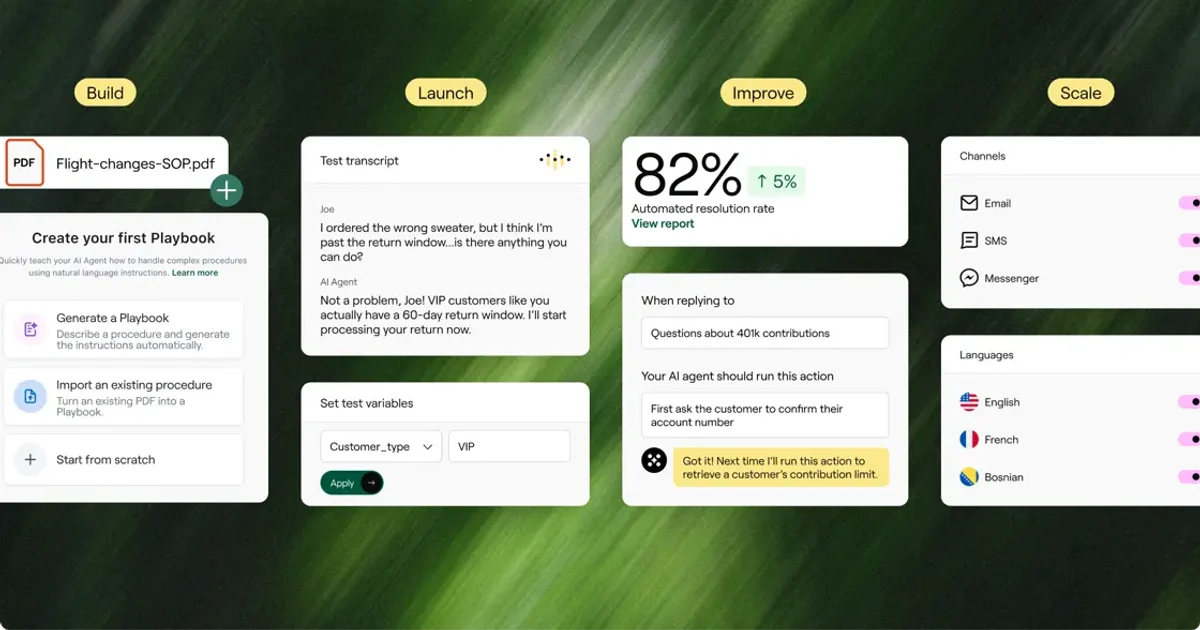
Ada is the volume-deflection veteran with a decade of high-volume containment work. The platform is priced on conversation volume with a reported median contract of $73,500 a year, roughly half Forethought’s typical mid-market deployment. Vendr data shows Ada pricing for comparable scope often falls in the $50,000 to $120,000 range, with more transparent volume-based pricing than Forethought.
For teams that need containment at scale without the enterprise complexity of Forethought or Decagon, Ada covers that job. The tradeoff is less granular control over agent behavior for complex multi-step workflows, and no historical ticket training that Forethought uses for edge-case resolution.
Pricing
Best for: Enterprises that need high-volume containment and deflection at a lower entry point than Forethought. Strong for organizations with standardized, repetitive support volume.
8. Zendesk AI: Best for Teams Already on Zendesk
Zendesk AI
zendesk.com | AI agents embedded in the Zendesk platform with verified resolution billing
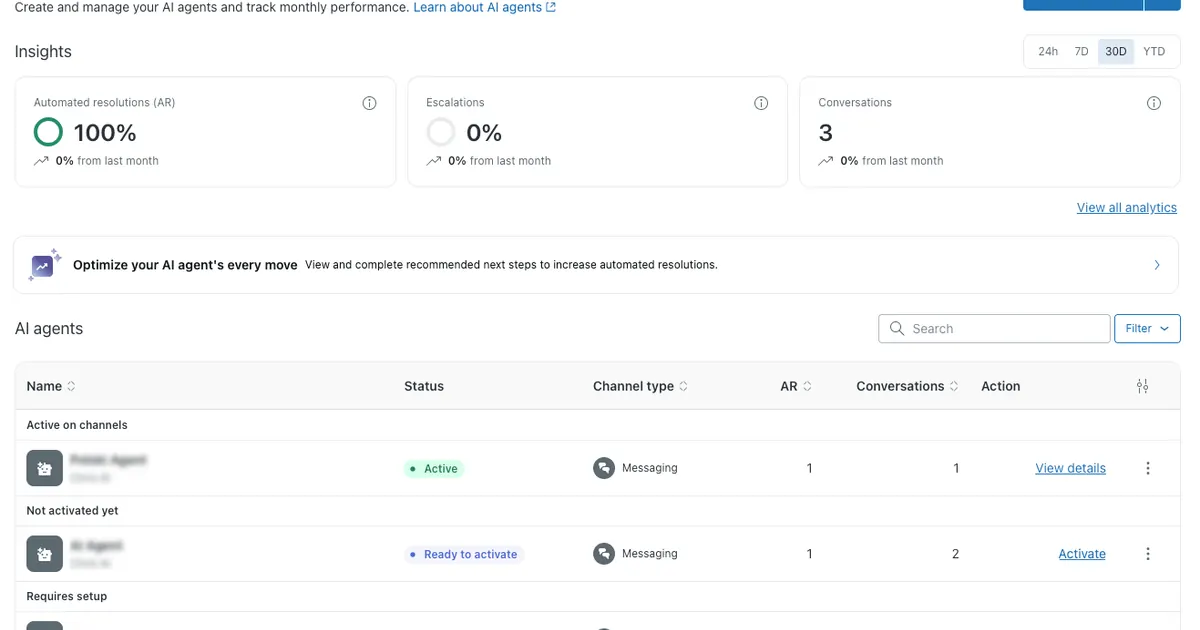
Zendesk AI is the natural choice for teams already running Zendesk for support. Zendesk moved to a three-tier model in May 2026 where only verified resolutions are billed, a notable improvement. From January 2026, Zendesk bills usage above the resolution allowance automatically each month on non-standard contracts, though customers can set “Don’t allow overage” to pause AI agent functionality at the limit instead.
Zendesk does not publish a per-resolution rate. Third-party reporting puts the effective rate between $1.00 and $2.00 per resolution for mid-market teams, with enterprise volume discounts pushing it lower. The per-resolution fee stacks on top of Suite pricing, not instead of it. For teams already on Zendesk, adding Zendesk AI is the path of least resistance, especially now that Forethought capabilities are being integrated into the same platform.
Pricing
Best for: Teams already running Zendesk that want native AI without adding a separate vendor, especially as Forethought capabilities are integrated into the same platform. Strong for organizations that value platform consolidation.
9. Freshdesk Freddy AI: Best for Affordable AI Support
Freshdesk Freddy AI
freshworks.com | Helpdesk platform with Freddy AI for ticket resolution and agent assistance
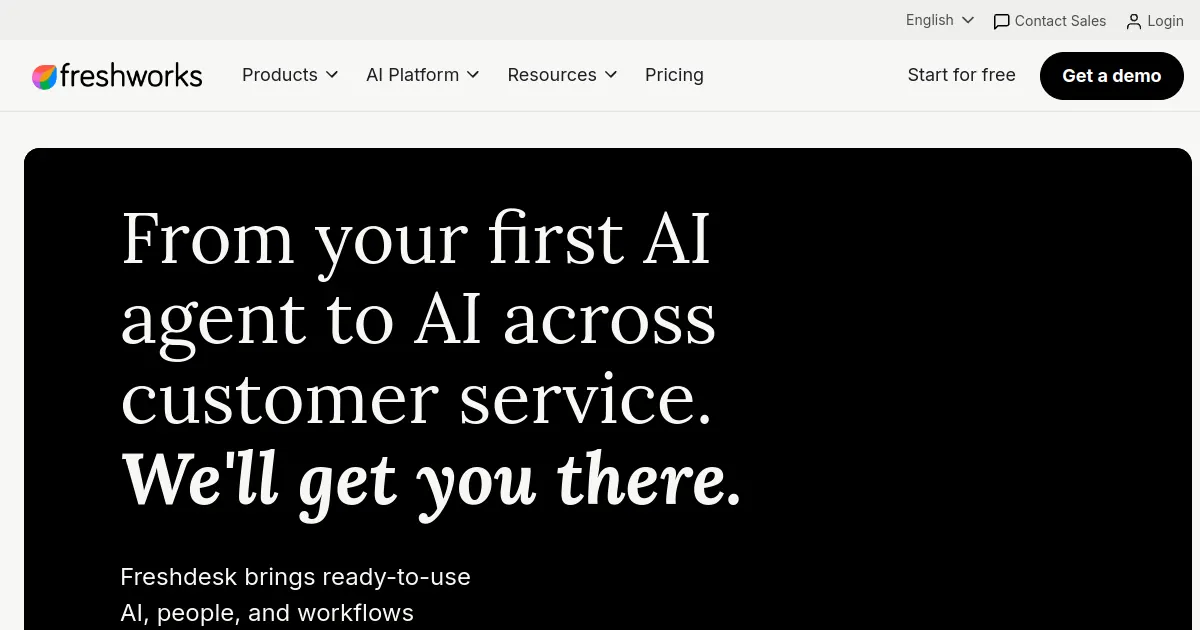
Freshdesk Freddy AI is the alternative for teams that want similar AI features to Forethought at more transparent pricing. The platform offers ticket resolution, agent assistance, and automation across email, chat, and social. Pricing starts free for small teams and paid plans run from $19 to $89 per agent per month.
For an SMB or mid-market team that needs AI support without the historical ticket training requirement or enterprise contract, Freshdesk Freddy AI covers that job. The tradeoff is that the AI is less sophisticated than Forethought’s multi-agent architecture, with less depth on edge-case resolution and knowledge gap detection.
Pricing
Best for: SMBs and mid-market teams that want AI support with more transparent pricing than Forethought. Strong for teams that need ticket resolution and agent assistance without historical ticket training requirements.
10. Tidio: Best for Accessible SMB Chat
Tidio
tidio.com | Live chat and AI chatbot platform for small businesses and ecommerce stores
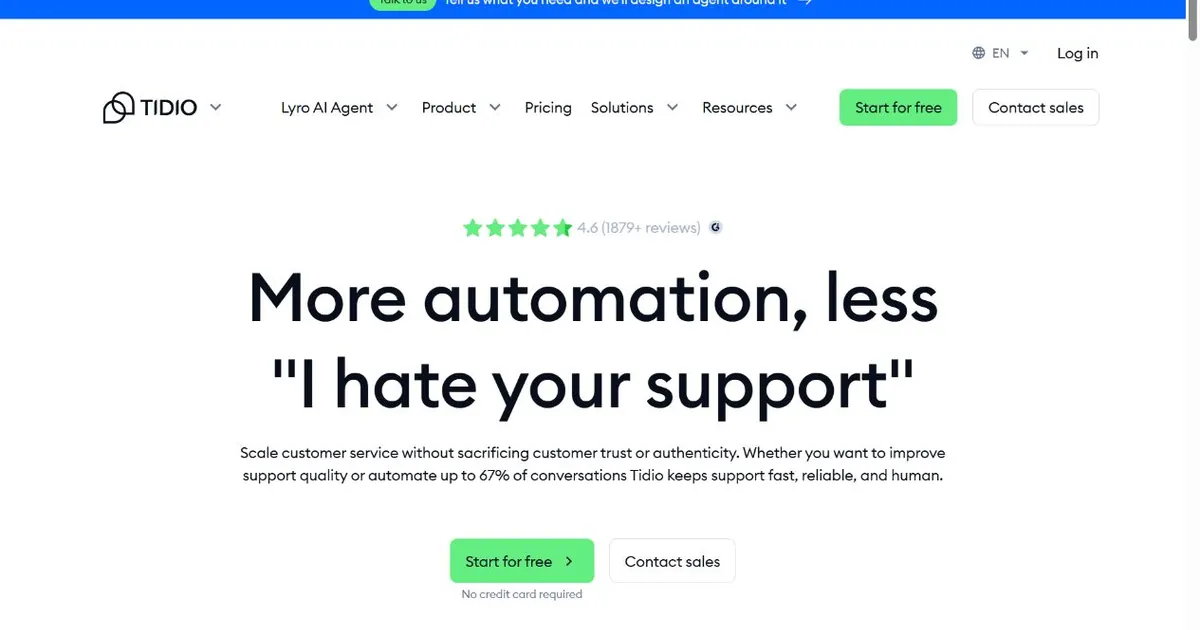
Tidio is what Forethought looks like when the pricing is public and the setup does not require historical ticket training. The core job is similar: greet visitors, answer questions, qualify leads, hand the good ones to a human. The execution is designed for someone who does not have an enterprise budget or years of ticket history.
Tidio’s Lyro AI handles customer conversations autonomously with fast setup and a free tier. Plans start from $24.17 per month billed annually. For an SMB that needs live chat with an AI layer at an accessible price point, Tidio covers that job.
Pricing
Best for: SMBs that need affordable conversational AI without historical ticket requirements or enterprise complexity. Strong for teams that need quick setup.
11. Crisp: Best Flat-Rate Omnichannel Inbox
Crisp
crisp.chat | Shared inbox, live chat, and AI chatbot billed per workspace rather than per agent
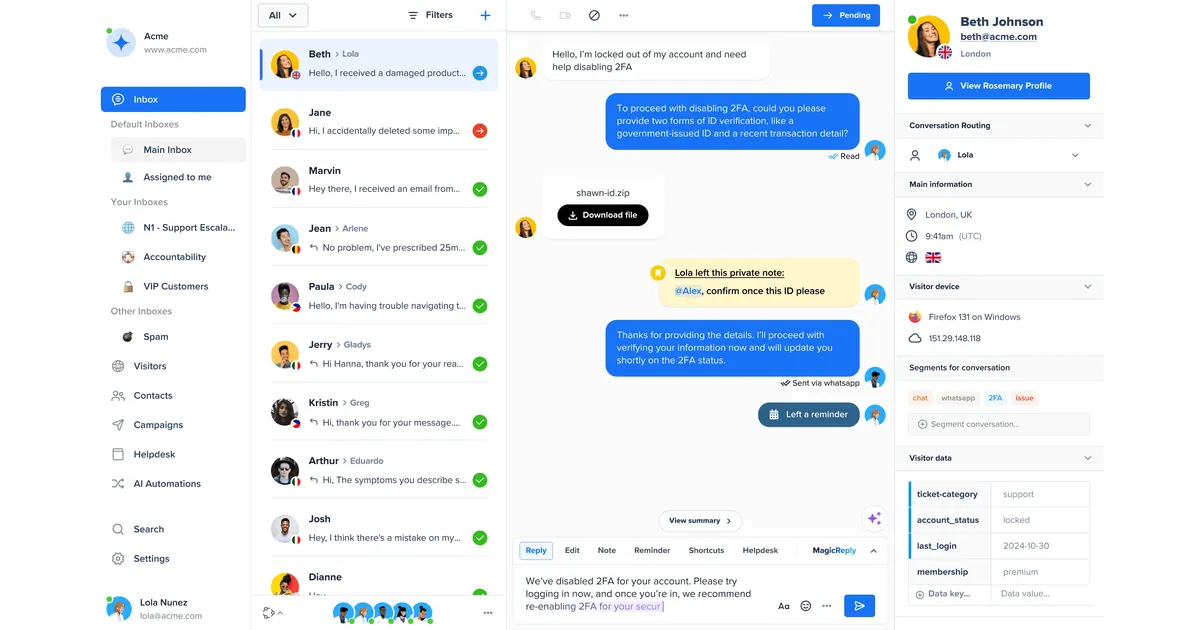
Crisp sits at an interesting spot in this comparison. It is not trying to replace Forethought’s enterprise ticket intelligence features. What it does well is give a small to mid-size team everything it needs to handle website conversations without a billing structure that grows with headcount. The workspace pricing model is the headline: adding a fifth or sixth teammate to your plan costs nothing extra below the Plus tier’s per-seat cap.
The plan lineup starts with a genuinely useful free tier covering two seats and unlimited live chat. Mini runs forty-five dollars a month, Essentials ninety-five dollars a month, and Plus two hundred and ninety-five dollars a month for teams that need unlimited AI automation. Every paid tier bundles AI credits for Hugo, Crisp’s chatbot, rather than charging a separate subscription for AI.
Pricing
Best for: Small teams that want live chat, a shared inbox, and a bundled AI chatbot on a single predictable bill without a seat-based charge that grows with every hire.
How to Evaluate a Forethought Alternative
Start with the job, not the feature list: The right replacement depends on which specific thing Forethought was doing for your team. Answering that question first saves time on comparisons that were never relevant.
Forethought was used differently by different teams, which is part of why this list does not have one obvious answer. Enterprise support organizations used Forethought for ticket triage, autonomous resolution, and agent assist across helpdesks. Growing support teams used it for knowledge gap detection and QA. Marketing teams used it for website chat and lead qualification. None of those jobs requires the same replacement.
If your team needs per-resolution AI with proven deployment and a trial, Intercom Fin is the natural choice. For enterprises that need precise workflow control with plain-English agent authoring, Decagon covers that job. For regulated industries that need compliance-bound resolution with audit logging, Lorikeet is the natural fit. For teams already on Zendesk, adding Zendesk AI is the path of least resistance, especially as Forethought capabilities are integrated into the same platform.
If your use case is website lead capture and qualification without historical ticket training requirements or enterprise contracts, a focused tool like Zappiq AI covers that job directly. The key difference from Forethought is that Zappiq starts with a working chatbot from day one without requiring 20,000 tickets or an implementation fee before anything happens. For an SMB looking for a practical alternative, that simplicity matters a great deal.
For teams that need affordable AI support without the enterprise contract, Freshdesk Freddy AI and Tidio cover those jobs. For teams that want a flat-rate omnichannel inbox, Crisp is worth evaluating.
Migration Checklist: Moving Away from Forethought
A support automation migration is not complete when the new platform is live. The risky parts are the ticket workflows, routing rules, and historical training data that your team built around Forethought. Use this checklist before turning the old workflow off.
- Document your ticket workflows and routing rules. Save the triage logic, escalation paths, and QA scoring criteria before rebuilding them elsewhere.
- Export historical ticket data. Keep the ticket history that trained your AI in a format your team can search after the migration, even if the new platform does not use it for training.
- Record integration and helpdesk details. Note ownership rules, CRM fields, webhooks, and any custom integrations that connect to the platform.
- Choose the replacement by job. Use a lead-generation tool for website qualification, a helpdesk-native AI for resolution, or an affordable AI platform for accessible support.
- Run the new tool in parallel for at least two weeks. Compare answers, resolution rates, lead delivery, routing, and handoffs before removing Forethought.
- Cut over and monitor the first month. Review unanswered questions, duplicate tickets, attribution, response time, and every integration that receives a qualified conversation.
Keep the old workflow available during testing. Parallel testing gives your team a way to compare real conversations and catch missing routing or knowledge gaps before it affects customer experience.
Frequently Asked Questions
Zendesk acquired Forethought in March 2026. The acquisition closed on March 26, 2026, and Forethought is now being integrated into Zendesk’s Resolution platform as Forethought AI Agents by Zendesk. The company remains available to new customers without requiring the core Zendesk platform, but roadmap continuity and multi-year standalone contracts carry real procurement risk.
Forethought uses custom pricing. Based on anonymized procurement data, per-conversation pricing for Solve ranges from $0.50 to $2.00. Per-agent pricing for Assist typically ranges from $50 to $150 per agent per month. Mid-market deployments (15,000 to 50,000 tickets per month) typically range from $60,000 to $150,000 annually. Implementation fees of $10,000 to $50,000 are common, and voice AI adds $10,000 to $30,000 to initial deployment.
The best alternative depends on the job. Zappiq AI is the most practical option for teams that primarily need website visitor qualification and lead capture without historical ticket training requirements or enterprise contracts. Intercom Fin is the strongest choice for per-resolution AI at scale. Decagon is worth evaluating for enterprises that need precise workflow control with Agent Operating Procedures.
Teams look for Forethought alternatives when the Zendesk acquisition creates procurement uncertainty, when the 20,000+ historical ticket training requirement excludes early-stage support operations, when implementation fees and multi-year contracts are hard to justify, or when the need is narrower than a full enterprise ticket automation platform.
For fintech, healthtech, and insurance teams that need compliance-bound support resolution with multi-step action execution and audit logging, Lorikeet is the natural fit. The platform runs 100% post-resolution QA review, escalations to a human are never charged, and pricing runs roughly $0.80 per resolution for chat, email, and SMS with a $500 per month minimum commitment.
Yes. Forethought was designed to layer on top of existing helpdesks including Zendesk, Salesforce, Intercom, ServiceNow, HubSpot, Gorgias, Amazon Connect, Genesys, and Five9. However, Agent Assist (the copilot experience) is Zendesk-only. With the Zendesk acquisition, the integration roadmap may shift, so teams on non-Zendesk helpdesks should confirm feature continuity.
The Bottom Line
Forethought built a genuinely differentiated AI customer support platform, with a multi-agent architecture that handled ticket resolution, triage, knowledge gap detection, and QA scoring autonomously. Its historical ticket training produced more accurate product-specific responses than knowledge-base-only tools, and its 70+ integrations meant deployment could layer over virtually any enterprise support stack.
For growing teams and SMBs, the problem is not the product. It is the Zendesk acquisition, the 20,000-ticket training requirement, and the enterprise contract structure. Forethought was built for mature support operations with years of ticket history and dedicated resources. For teams without either, it is the reason they look elsewhere.
The right replacement depends on which job Forethought was doing for your team. For teams that need per-resolution AI with a trial, Intercom Fin covers that job. For enterprises that need precise workflow control, Decagon is the natural fit. For regulated industries that need compliance-bound resolution, Lorikeet is the natural choice. For teams already on Zendesk, adding Zendesk AI is worth evaluating before paying for a separate platform.
For SMBs that primarily need website visitors qualified and delivered to a sales team, Zappiq AI covers that job without historical ticket requirements, implementation fees, or enterprise contracts. The chatbot reads your site and starts working on day one.
The free trial for Zappiq AI is at zappiqai.com. No credit card needed, no 20,000-ticket requirement, no implementation project before your first visitor conversation.
Try the Forethought alternative built for lead generation
Zappiq AI is live in under ten minutes. Trains on your website, qualifies every visitor automatically, and sends you the lead while it is still fresh. No historical ticket requirements.
Start Free TrialNo credit card | No developer needed | No branding on any plan
References
- Spotsaas. "Top 3 Forethought Alternatives 2026." spotsaas.com.
- The AI Agent Index. "Forethought AI Review (2026): Now Part of Zendesk." theaiagentindex.com.
- Zendesk. "Zendesk Completes Acquisition of Forethought." zendesk.com.
- Forethought. "AI for Support: What to Expect When You Implement AI for Customer Support." forethought.ai.
- CostBench. "Forethought Alternatives: Zendesk AI + 3 More (2026)." costbench.com.
- BitBytes. "Top 5 Forethought Alternatives After Zendesk Deal." bitbytes.io.
- Vendr. "Forethought Technologies Software Pricing & Plans 2026." vendr.com.
- Computer Weekly. "Zendesk to acquire Forethought in major agentic AI play." computerweekly.com.
- DragApp. "Zendesk Pricing in 2026: Plans, the AI Meter, and What a Team Actually Pays." dragapp.com.
- Aissist. "AI Agent Pricing Benchmark 2026: 18 Vendors Compared." aissist.io.

Ansar Ali
Ansar Ali founded Zappiq AI after watching too many small business owners get quoted enterprise pricing for a job that really came down to answering questions on a website and identifying who was serious. He spends most of his time on lead qualification logic, attribution tracking, and making sure a chatbot install never slows a page down.