
Quick Summary
Short answer: Freshdesk is the budget help desk standard at $19 per agent, but AI sessions expire monthly and Copilot costs $29 per agent on top. For teams that want predictable AI pricing without the session meter, Zappiq AI is the most practical option for website lead capture, Help Scout is the strongest choice for email-first support, and Zoho Desk is the closest like-for-like at a lower price point.
- Zappiq AI is the best Freshdesk alternative for teams that primarily need website visitor qualification and lead capture without per-agent pricing or separate AI-session charges; each plan has a monthly conversation allowance.
- Help Scout is the strongest choice for small teams that want a polished, email-first help desk with per-resolution AI pricing at $0.75.
- Zoho Desk is the closest like-for-like to Freshdesk at a lower price point, with plans starting at $7 per agent and tight Zoho CRM integration.
- Zendesk is the natural upgrade for teams that have outgrown Freshdesk and need enterprise-grade omnichannel ticketing, though AI costs stack differently.
- Intercom (Fin) is the choice for SaaS companies where support lives inside the product, with per-resolution pricing at $0.99.
- HubSpot Service Hub is the CRM-native option for teams already running sales and marketing on HubSpot.
- Drag, Missive, and Hiver are Gmail-native alternatives for teams that want shared inbox without a full help desk.
- Gladly is the customer-record platform for retail and subscription brands where context fragmentation is the real problem.
- Front is the polished multichannel inbox for teams that want strong routing without ticket overhead.
What Freshdesk Actually Is (And Why Teams Look Elsewhere)
Freshdesk earned its place as the budget help desk standard. Info-Tech Research Group named it a Champion in its 2026 Customer Service Management Data Quadrant, with an 8.7 satisfaction score and high marks for the business value it delivers. At $19 per agent per month for the Growth tier, it offers real ticketing, a shared inbox, a customer portal, a knowledge base, and pre-built reports without the enterprise price of Zendesk. For small teams that need formal ticketing without a steep learning curve, Freshdesk covers that job.
The problem for growing teams is the AI cost model. Every Freshdesk plan includes the Freddy AI Agent, with the first 500 sessions free. Additional sessions cost $49 per 100. A session is defined as a unique interaction between an end user and an AI Agent, and for email, that means a 72-hour window starting from the customer’s first email. Critically, sessions expire at the end of your payment cycle, whether used or not. Freddy AI Copilot, the agent-assist layer, is a separate $29 per agent per month add-on.
The pricing reality: Freshdesk’s entry price looks like the best deal in the category, but the AI stack is where the bill grows. Freddy Copilot at $29 per agent plus AI sessions at around $0.49 each, with sessions that expire monthly, means a 10-agent team using AI on about 300 conversations a month can see a computed bill around $627 per month before add-ons. The session meter is the specific friction point that sends teams looking for alternatives.
There is also the product-line split. The $19 per agent entry price covers Freshdesk’s email-first ticketing product. If you need live chat, social, and messaging in one unified inbox, that is Freshdesk Omni, a separate, higher-priced line starting at $29 per agent. A lot of “$19/month” comparisons gloss over that distinction, and teams that discover it after signing up often feel misled.
There is a third pattern too. Teams leave Freshdesk not because of price but because of ceiling. Reporting and automation depth lag Zendesk at the top end. A support operation that has grown past 15 agents and needs skills-based routing, multi-tier queues, and reporting that connects support activity to business outcomes will hit Freshdesk’s ceiling and start looking at Zendesk or Gladly.
Where Freshdesk Users Are Actually Looking in 2026
Freshdesk users are not all looking for the same replacement. Teams that used Freshdesk primarily for email ticketing are evaluating different options than teams that need omnichannel support, live chat, or website lead capture. The important distinction is between replacing the help desk function and replacing the specific job Freshdesk was doing for your team.
For teams that need email-first support with a polished interface and per-resolution AI pricing, Help Scout is the natural comparison. For teams that need the closest like-for-like at a lower price, Zoho Desk covers that job. For teams that have outgrown Freshdesk and need enterprise depth, Zendesk is the path. For teams that need website lead capture without per-agent pricing, that scope is different entirely.
- Website lead capture and qualification: Zappiq AI for automatic training, visitor qualification, and lead delivery without per-agent pricing or separate AI-session charges.
- Email-first help desk with per-resolution AI: Help Scout for a polished interface and AI Answers at $0.75 per resolution.
- Closest like-for-like at lower price: Zoho Desk for full multichannel help desk features starting at $7 per agent.
- Enterprise omnichannel ticketing: Zendesk for deep customization, routing, and reporting at $55 to $115 per seat.
- AI-first premium support: Intercom (Fin) for $0.99 per resolution and a conversational model built for SaaS.
- CRM-native support: HubSpot Service Hub for teams already running sales and marketing on HubSpot.
- Gmail-native shared inbox: Drag, Missive, and Hiver for teams that want to skip the help desk overhead entirely.
- Customer-record support: Gladly for retail and subscription brands where context fragmentation across channels is the real problem.
- Polished multichannel inbox: Front for strong routing and assignment without ticket overhead.
What Freshdesk Actually Costs vs the Alternatives
The tools below replace different pieces of what Freshdesk does. No single product does everything Freshdesk does for every team, because Freshdesk itself is being stretched across jobs that range from email ticketing to omnichannel support. The honest answer is matching your actual use case to the tool built for it.
Quick Comparison: 11 Freshdesk Alternatives
| Tool | Starting Price | Best For | AI Model | Free Option |
|---|---|---|---|---|
| Zappiq AI | Starter from $9/mo equivalent billed annually for 350 conversations | Website lead capture and qualification | Flat conversation volume | 100 conversations |
| Help Scout | Free, paid from $25/seat | Email-first help desk | AI Answers $0.75/resolution | 5 users |
| Zoho Desk | Free, paid from $7/agent | Budget full help desk | Zia AI on higher tiers | 3 agents |
| Zendesk | $19/agent (email-only) | Enterprise omnichannel | Copilot $50/seat + metered | Trial only |
| Intercom (Fin) | $29/seat | AI-first SaaS support | Fin $0.99/resolution | No |
| HubSpot Service Hub | Free, paid from $15/seat | CRM-native support | AI bundled on higher tiers | Yes |
| Drag | $12 to $24/seat | Gmail-native shared inbox | AI included, no add-on | No |
| Missive | $14 to $36/seat | Multi-provider collaboration | Collaboration-first | No |
| Hiver | $25 to $85/seat | Gmail/Outlook multichannel | AI bundled from Growth | No |
| Gladly | Custom, sales-led | Retail customer-record support | AI included, not metered | No |
| Front | $25 to $105/seat | Polished multichannel inbox | AI add-ons stack | No |
Before picking a replacement: Decide which job Freshdesk was doing for your team. If it was capturing and qualifying website visitors, the tools at the top of this list were purpose-built for that. If it was email ticketing with AI assistance, Help Scout and Zoho Desk are the natural comparisons.
1. Zappiq AI: Best for Website Lead Capture Without Per-Agent Pricing
Zappiq AI
zappiqai.com | AI lead generation chatbot for small and medium business websites, no per-agent pricing or separate AI-session charges
- Live setup in minutes
- Automatically trains on your website
- Qualifies leads and tracks ad source
- No engineering-led deployment
- No branding on any plan
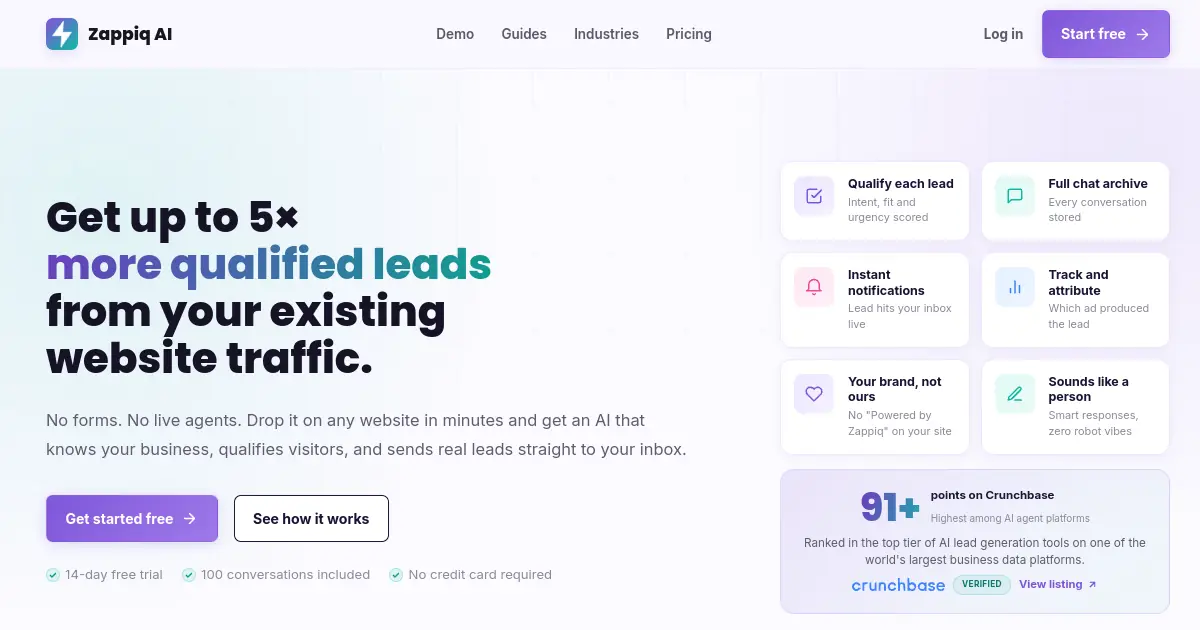
The comparison between Freshdesk and Zappiq AI is almost entirely about scope. Freshdesk is built to manage support tickets across email, chat, phone, and social, with a shared inbox, SLA tracking, and reporting for support operations. Zappiq AI is built to do one thing well: turn website visitors into qualified leads and deliver them to your team while the conversation is still relevant.
For an SMB, that narrower scope is the point. You install a script, Zappiq reads your website, and there is a working chatbot answering visitor questions within minutes. There is no per-agent seat pricing or separate AI-session add-on to budget for; instead, each plan includes a defined monthly conversation allowance. The AI trains itself on your content and starts from there. If something needs adjustment, you adjust it. The base state is already functional.
Freshdesk’s setup process requires configuring ticket fields, routing rules, SLA targets, and the Freddy AI Agent before the platform does anything useful. For support teams with dedicated operations people, that is expected. For SMBs that just need a chatbot that answers questions and captures leads, that overhead is the reason they look elsewhere.
The moment a visitor qualifies, Zappiq emails you the full lead: contact details, intent summary, and the complete conversation transcript. That combination of speed and context matters because website visitors who are ready to buy do not stay ready for long. A lead that sits in a shared inbox for three hours is a different lead than one that arrives with context while the conversation is still fresh.
Pricing is structured around conversation volume rather than per-agent seats or AI session packs. The same traffic spike that would trigger a conversation about session overages at Freshdesk does not change your Zappiq bill. For an SMB running paid traffic, that predictability matters more than it might seem until the first month you run a campaign and watch volume spike.
Integration options: Zappiq connects to Zapier, Make, and n8n, which means a qualified lead can be pushed into your CRM, a Slack channel, or any other tool your team already uses without touching a line of code. Ad attribution is tracked per lead, so you know which campaign or keyword brought a visitor before they became a contact.
Pricing
Best for: SMBs that need website visitor qualification and lead capture without per-agent pricing, separate AI-session charges, or Copilot add-ons. Plans have monthly conversation allowances. Service businesses, agencies, clinics, legal, real estate, home services, and anyone running paid traffic who wants to know exactly what a lead cost them.
2. Help Scout: Best for Email-First Help Desk
Help Scout
helpscout.com | Polished email-first help desk with an excellent knowledge base and per-resolution AI
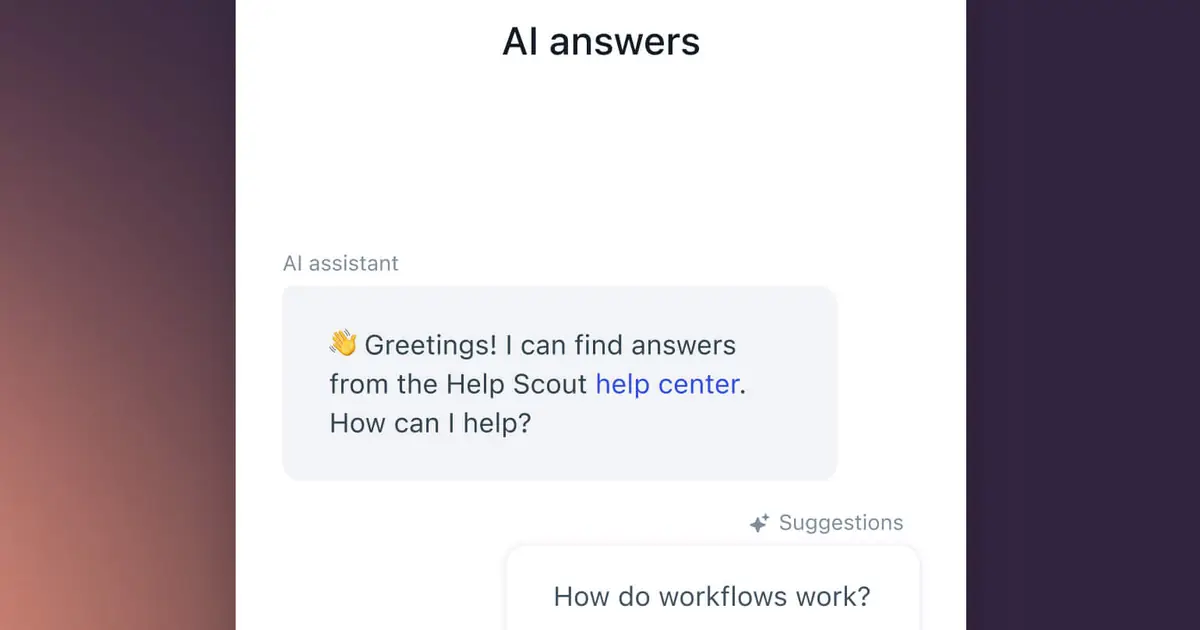
Help Scout is the natural alternative for small-to-mid teams that want a clean, email-first help desk without Freshdesk’s session meter. The platform is well-designed, with an excellent knowledge base and a gentler learning curve than most help desks. AI Answers is billed per resolution at $0.75, which is a usage-based model like Freshdesk’s sessions, but the interface is cleaner and the pricing is more transparent.
The plan lineup starts with a free tier for five users, then Standard at $25, Plus at $45, and Pro at $75 per seat. For teams that want a polished email-first help desk without the complexity of Zendesk or the session meter of Freshdesk, Help Scout covers that job. The tradeoff is that it is a standalone platform, not Gmail-native, and it does not have the omnichannel depth of Zendesk.
Pricing
Best for: Small-to-mid teams that want a clean, email-first help desk with per-resolution AI pricing and a polished interface. Strong for organizations that value simplicity over enterprise depth.
3. Zoho Desk: Best Budget Full Help Desk
Zoho Desk
zoho.com/desk | Full multichannel help desk with tight Zoho CRM integration at a lower price than Freshdesk

Zoho Desk is the closest like-for-like to Freshdesk at a lower price point. The platform is a full multichannel help desk with tickets, email, chat, phone, and social, and tight Zoho CRM integration. Info-Tech Research Group named it a Champion in its 2026 Customer Service Management Data Quadrant with an 8.6 satisfaction score, rated highly for breadth of features and functionality.
Pricing is public and transparent: Express at $7, Standard at $14, Professional at $23, and Enterprise at $40 per agent per month, with a free plan for up to three agents. Most teams land on Professional or Enterprise rather than the limited entry tier. For budget-conscious teams that need full help desk features, Zoho Desk covers that job. The tradeoff is that the UI feels dated, and Zia AI requires the Enterprise tier to unlock its full capabilities.
Pricing
Best for: Budget-conscious teams that need full help desk features at a lower price than Freshdesk. Strong for organizations already using Zoho for CRM or other operations.
Need website leads without per-agent pricing?
Zappiq AI trains on your site in minutes, qualifies every visitor automatically, and sends you the lead before the conversation goes cold. No demo required or separate AI-session charge; monthly conversation allowances apply.
Start Free TrialNo credit card | No developer needed | No branding on any plan
4. Zendesk: Best for Enterprise Omnichannel Ticketing
Zendesk
zendesk.com | Enterprise help desk with deep omnichannel ticketing, routing, SLAs, and marketplace
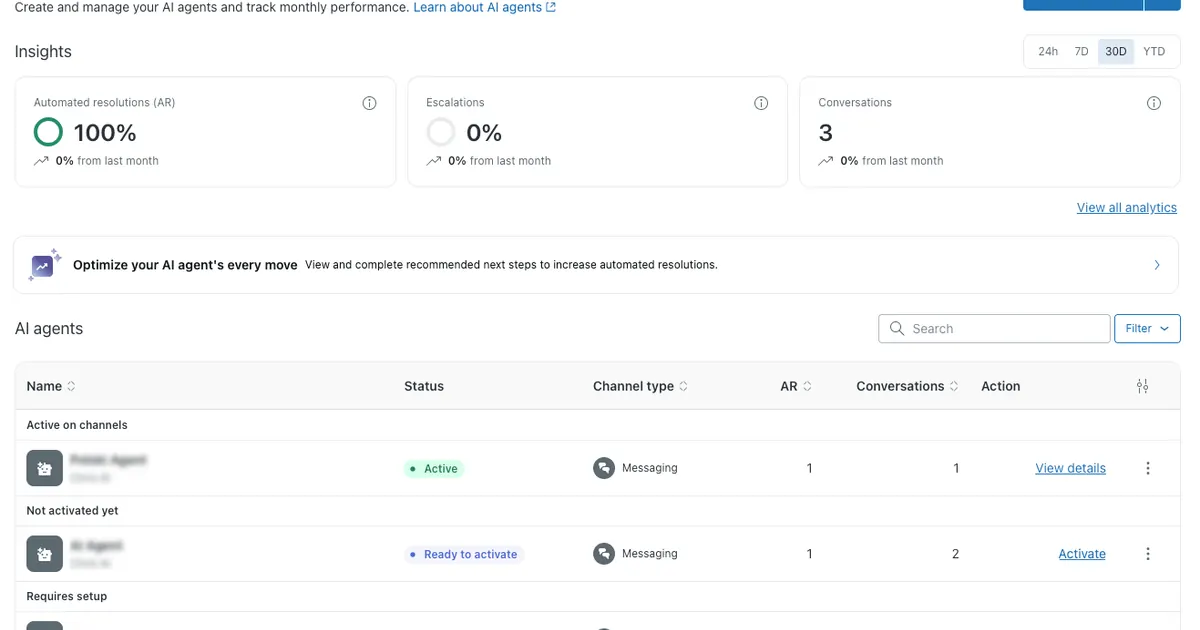
Zendesk is the most common destination for teams leaving Freshdesk for capability reasons. The platform is more mature and more configurable, with a broader marketplace of integrations. It is what support operations leaders at enterprise scale describe as a mature, well-understood platform for managing omnichannel ticket queues reliably, with strong reporting and established integrations.
The pricing structure mirrors Freshdesk’s add-on model. Support Team starts at $19 per agent for email-only ticketing. Suite Team, the real entry point for AI and multichannel, runs $55 per agent. Suite Professional is $115 per agent. Copilot adds $50 per agent on top, and AI resolutions are metered at a rate Zendesk does not publish. Teams leaving Freshdesk for capability reasons often find they have traded one pricing complexity for another. For enterprises with technical resources and dedicated admin capacity, Zendesk covers that job.
Pricing
Best for: Enterprise support operations that have outgrown Freshdesk and need deep omnichannel ticketing, routing, SLAs, and reporting at scale. Strong for organizations with technical resources to manage configuration.
5. Intercom (Fin): Best for AI-First SaaS Support
Intercom (Fin)
intercom.com | AI-first messaging platform with the Fin agent at $0.99 per resolution
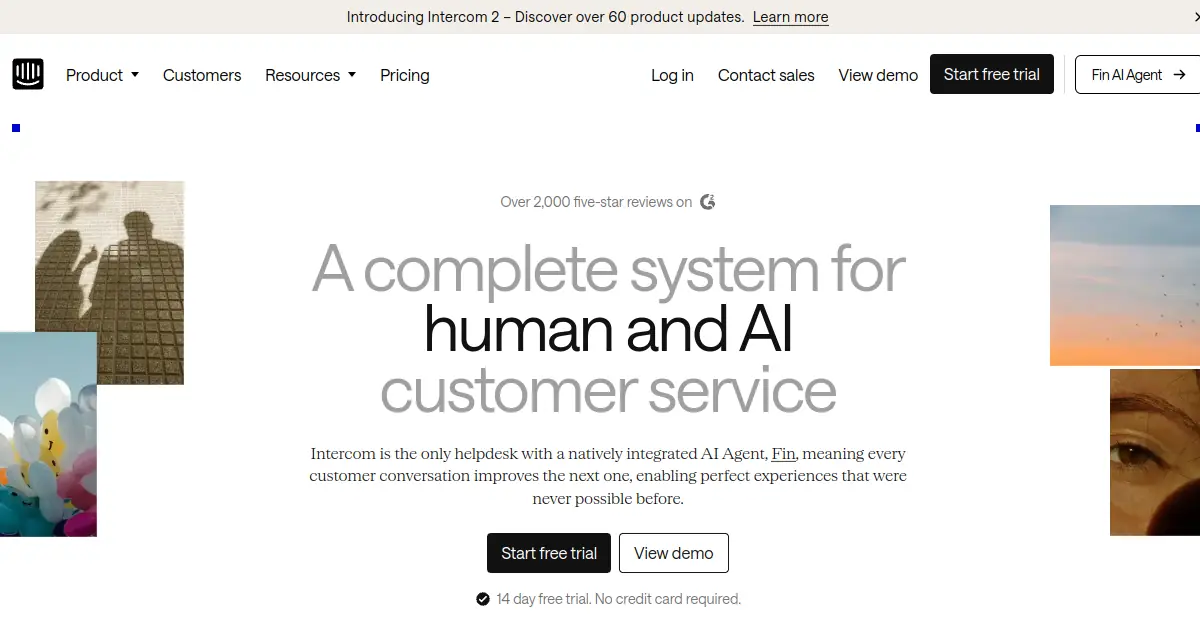
Intercom is the choice for SaaS companies where support lives inside the product experience. Fin, Intercom’s AI agent, handles a meaningful share of conversations in well-scoped deployments and averages a 66% resolution rate, with some customers reaching 80%+. The messenger-style interface is genuinely built for continuous, in-app conversations and proactive messaging.
Pricing is seat-based across three tiers: Essential at $29, Advanced at $85, and Expert at $132 per seat. On top of seats, Fin is billed at $0.99 per resolved conversation with a 50-resolution monthly minimum, and the Copilot add-on is another $35 per agent. Salesforce signed an agreement to acquire Fin for roughly $3.6 billion in June 2026, which is relevant context for long-term platform decisions. For teams whose support surface is primarily web chat and email, Intercom covers that job. For teams that need voice support or deep routing logic, the limitations show up as the channel footprint expands.
Pricing
Best for: SaaS companies under roughly 20 agents where support lives inside the product experience. Strong for teams that value a conversational interface and proactive messaging over traditional ticket queues.
6. HubSpot Service Hub: Best for CRM-Native Support
HubSpot Service Hub
hubspot.com | Customer service platform built into the HubSpot CRM with free ticketing tools
HubSpot Service Hub is the natural choice for teams already running sales and marketing on HubSpot. The argument is context: when a ticket opens, the agent sees the customer’s entire CRM record next to it, including deals, emails, page visits, and lifecycle stage. Info-Tech Research Group named it a Champion in its 2026 Data Quadrant with an 8.8 satisfaction score, recognized for its strong website analytics capabilities.
The free tools include ticketing, a shared inbox, and basic live chat for up to a couple of users. Starter costs $15 per seat per month and removes branding while adding simple automation. The jump to Professional at roughly $100 per seat is where the features most support teams actually want live: help desk workspace, customer portal, SLAs, and feedback surveys. For teams already on HubSpot, the integration case is real. For everyone else, the dependency is a consideration.
Pricing
Best for: Companies already running sales and marketing on HubSpot that want support to share the same customer record. Strong for organizations that value CRM context over standalone help desk depth.
7. Drag: Best Gmail-Native Shared Inbox
Drag
dragapp.com | Shared Gmail inbox with AI included and no per-resolution fees
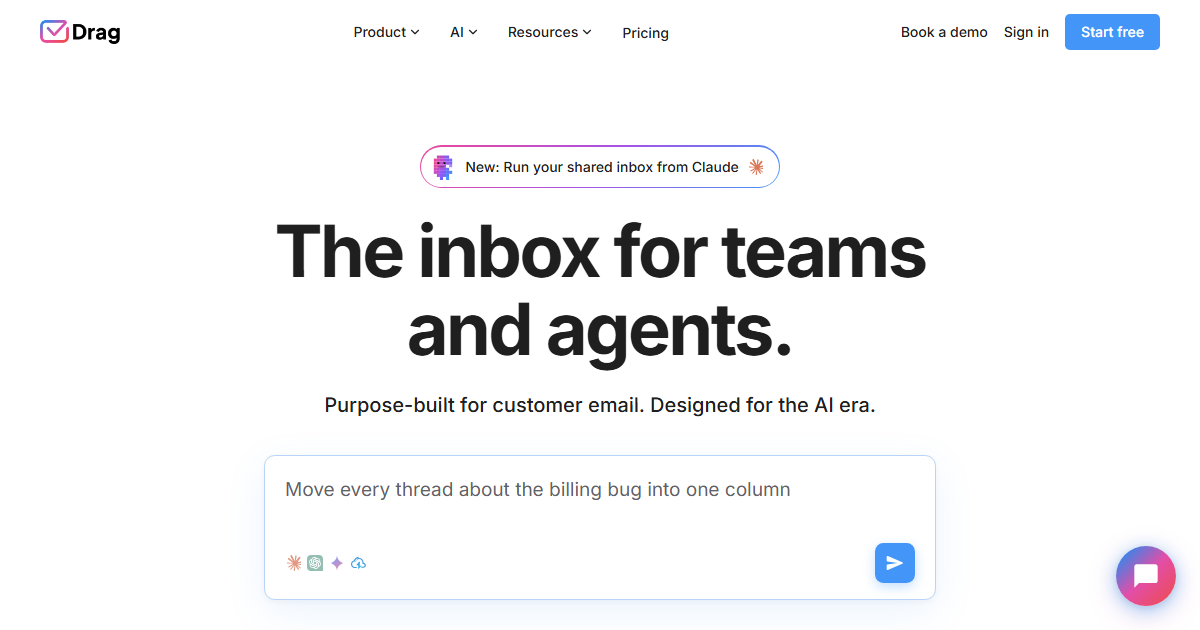
Drag is the answer for teams that want to skip the help desk overhead entirely. Support lives in Gmail, so there is no separate platform to configure or learn, and its AI works on your real inbox. Pricing is flat: Starter at $12, Plus at $18 with AI included, and Pro at $24 per seat. There is no AI add-on, no session fees, and no seat minimum.
For teams that find Freshdesk’s ticketing heavier than they need and want a shared inbox without the platform, Drag covers that job. The tradeoff is that it is a Gmail shared inbox, not a full help desk. Teams that need deep ticketing, SLAs, or omnichannel at scale will need to look at Zendesk or Zoho Desk instead.
Pricing
Best for: Gmail teams that want a shared inbox with AI included and no ticketing overhead. Strong for organizations that live in Gmail and do not need a full help desk platform.
8. Missive: Best for Multi-Provider Collaboration
Missive
missiveapp.com | Collaborative inbox with in-thread chat across Gmail, Outlook, iCloud, and IMAP
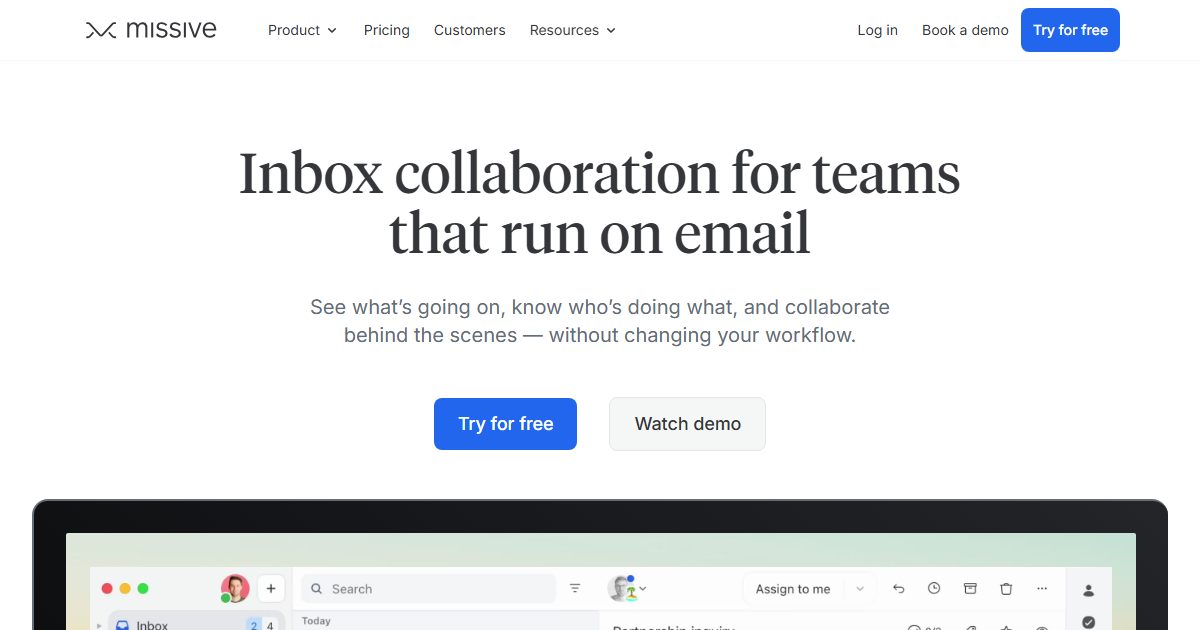
Missive is the collaborative inbox for teams that want real collaboration on email across more than one provider. The platform supports in-thread chat, shared drafts, and multi-assignee workflows across Gmail, Outlook, iCloud, and IMAP. Pricing runs Starter at $14, Productive at $24, and Business at $36 per seat.
For teams that find Freshdesk’s ticketing heavier than they need and want a more collaborative email workflow, Missive covers that job. The tradeoff is that it is collaboration-first and lighter on formal ticketing, SLAs, and reporting than a full help desk.
Pricing
Best for: Teams that want real collaboration on email across multiple providers without a full help desk. Strong for organizations that value in-thread chat and shared drafts over formal ticketing.
9. Hiver: Best for Gmail/Outlook Multichannel
Hiver
hiverhq.com | Shared inboxes, assignment, CSAT, and multichannel layered onto Gmail and Outlook
Hiver is the closest Gmail-native option for teams that want light help-desk features and multichannel support without a separate platform. The platform layers shared inboxes, assignment, CSAT, and multichannel onto Gmail and Outlook, with AI bundled from the Growth tier up.
Pricing runs Growth at $25, Pro at $55, and Elite at $85 per seat, with AI included from Growth and a 2-seat minimum. For Gmail or Outlook teams that want multichannel support without leaving their inbox, Hiver covers that job. The tradeoff is that costs climb at higher tiers, and there is no MCP server for integration depth.
Pricing
Best for: Gmail or Outlook teams that want light help-desk features and multichannel support without a separate platform. Strong for organizations that want to stay in their email client.
10. Gladly: Best for Retail Customer-Record Support
Gladly
gladly.ai | Customer-record platform built for retail and subscription brands
Gladly is built around a customer record, not a ticket. Every channel, including voice, chat, SMS, email, social, and WhatsApp, feeds into a single continuous timeline per customer. Because AI and team members work from the same data model, escalations happen with full context intact.
The pricing model is meaningfully different from Freshdesk’s: AI is included in the platform rather than metered by session, so costs do not spike when volume does. Ollie, a subscription pet food brand, saw a 15% reduction in their total contract within three months while improving contact efficiency by 30%. Rothy’s saw a 22% staffing cost reduction year over year and a 33% reduction in cost per order. For consumer-facing retail and subscription brands where context fragmentation across channels is the real problem, Gladly covers that job. The tradeoff is that it is purpose-built for retail and subscription brands, not B2B technical support, internal helpdesk, or ITSM.
Pricing
Best for: Consumer-facing retail and subscription brands where customer context across channels is the real problem. Strong for organizations that need a unified customer record rather than ticket-based support.
11. Front: Best for Polished Multichannel Inbox
Front
front.com | Polished multichannel inbox with mature routing and assignment
Front combines email, SMS, social, and chat with strong routing and assignment, a more collaborative feel than Freshdesk’s ticketing. Pricing runs Starter at $25 per seat (single channel, up to 10 seats) to Enterprise at $105 per seat, with Professional capped at 50 seats. AI add-ons stack: Copilot at $20 and Smart QA at $20.
For teams that want a polished multichannel inbox with mature routing and a more collaborative workflow than Freshdesk’s ticketing, Front covers that job. The tradeoff is that it runs $25 to $105 per seat, with Starter capped at 10 seats and AI add-ons that stack.
Pricing
Best for: Teams that want a polished multichannel inbox with strong routing and assignment, a more collaborative feel than Freshdesk’s ticketing. Strong for organizations that value collaboration over formal ticket queues.
How to Evaluate a Freshdesk Alternative
Start with the job, not the feature list: The right replacement depends on which specific thing Freshdesk was doing for your team. Answering that question first saves time on comparisons that were never relevant.
Freshdesk was used differently by different teams, which is part of why this list does not have one obvious answer. Small teams used Freshdesk for email ticketing and a shared inbox. Growing teams used it for omnichannel support across email, chat, and social. Teams with paid traffic used it for lead capture alongside support. None of those jobs requires the same replacement.
If your team needs email-first support with a polished interface and per-resolution AI pricing, Help Scout is the natural choice. For teams that need the closest like-for-like at a lower price, Zoho Desk covers that job. For teams that have outgrown Freshdesk and need enterprise depth, Zendesk is the path. For teams already on HubSpot, Service Hub is worth evaluating before paying for a new vendor.
If your use case is website lead capture and qualification without per-agent pricing or separate AI-session charges, a focused tool like Zappiq AI covers that job directly. Plans include a set monthly conversation allowance. The key difference from Freshdesk is that Zappiq starts with a working chatbot from day one without requiring a separate AI session pack budget before anything happens. For an SMB looking for a practical alternative, that simplicity matters a great deal.
For teams that want a Gmail-native shared inbox without the help desk overhead, Drag, Missive, and Hiver cover those jobs. For retail and subscription brands where context fragmentation is the real problem, Gladly is the natural fit. For teams that want a polished multichannel inbox with strong routing, Front is worth evaluating.
Migration Checklist: Moving Away from Freshdesk
A help desk migration is not complete when the new platform is live. The risky parts are the ticket workflows, routing rules, and knowledge base content that your team built around Freshdesk. Use this checklist before turning the old workflow off.
- Document your ticket fields and routing rules. Save the automation, SLA policies, and escalation paths before rebuilding them elsewhere.
- Export your knowledge base. Keep the articles, categories, and internal notes in a format your team can search after the migration.
- Export ticket history and contact data. Keep transcripts, contact details, and outcomes in a format your team can search after the migration.
- Choose the replacement by job. Use a lead-generation tool for website qualification, an email-first help desk for ticketing, or a customer-record platform for retail context.
- Run the new tool in parallel for at least two weeks. Compare answers, resolution rates, lead delivery, routing, and handoffs before removing Freshdesk.
- Cut over and monitor the first month. Review unanswered questions, duplicate tickets, attribution, response time, and every integration that receives a qualified conversation.
Keep the old workflow available during testing. Parallel testing gives your team a way to compare real conversations and catch missing routing or knowledge gaps before it affects customer experience.
Frequently Asked Questions
Freshdesk Growth starts at $19 per agent per month billed annually. Pro is $55 per agent per month and Enterprise is $89 per agent per month. Every plan includes Freddy AI Agent with the first 500 sessions free. Additional sessions cost $49 per 100. Freddy AI Copilot, the agent-assist layer, is a separate $29 per agent per month add-on. AI sessions expire monthly whether used or not.
The best alternative depends on the job. Zappiq AI is the most practical option for teams that primarily need website visitor qualification and lead capture without per-agent pricing or separate AI-session charges; each plan has a monthly conversation allowance. Help Scout is the strongest choice for small teams that want a polished, email-first help desk with per-resolution AI pricing. Zoho Desk is the closest like-for-like at a lower price point.
Zappiq AI offers a 14-day trial with 100 conversations. Zoho Desk has a free plan for up to 3 agents. HubSpot Service Hub has free ticketing tools. Spiceworks offers a free ad-supported help desk for up to five technicians. Freshdesk itself offers a free program for 1-2 agents for 6 months.
Freshdesk is the email-first ticketing product. Freshdesk Omni is a separate, higher-priced line that adds live chat, social, and messaging into a unified inbox. The $19 per agent entry price covers the email-first product only. Teams that need omnichannel support should evaluate the Omni pricing separately.
Teams look for Freshdesk alternatives when AI session metering makes costs unpredictable, when Copilot add-on pricing stacks on top of seat pricing, when the email-only entry tier does not cover their channel needs, or when they need deeper reporting or routing than Freshdesk provides.
For Gmail teams that want a shared inbox with AI included and no ticketing overhead, Drag covers that job at $18 per seat with AI included. Missive and Hiver are also Gmail-native alternatives, though Hiver costs climb at higher tiers and Missive is lighter on formal ticketing. For teams that need a full help desk, Help Scout or Zoho Desk are better fits.
The Bottom Line
Freshdesk built the budget help desk standard and earned its Champion placement in Info-Tech’s 2026 Data Quadrant. At $19 per agent, it offers real ticketing and a shared inbox without Zendesk pricing. For small teams that need formal ticketing without a steep learning curve, Freshdesk covers that job.
For growing teams, the problem is not the product; it is the AI cost model. Freddy AI sessions expire monthly whether used or not. Copilot is a separate $29 per agent add-on. The email-only entry tier does not cover live chat or social. And the product-line split between Freshdesk and Freshdesk Omni surprises teams that discover it after signing up.
The right replacement depends on which job Freshdesk was doing for your team. For teams that need email-first support with per-resolution AI pricing, Help Scout covers that job. For teams that need the closest like-for-like at a lower price, Zoho Desk is the natural fit. For teams that have outgrown Freshdesk and need enterprise depth, Zendesk is the path. For teams already on HubSpot, Service Hub is worth evaluating before paying for a new vendor.
For SMBs that primarily need website visitors qualified and delivered to a sales team, Zappiq AI covers that job without per-agent pricing, separate AI-session charges, or Copilot add-ons. Each plan has a defined conversation allowance. The chatbot reads your site and starts working on day one.
The free trial for Zappiq AI is at zappiqai.com. No credit card needed, no annual contract, no session pack to budget for before your first visitor conversation.
Try the Freshdesk alternative built for lead generation
Zappiq AI is live in under ten minutes. Trains on your website, qualifies every visitor automatically, and sends you the lead while it is still fresh. No per-agent pricing required.
Start Free TrialNo credit card | No developer needed | No branding on any plan
References
- DragApp. "9 Best Freshdesk Alternatives in 2026 (Free and Paid, AI Costed)." dragapp.com.
- DragApp. "8 Best Help Desk Software Tools in 2026 (With the Real Pricing Math)." dragapp.com.
- Freshworks. "Freshdesk Pricing & Plans." freshworks.com.
- Info-Tech Research Group. "HubSpot Service Hub, Freshdesk, HelpDesk, and Zoho Desk Named Customer Service Management Champions." infotech.com.
- G2. "What are the Best-Rated Help Desk Solutions for Enterprise Companies?" g2.com.
- Freshworks. "Precios y planes de Freshdesk Omni." freshworks.com.
- Freshworks. "12 Best help desk ticketing systems in 2026." freshworks.com.
- BunnyDesk. "Zendesk vs Freshdesk vs Intercom (2026): Which Fits Your Team?" bunnydesk.ai.
- Freshworks. "Freshdesk – Tarife und Preise." freshworks.com.
- HelpDesk. "Best Web-Based Help Desk Software 2026: Top 12 Free & Paid." helpdesk.com.
- G2. "Best Help Desk Software Reviews 2026." g2.com.
- Freshworks. "Freshservice – Preisübersicht 2026." freshworks.com.
- Gladly. "Best Freshdesk alternatives for scaling teams in 2026." gladly.ai.
- Agent Whispers. "Helpdesk Pricing Calculator (2026)." agentwhispers.com.
- Freshworks. "Preços e planos do Freshdesk." freshworks.com.

Ansar Ali
Ansar Ali founded Zappiq AI after watching too many small business owners get quoted enterprise pricing for a job that really came down to answering questions on a website and identifying who was serious. He spends most of his time on lead qualification logic, attribution tracking, and making sure a chatbot install never slows a page down.