
Quick Summary
Short answer: Capacity AI alternatives depend on the job you need to replace. For website lead capture, Zappiq AI is the practical choice; for AI support resolution, Intercom Fin is the strongest fit; for helpdesk-led automation, Freshdesk and Zendesk are easier alternatives to Capacity AI. This guide also covers Capacity chatbot alternatives for HubSpot, Tidio, and Crisp.
- Zappiq AI is the best Capacity alternative for teams that primarily need website visitor qualification and lead capture without enterprise pricing or partner-led implementation.
- Intercom Fin is the strongest alternative for teams that need AI support resolution at scale, with a per-resolution pricing model that scales with actual usage.
- Freshdesk is the best pick for teams that want helpdesk-led AI without the enterprise contract, with a free tier and paid plans that start under $20 per agent.
- Zendesk is the natural choice for teams already in the Zendesk ecosystem that want to add AI resolution without switching platforms.
- HubSpot Chatflows is worth evaluating if you are already using HubSpot and want conversations and contacts on the same record.
- Tidio and Crisp are options for small teams that want live chat with an AI layer at a price that does not require board approval.
What Capacity AI Is (And Why Teams Look for Alternatives)
Capacity has a legitimate product. The platform started as a knowledge base and helpdesk tool, expanded into AI agents for voice, chat, SMS, and email, and through a series of acquisitions now covers agent assist, conversation intelligence, automated QA, and outbound campaigns [3]. The deflection numbers are real. Capacity reports 50 to 90 percent deflection on chat and voice, with customers like DSW saving $1.5 million in annual support costs.
The problem is not the product. It is the packaging. Capacity is sold as an enterprise platform with an annual subscription, usage-based AI pricing, and partner-led implementation [1] [2]. The pricing page lists three tiers (Core, Pro, Enterprise) and then routes every single one to a sales contact form. No numbers, no self-serve trial, no way to estimate cost without a conversation [1].
The pricing reality: Published pricing analyses list Capacity's starting price at $25,000 per year for the Core tier, before any AI usage, before live chat, before Agent Assist, and before automated QA [2]. All three of those features sit in the Pro tier, which means the actual floor for a useful deployment is higher. Implementation is partner-led and priced separately [2].
Then there is the implementation timeline. Capacity's own documentation says chat and SMS go live in weeks when standard connectors are in place, while voice deployments take six to eight weeks. All deployments are supported by a partner-led implementation team [2]. G2 buyers report three months to implement and fourteen months to return on investment, which means the renewal decision arrives two months before the evidence does [2].
There is also the helpdesk integration catch. Capacity's directory lists 273 apps, but the capability tags reveal a tiered experience. Salesforce and Slack get full API, Indexed, and Interface tags. Zendesk and Freshdesk get API only, with no indexed knowledge and no embedded UI. Zoho Desk, Help Scout, and Kustomer are missing from the directory entirely [2]. If you are a Zendesk shop, what you are buying is a platform whose deepest integrations point somewhere else.
For enterprise contact centers with dedicated implementation partners and a budget that absorbs the setup cost, Capacity is a reasonable choice. For mid-market teams that want AI support without the enterprise overhead, the alternatives below are the actual starting point.
Capacity AI Alternatives by Use Case
People searching for alternatives to Capacity AI are not all looking for the same replacement. Teams that used Capacity primarily for website chat and lead capture are evaluating different options than teams that used it for voice deflection or agent assist. The important distinction is between replacing the enterprise contact center function and replacing the specific job Capacity was doing for your team.
For teams that need broad CX automation across voice, chat, email, and SMS with agent assist and QA, Capacity is one of the stronger options in the market. For teams that need website lead capture and qualification, that scope is overkill. The alternatives below are organized by the job they actually do, so you can compare Capacity AI competitors without confusing a helpdesk, chatbot, and contact-center platform.
If you are also comparing adjacent platforms, see our Intercom alternatives guide for support resolution, the Cognigy alternatives guide for enterprise conversational AI, and the Drift alternatives guide for website sales chat.
- Website lead capture and qualification: Zappiq AI for automatic training, visitor qualification, and lead delivery without an enterprise contract.
- AI support resolution at scale: Intercom Fin for per-resolution pricing and mature support workflows.
- Helpdesk-led AI without enterprise pricing: Freshdesk for a free tier and paid plans under $20 per agent.
- Zendesk ecosystem: Zendesk AI for teams already on the platform.
- CRM-native chat: HubSpot Chatflows for teams already using HubSpot.
- SMB and ecommerce chat: Tidio for accessible AI chat and automation.
- Flat-rate omnichannel inbox: Crisp for workspace pricing and bundled AI.
What Capacity Actually Costs vs the Alternatives
The tools below replace different pieces of what Capacity does. No single product does everything Capacity does for every team, because Capacity itself is being stretched across jobs that range from enterprise contact center automation to basic website chat. The honest answer is matching your actual use case to the tool built for it.
Quick Comparison: 7 Capacity Alternatives
| Tool | Starting Price | Best For | Setup Time | Free Option |
|---|---|---|---|---|
| Zappiq AI | Starter from $9/mo equivalent billed annually for 350 conversations | Website lead capture and qualification | Under 10 min | 14-day trial with 100 conversations |
| Intercom Fin | $39/agent/mo + $0.99/resolution | AI support resolution at scale | Hours to days | No |
| Freshdesk | Free, paid from ~$15/agent/mo | Helpdesk-led AI for SMB | 30 to 60 min | Yes |
| Zendesk | From ~$19/agent/mo | Teams already in Zendesk | Hours to days | Yes, trial only |
| HubSpot Chatflows | Free, paid from ~$20/seat | Teams already on HubSpot CRM | 30 to 60 min | Yes, unlimited seats |
| Tidio | $29/mo (Starter) | Small business and ecommerce chat | 30 to 60 min | Yes, 50 chats/mo |
| Crisp | $45/mo (Mini) | Flat-rate omnichannel inbox | 15 to 30 min | Yes, 2 seats |
Before picking a replacement: Decide which job Capacity was doing for your team. If it was capturing and qualifying website visitors, the tools at the top of this list were purpose-built for that. If it was contact center voice automation with agent assist and QA, you are looking at a different category with different requirements.
1. Zappiq AI: Best for Website Lead Capture Without Enterprise Overhead
Zappiq AI
zappiqai.com | AI lead generation chatbot for small and medium business websites, no implementation partner required
- Live setup in minutes
- Automatically trains on your website
- Qualifies leads and tracks ad source
- No engineering-led deployment
- No branding on any plan
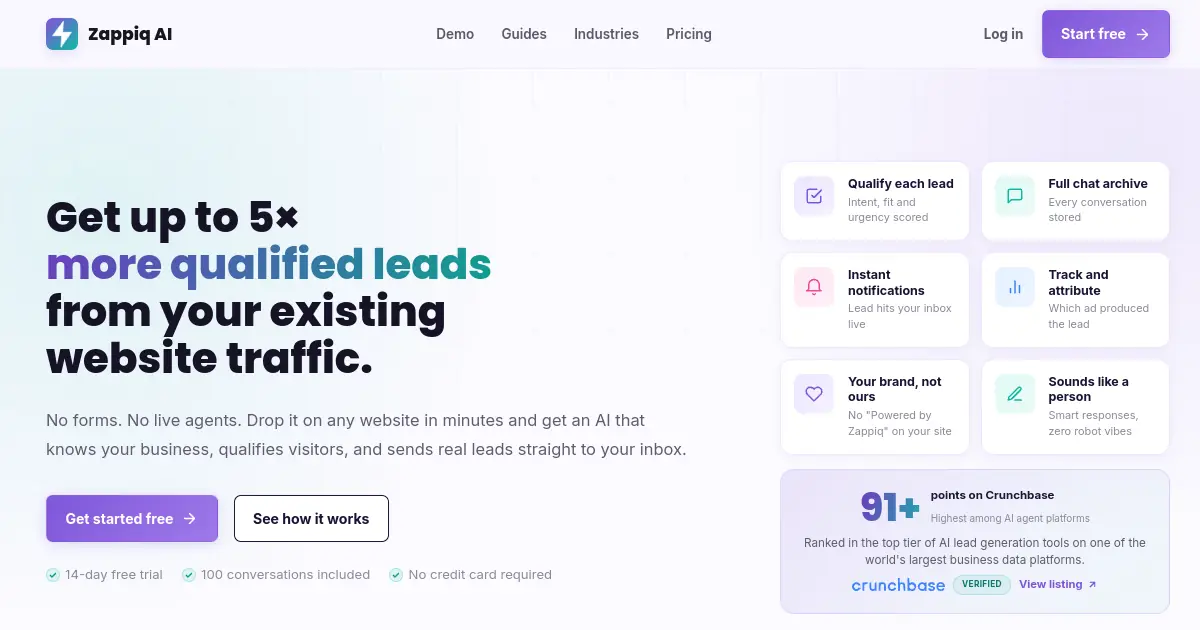
The comparison between Capacity and Zappiq AI is almost entirely about scope. Capacity is built to orchestrate support conversations across an enterprise contact center with voice, agent assist, conversation intelligence, and automated QA. Zappiq AI is built to do one thing well: turn website visitors into qualified leads and deliver them to your team while the conversation is still relevant.
For a mid-market team, that narrower scope is the point. You install a script, Zappiq reads your website, and there is a working chatbot answering visitor questions within minutes. There is no partner-led implementation, no six-week voice deployment, no knowledge base authoring project before the first conversation. The AI trains itself on your content and starts from there. If something needs adjustment, you adjust it. The base state is already functional.
Capacity's setup process requires configuration before the platform does anything useful. The knowledge base needs to be populated, the AI agents need to be configured, and the integrations need to be mapped. For enterprise contact centers with implementation partners, that is expected. For mid-market teams that just need a chatbot that answers questions and captures leads, that overhead is the reason they look elsewhere.
The moment a visitor qualifies, Zappiq emails you the full lead: contact details, intent summary, and the complete conversation transcript. That combination of speed and context matters because website visitors who are ready to buy do not stay ready for long. A lead that sits in a shared inbox for three hours is a different lead than one that arrives with context while the conversation is still fresh.
Pricing is structured around conversation volume rather than enterprise tiers or outcome counts. The same traffic spike that would trigger a conversation about contract expansion at an enterprise vendor does not change your Zappiq bill. For a mid-market team running paid traffic, that predictability matters more than it might seem until the first month you run a campaign and watch volume spike.
Integration options: Zappiq connects to Zapier, Make, and n8n, which means a qualified lead can be pushed into your CRM, a Slack channel, or any other tool your team already uses without touching a line of code. Ad attribution is tracked per lead, so you know which campaign or keyword brought a visitor before they became a contact.
Capacity vs Zappiq AI
| Decision point | Capacity | Zappiq AI |
|---|---|---|
| Primary fit | Enterprise support automation | Mid-market website lead capture |
| Setup | Partner-led, weeks to months | Under 10 minutes, self-serve |
| Lead handoff | Routing and escalation workflows | Email delivery with contact details, source data, summary, and transcript |
| Pricing approach | From $25,000/yr plus usage, quote only | 14-day trial with 100 conversations; Starter $9/mo annual equivalent (350), Growth $39/mo monthly or $27/mo annual equivalent (1,500), Pro $99/mo monthly or $69/mo annual equivalent (5,000) |
Pros
- No developer or implementation partner needed to go live
- Trains automatically on your website from day one
- Flat pricing, no enterprise contract or usage meter
- Lead qualification built in, not a separate configuration layer
- Instant email alerts with full conversation transcript
- Ad source and campaign attribution per lead
- No branding added to the widget on any plan
- Webhook routing to Zapier, Make, and n8n
Cons
- Not a full contact center platform or helpdesk system
- No voice channel or IVR support
- No agent assist, conversation intelligence, or automated QA
- Younger platform compared to enterprise vendors
Pricing
Best for: Mid-market teams that need website visitor qualification and lead capture without an enterprise contract, implementation partner, or months-long deployment. Service businesses, agencies, clinics, legal, real estate, home services, and anyone running paid traffic who wants to know exactly what a lead cost them.
2. Intercom Fin: Best for AI Support Resolution at Scale
Intercom Fin
intercom.com | Customer messaging platform with the Fin AI agent for automated resolution
Read the Intercom alternatives guide →
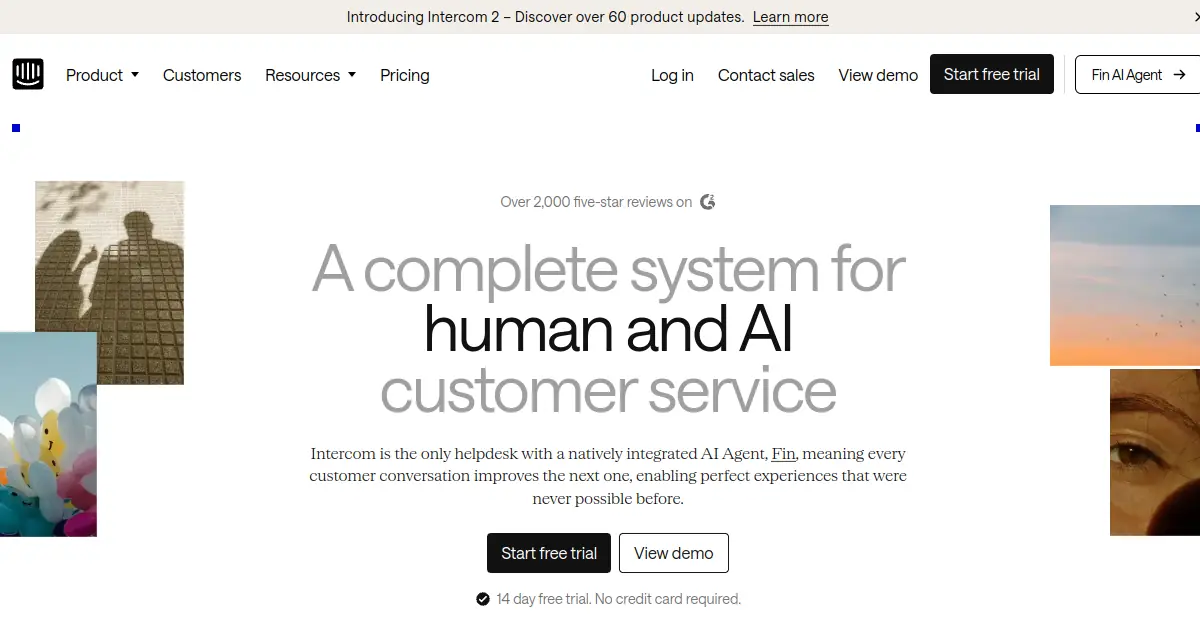
Intercom is the natural alternative for teams that used Capacity specifically for AI support resolution. The platform handles live chat, email, and ticketing through a single inbox, and Fin resolves conversations autonomously at scale. The difference from Capacity is the pricing model and the brand recognition.
Fin charges separately from the base seat plan. Resolutions are billed at $0.99 each, qualifications at $9.99. That per-outcome model is different from Capacity's platform fee plus usage structure, and it scales more predictably for teams with variable volume. For a support organization with real headcount and real AI conversation volume, the per-resolution model can be more economical than an annual platform fee that starts at $25,000.
The tradeoff is that Intercom is a support platform first. It is not built for website lead generation in the way Zappiq is, and it is not built for agent assist and conversation intelligence in the way Capacity is. What it does well is resolve customer conversations with AI, and it does that at scale with a mature platform.
There is also the acquisition context. Salesforce signed an agreement to acquire Fin (formerly Intercom) in mid-2026 for roughly $3.6 billion. The deal is subject to closing conditions, so the long-term roadmap and pricing philosophy may shift once the integration is complete. It is not a reason to avoid Intercom, but it is relevant context for teams making a multi-year platform decision.
Capacity vs Intercom Fin
| Decision point | Capacity | Intercom Fin |
|---|---|---|
| Primary fit | Unified CX automation platform | AI support resolution at scale |
| AI workflow | Deflection, agent assist, auto QA | Fin AI agent grounded in support content |
| Cost model | Platform fee plus usage, from $25,000/yr | Seat pricing plus per-resolution charges |
| Choose Intercom when | You need agent assist and conversation intelligence | You need AI resolution with predictable per-outcome pricing |
Pros
- Mature platform with live chat, email, and ticketing unified
- Fin AI agent handles real resolution at scale
- Per-resolution pricing scales with actual usage
- Deep integration ecosystem for support operations
- Well-documented knowledge base and onboarding support
Cons
- Per-outcome AI billing adds unpredictability at volume
- Seat pricing starts at $39/agent/mo before AI is added
- Salesforce acquisition pending, long-term direction uncertain
- Not built for website lead generation or agent assist
Pricing
Best for: Support organizations with real headcount and AI conversation volume that want the most complete customer messaging platform available and can manage a per-outcome AI billing model alongside a seat plan.
Need website leads without a $25,000 annual contract?
Zappiq AI trains on your site in minutes, qualifies every visitor automatically, and sends you the lead before the conversation goes cold. No demo required. No implementation partner.
Start Free TrialNo credit card | No developer needed | No branding on any plan
freshdesk">3. Freshdesk: Best for Helpdesk-Led AI Without Enterprise Pricing
Freshdesk
freshworks.com | Helpdesk platform with Freddy AI for ticket resolution and agent assistance
Read the Freshdesk alternatives guide →
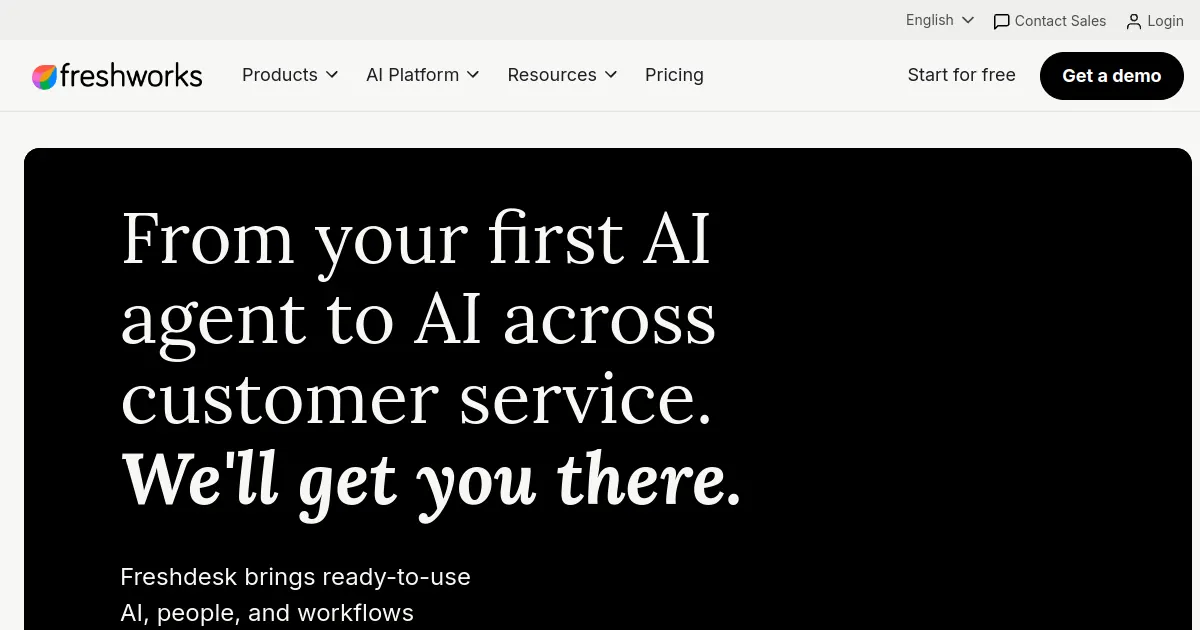
Freshdesk is what Capacity looks like when the pricing is public and the setup does not require a partner. The platform is a helpdesk first, with ticketing, knowledge base, and automation tools, and Freddy AI adds resolution and agent assistance on top. The free tier covers unlimited agents for basic ticketing, and paid plans start under $20 per agent per month.
For a mid-market team that used Capacity for support ticket resolution, Freshdesk covers that job at a fraction of the cost and without the implementation project. The AI is less sophisticated than Capacity's agentic capabilities, and there is no conversation intelligence or automated QA. But for teams that need a helpdesk with AI assistance rather than a full CX automation platform, Freshdesk is the more practical starting point.
The tradeoff is depth. Freddy AI is competent at ticket resolution and agent assistance, but it does not push the boundaries of autonomous resolution the way Capacity, Sierra, or Decagon do. If your use case requires advanced agentic AI, Freshdesk may be too thin. If your use case is a helpdesk that resolves common questions and assists agents, Freshdesk covers it well.
Capacity vs Freshdesk
| Decision point | Capacity | Freshdesk |
|---|---|---|
| Primary fit | Unified CX automation platform | Helpdesk with AI assistance |
| Entry price | From $25,000/yr, quote only | Free tier, paid from ~$15/agent/mo |
| Setup | Partner-led, weeks to months | Self-serve, 30 to 60 minutes |
| AI depth | Agentic AI with deflection and QA | Freddy AI for resolution and assistance |
Pros
- Free tier available for small teams
- Paid plans under $20 per agent per month
- Self-serve setup without implementation partner
- Helpdesk, knowledge base, and automation included
- Freddy AI handles resolution and agent assistance
Cons
- AI depth less advanced than Capacity
- No conversation intelligence or automated QA
- No voice channel or IVR support
- Not built for website lead generation
Pricing
Best for: Mid-market teams that need a helpdesk with AI assistance without the enterprise contract, partner-led implementation, or six-figure annual commitment. Teams that want to start free and scale as volume grows.
zendesk">4. Zendesk: Best for Teams Already in the Zendesk Ecosystem
Zendesk
zendesk.com | Customer service platform with AI agents and automated resolution
Read the Zendesk alternatives guide →
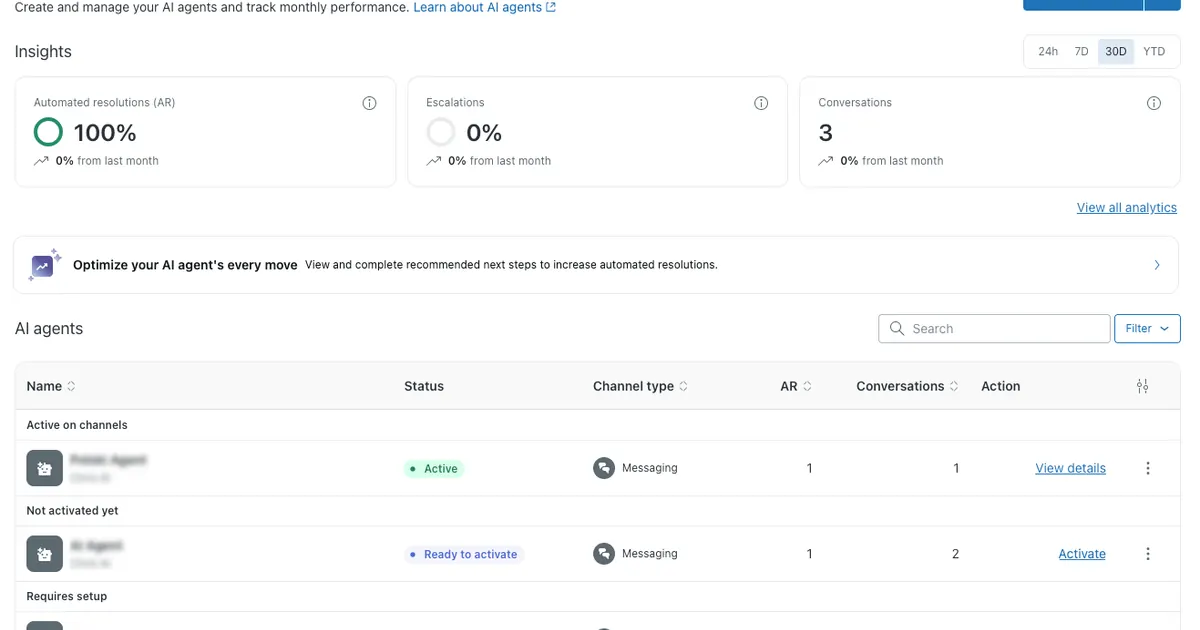
Zendesk is the natural choice for teams that already use the platform for support. The AI agents add resolution and automation on top of the existing ticketing workflow, and the integration with existing Zendesk data means no migration project. Pricing starts around $19 per agent per month for the entry tier, with AI features available as add-ons or on higher plans.
For teams that used Capacity for support ticket resolution and are already on Zendesk, adding Zendesk AI is the path of least resistance. There is no new platform to learn, no data migration, and no new vendor to evaluate. The AI capabilities are less advanced than Capacity's agentic AI, but the integration with existing workflows is immediate.
The catch is that Zendesk's AI pricing can add up quickly. AI features are often priced as separate add-ons or bundled into higher tiers, which means the entry price is not the full cost. For teams that need AI resolution at scale, Intercom Fin's per-resolution model may be more predictable.
5. HubSpot Chatflows: Best for Teams Already on HubSpot
HubSpot Chatflows
hubspot.com | Live chat and chatbot builder built directly into HubSpot's free CRM
Read the HubSpot chatbot alternatives guide →
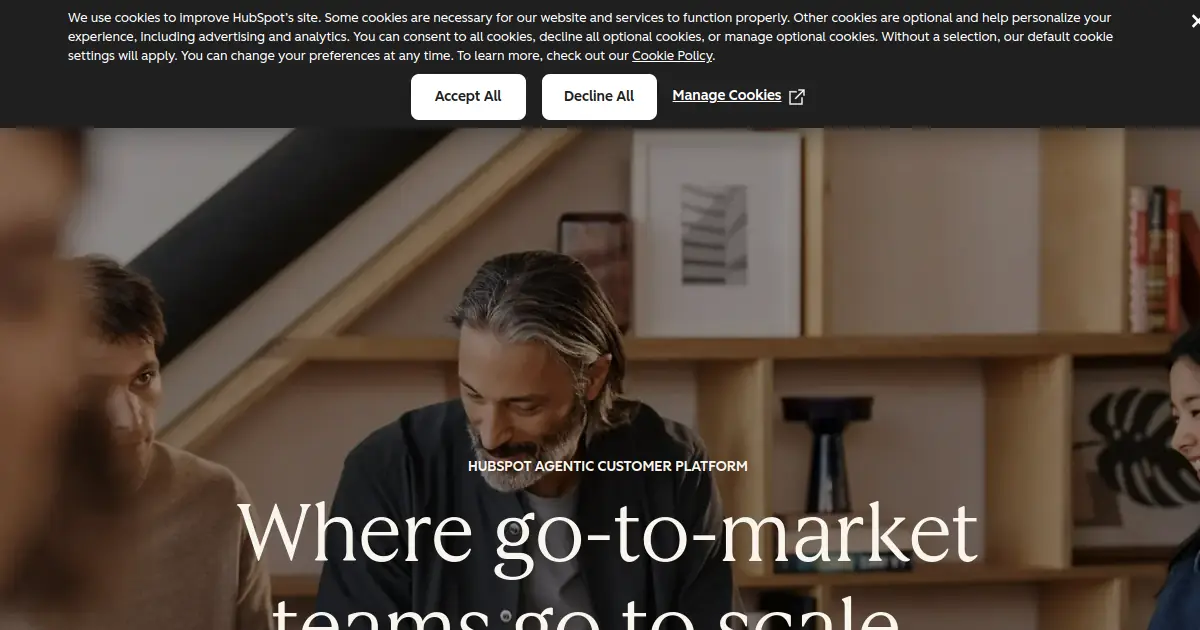
HubSpot Chatflows is not trying to out-feature Capacity. It is trying to make website conversations part of the same CRM record where your contacts, deals, and email history already live. For a team that already uses HubSpot for marketing or sales, that integration has genuine value that no dedicated support platform can match.
The free tier is meaningfully usable. You get the chat widget, a basic chatbot builder, live chat with notifications, and connection to HubSpot's free CRM with no seat limit. That covers the most common use case for most small businesses: greet visitors, answer basic questions, and capture contact details that land on a contact record your sales team can act on.
The tradeoff is depth. HubSpot Chatflows does not have the agentic AI, conversation intelligence, or automated QA that Capacity offers. It is a chat and lead capture tool, not a support automation platform. For teams that need both, a dedicated support platform may be necessary. For teams that just need conversations and contacts in the same place, HubSpot covers the job.
tidio">6. Tidio: Best for Small Business and Ecommerce Chat
Tidio
tidio.com | Live chat and AI chatbot platform built for small businesses, Shopify stores, and ecommerce sites
Read the Tidio alternatives guide →
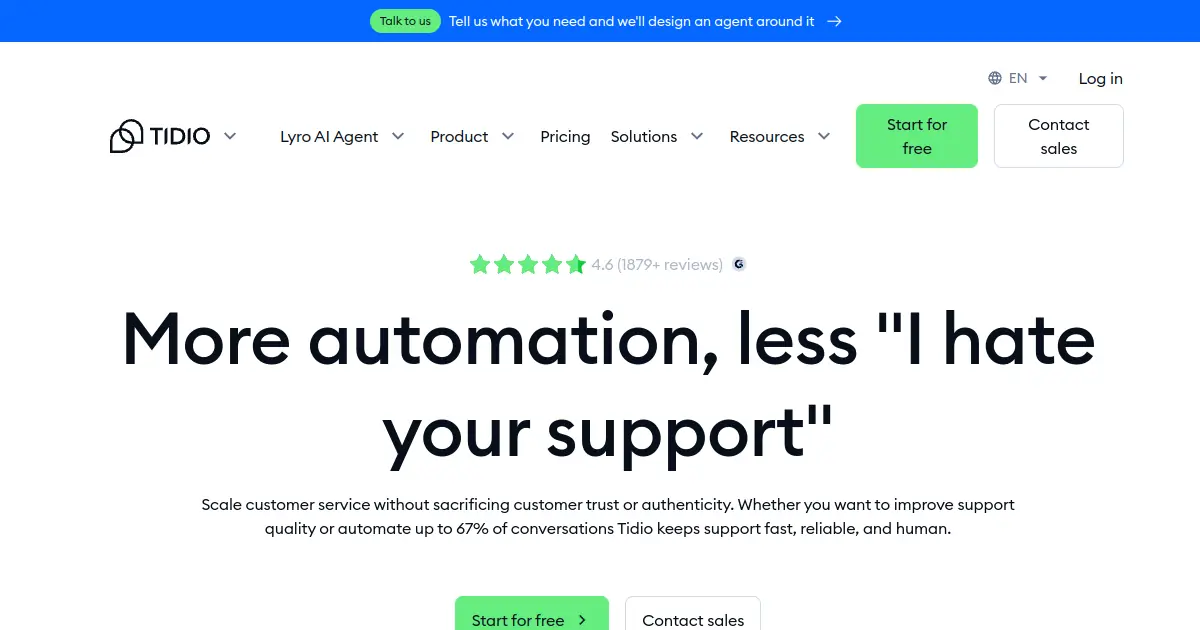
Tidio is what Capacity would have looked like if it had been designed for a business with ten employees instead of a contact center with a hundred agents. The core job is similar: greet visitors, answer questions, qualify leads, hand the good ones to a human. The execution is designed for someone who does not have an implementation partner or a six-figure budget.
The free plan covers fifty conversations a month with three operator seats. Starter runs around twenty-nine dollars a month and opens up more conversations and a better visual flow builder. Growth at about fifty-nine dollars adds more seats and automation. Lyro, Tidio's AI chatbot, is sold as a separate add-on starting around thirty to thirty-nine dollars a month.
The Shopify integration is native and well built. Order lookups, product recommendations, and cart-related flows connect directly to store data rather than requiring custom logic. For a store owner that was using Capacity as a basic chat tool and found it overbuilt and overpriced for that job, Tidio covers the same ground at a fraction of the cost.
crisp">7. Crisp: Best Flat-Rate Omnichannel Inbox
Crisp
crisp.chat | Shared inbox, live chat, and AI chatbot billed per workspace rather than per agent
Read the Crisp alternatives guide →
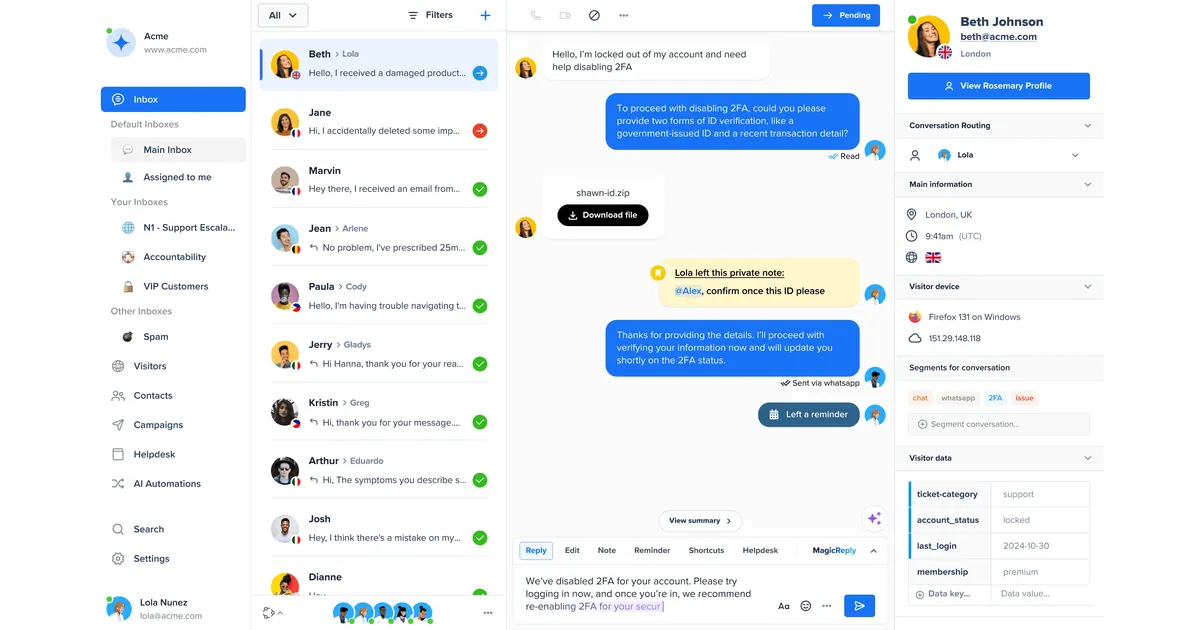
Crisp sits at an interesting spot in this comparison. It is not trying to replace Capacity's enterprise CX automation features. What it does well is give a small to mid-size team everything it needs to handle website conversations without a billing structure that grows with headcount. The workspace pricing model is the headline: adding a fifth or sixth teammate to your plan costs nothing extra below the Plus tier's per-seat cap.
The plan lineup starts with a genuinely useful free tier covering two seats and unlimited live chat. Mini runs forty-five dollars a month, Essentials ninety-five dollars a month, and Plus two hundred and ninety-five dollars a month for teams that need unlimited AI automation. Every paid tier bundles AI credits for Hugo, Crisp's chatbot, rather than charging a separate subscription for AI the way most tools in this category do.
Hugo is capable within its credit limits but not unlimited outside the top plan. Essentials caps AI actions at roughly fifty per day, which works fine for a modest site and runs short quickly for anything handling real volume. Moving past that cap means stepping up to Plus, a meaningful price increase, though still well under what Capacity's entry tier costs even before the AI layer is factored in.
How to Evaluate a Capacity Alternative
Start with the job, not the feature list: The right replacement depends on which specific thing Capacity was doing for your team. Answering that question first saves time on comparisons that were never relevant.
Capacity was used differently by different teams, which is part of why this list does not have one obvious answer. Enterprise contact centers used Capacity for voice deflection and agent assist. Support teams used it for ticket resolution and knowledge management. Marketing teams used it for website chat and lead qualification. None of those jobs requires the same replacement.
If your team needs to modernize an existing contact center with agent assist, conversation intelligence, and automated QA, Capacity remains one of the stronger options in the market. The alternatives on this list that focus on support, like Intercom Fin or Freshdesk, are worth evaluating if that is the primary requirement but the enterprise overhead is not.
If your use case is website lead capture and qualification without the enterprise complexity, a focused tool like Zappiq AI covers that job directly. The key difference from Capacity is that Zappiq starts with a working chatbot from day one without requiring a partner-led implementation before anything happens. For a mid-market team looking for a practical alternative, that simplicity matters a great deal.
For teams already running HubSpot or Zendesk, adding the native AI capabilities to your existing platform is worth evaluating before paying for a new vendor. The integration with existing data is genuine, and the cost is often lower than a new platform subscription.
Migration Checklist: Moving Away from Capacity
A support automation migration is not complete when the new platform is live. The risky parts are the knowledge base, routing logic, and integrations that your team built around Capacity. Use this checklist before turning the old workflow off.
- Document your knowledge base structure. Save the categories, articles, and any custom knowledge sources that power your AI responses.
- Record routing and escalation rules. Note ownership rules, SLA triggers, escalation paths, and any workflow automations that connect to the platform.
- Export conversation data. Keep transcripts, contact details, and outcomes in a format your team can search after the migration.
- Choose the replacement by job. Use a lead-generation tool for website qualification, a support platform for ticket resolution, or a helpdesk for ticketing and AI assistance.
- Run the new tool in parallel for at least two weeks. Compare answers, resolution rates, lead delivery, routing, and handoffs before removing Capacity.
- Cut over and monitor the first month. Review unanswered questions, duplicate conversations, attribution, response time, and every integration that receives a qualified conversation.
Keep the old workflow available during testing. Parallel testing gives your team a way to compare real conversations and catch missing routing or knowledge gaps before it affects customer experience.
Frequently Asked Questions
Capacity does not publish a simple self-serve price. Published pricing analyses list a starting point of $25,000 per year for the Core tier, before AI usage, live chat, Agent Assist, or automated QA is added. Implementation is partner-led and priced separately.
The best alternative depends on the job. Zappiq AI is the most practical option for teams that primarily need website visitor qualification and lead capture without enterprise pricing or partner-led implementation. Intercom Fin is the strongest choice for teams that need AI support resolution at scale. Freshdesk and Zendesk are options for teams that want helpdesk-led AI without the enterprise contract.
Zappiq AI offers a 14-day trial with 100 conversations. Freshdesk has a free tier for small teams. HubSpot Chatflows is free with no seat limit. Most enterprise-focused alternatives do not offer free trials because they require sales engagement and implementation planning.
Capacity is a unified CX automation platform focused on deflection, agent assist, and conversation intelligence. Intercom is a customer messaging platform with the Fin AI agent for resolution. Both target enterprise support teams, though Intercom has broader brand recognition and a more established ecosystem.
Capacity does not present a typical credit-card self-serve trial on its pricing page. A pilot may be available through a sales conversation, but teams should confirm the scope, implementation support, data access, and cost before treating it as a free trial.
Capacity's integrations directory lists Zendesk and Freshdesk, but with API-only capability tags. That means no indexed knowledge and no embedded UI. Salesforce and Slack get the full experience with API, Indexed, and Interface tags. Zoho Desk, Help Scout, and Kustomer are missing from the directory entirely.
The best Capacity chatbot alternative depends on the conversation goal. Zappiq AI fits website lead capture, HubSpot Chatflows fits CRM-native conversations, Tidio fits small-business and ecommerce chat, and Crisp fits teams that want a shared inbox with workspace pricing. Intercom Fin and Freshdesk are stronger choices when the chatbot must resolve support tickets.
For a small business, Zappiq AI is the best Capacity AI competitor when the goal is qualifying website visitors and delivering leads. Tidio, Crisp, or HubSpot Chatflows may be a better fit when the priority is live chat, ecommerce support, or keeping conversations inside an existing CRM.
The Bottom Line
Capacity built a capable support automation platform and earned real customers through legitimate deflection results. The problem is not the product. It is the packaging. Capacity is sold as an enterprise platform with a $25,000 annual starting price, opaque pricing, partner-led implementation, and a three-month deployment timeline. For enterprise contact centers with the budget and the partners, that is a reasonable tradeoff. For mid-market teams without either, it is the reason they look elsewhere.
The right replacement depends on which job Capacity was doing for your team. For teams that need AI resolution at scale, Intercom Fin offers a more predictable pricing model. For teams that need a helpdesk with AI assistance, Freshdesk covers that job at a fraction of the cost. For teams already on HubSpot or Zendesk, adding the native AI capabilities is worth evaluating before paying for a new vendor.
For mid-market teams that primarily need website visitors qualified and delivered to a sales team, Zappiq AI covers that job without the enterprise contract, the implementation partner, or the months-long deployment. The chatbot reads your site and starts working on day one.
The free trial for Zappiq AI is at zappiqai.com. No credit card needed, no annual contract, no implementation project before your first visitor conversation.
Try the Capacity alternative built for lead generation
Zappiq AI is live in under ten minutes. Trains on your website, qualifies every visitor automatically, and sends you the lead while it is still fresh. No six-figure commitment required.
Start Free TrialNo credit card | No developer needed | No branding on any plan
References
- Capacity. "Pricing." capacity.com.
- eesel AI. "Capacity pricing 2026: every tier, every meter, and the real floor." eesel.ai.
- The AI Agent Index. "Capacity Review (2026): AI Support Automation Platform." theaiagentindex.com.
- Gartner. "Top Capacity Competitors & Alternatives 2026." gartner.com.
- Isara. "Isara vs Tethr (now Capacity): pricing and comparison." isara.ai.
- xpay. "Capacity Pricing 2026: Real Costs, Plans & Alternatives." xpay.sh.

Ansar Ali
Ansar Ali founded Zappiq AI after watching too many small business owners get quoted enterprise pricing for a job that really came down to answering questions on a website and identifying who was serious. He spends most of his time on lead qualification logic, attribution tracking, and making sure a chatbot install never slows a page down.