
Quick Summary
- Zappiq AI is the best Freshchat alternative for small businesses that want to turn more website visitors into qualified leads. Freshchat is built for managing support conversations. Zappiq is built for identifying and capturing prospective customers before they leave your site, with AI included in every plan and no per-agent pricing.
- Tidio is the strongest Freshchat alternative for small and mid-size ecommerce businesses that want AI chatbots, live chat, and multi-channel messaging at a price that scales sensibly with team size, with Shopify native integration that Freshchat cannot match.
- Intercom, now rebranding as Fin, is the right call for SaaS and digital product companies that need sophisticated in-app messaging, proactive engagement campaigns, and an AI agent that charges per successful resolution rather than a flat session fee.
- Help Scout is the best pick for service businesses and small support teams that want a clean, email-first shared inbox without per-seat pricing that punishes team growth, with AI tools included in every plan at no extra cost.
- Crisp is the best alternative for startups and lean teams that want modern multi-channel chat, email campaigns, a knowledge base, and a chatbot builder in one tool, with a free plan that is generous enough to run a real business on.
- LiveChat is the right choice for teams that want the largest third-party integration catalog in the live chat category, 200 plus connections, paired with dependable notification reliability and strong analytics across all plan levels.
- Zendesk is the strongest option for enterprise support teams handling high ticket volumes across multiple channels that need deep reporting, SLA management, and compliance infrastructure that Freshchat does not offer on lower tiers.
Where Freshchat Works and Where It Falls Short
Freshchat's position in the market is straightforward to understand. It is Freshworks' customer messaging product, designed to bring live chat, AI bots, and multi-channel conversation management into a single inbox. For teams already running Freshdesk for ticketing or Freshsales for CRM, Freshchat plugs into that ecosystem with native context sharing that third-party tools cannot replicate as smoothly. The growth and pro tiers hit a reasonable price point for teams that need something beyond basic live chat but are not ready for enterprise-scale pricing. Those are real advantages.
The issues that drive teams to look elsewhere fall into a few categories. The most consistent one across review platforms is how AI features are packaged. Freshchat's Freddy AI Agent, the product that handles automated customer conversations, is billed as bot sessions on top of any paid plan rather than included in the base price. Freddy Copilot, the assistant for human agents, is similarly an add-on. When teams compare Freshchat's headline pricing to what they actually spend once Freddy is included, the number often looks different from what they expected when they signed up.
The real cost issue: Freshdesk's Freddy AI Agent sessions cost $49 per 100 sessions once the included allowance runs out, and those sessions expire each billing cycle with no rollover. For a chatbot handling a moderate number of customer conversations, that add-on cost can quickly equal or exceed the base plan price.
The March 2026 outage is a more recent concern. Multiple customer accounts on Capterra describe losing access to live chat, WhatsApp, and social channels for multiple consecutive days during an extended service disruption in early 2026. A single incident is not a pattern, and Freshchat's track record before 2026 was generally solid, but for any team where the chat widget is the primary way customers make contact, that kind of downtime is a legitimate reason to reassess the platform's reliability against alternatives.
The reporting situation is the third consistent theme. Freshchat's analytics are functional at the Growth and Pro tiers but lack the depth and granularity that teams making operational decisions tend to need. Custom reporting, advanced conversation analytics, and meaningful CSAT tracking show up fully only at the Enterprise level. Teams that need those insights earlier in their growth find themselves facing a plan upgrade that pushes the monthly cost significantly higher than where they started.
What Freshchat Actually Costs Once You Account for AI and Features
None of this means Freshchat is the wrong tool for every team. Inside the Freshworks ecosystem, the integration story is genuinely strong. The Growth plan at $15 per agent per month is a fair entry point for small teams that do not need AI bot sessions or deep analytics. The unified inbox across web, mobile, and messaging channels works reliably for teams that handle manageable conversation volumes. The alternatives below matter for the teams whose needs have grown past what Freshchat's current structure efficiently supports.
Quick Comparison: 7 Freshchat Alternatives
| Tool | Starting Price | Free Plan | AI Included | Best For |
|---|---|---|---|---|
| Zappiq AI | 14-day trial with 100 conversations; Starter from $9/mo equivalent annually (350); Growth $39/mo monthly or $27/mo equivalent annually (1,500); Pro $99/mo monthly or $69/mo equivalent annually (5,000) | 14-day trial; 100 conversations | Yes, every plan | Lead qualification, SMB websites |
| Tidio | Free, paid from $29/mo | Yes | Lyro AI from $39/mo add-on | Ecommerce, Shopify stores |
| Intercom (Fin) | $29/seat/mo | No | $0.99/resolved conversation | SaaS, in-app messaging |
| Help Scout | Free up to 50 contacts/mo | Yes | Yes, all plans included | Email-first support, small teams |
| Crisp | Free, paid from $45/mo | Yes | AI agent on paid plans | Startups, multi-channel chat |
| LiveChat | $20/agent/mo | 14-day trial | Via ChatBot add-on | Teams needing 200+ integrations |
| Zendesk | $19/agent/mo | 14-day trial | AI agent on higher plans | Enterprise ticket volume and SLAs |
Before choosing: Freshchat is primarily a customer support and messaging tool. If your main goal is capturing and qualifying leads from website traffic rather than managing inbound support conversations, the tools at the top of this list serve that job more directly than any of the traditional live chat platforms.
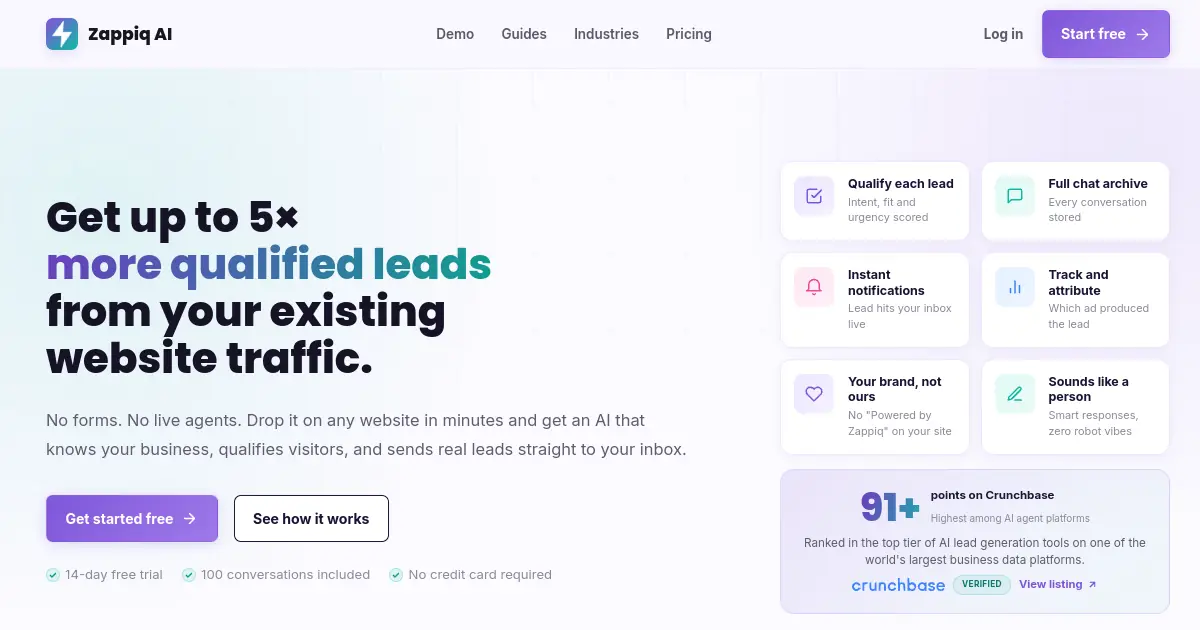
1. Zappiq AI: Best for Turning Website Traffic Into Qualified Leads
Zappiq AI
zappiqai.com | AI lead generation chatbot for small and medium business websites, qualifies visitors automatically and delivers structured leads by email
Most of the tools on this list, including Freshchat itself, are built around a core assumption: customers reach out, agents respond. The tool's job is to make that exchange fast, organized, and measurable. That is a useful problem to solve for businesses with active inbound support volume, but it is a different problem from the one most small service businesses actually face on their website.
A dental clinic, a real estate office, a law firm, or a home services business does not primarily need a more organized way to handle support tickets. It needs a more effective way to capture the people who visit its website, show genuine interest, and then leave without making contact. That is a lead generation problem, not a customer service problem, and it calls for a different kind of tool.
Zappiq AI is built specifically for that job. The moment you sign up, it reads your website and builds its own understanding of your services, your pricing, your location, and the kinds of questions your visitors typically ask. No training data to write, no flows to configure. From the first conversation, it handles real visitor questions accurately and moves visitors who appear to be genuine prospects through a short qualification sequence before collecting their contact details. The lead that arrives in your inbox includes the visitor's answers, their contact information, and the ad source or keyword that brought them to your site.
The contrast with Freshchat matters most on two specific points. First, AI is included in every Zappiq plan. There is no Freddy equivalent billed as a separate session add-on. The qualification logic that routes conversations by intent, asks follow-up questions, and decides when to collect contact details is part of the product at every tier. Second, Zappiq pricing is based on monthly conversation allowances rather than per-agent seats or a separate AI-session charge. Your subscription price is predictable within the selected tier; if traffic grows beyond its allowance, choose the tier that fits your volume.
Integrations: Zappiq connects to Zapier, Make, and n8n on Pro accounts, meaning a qualified lead flows automatically into your CRM, a Google Sheet, a Slack channel, or an email sequence without any manual follow-up process.
Pros
- Reads your website automatically, nothing to configure or train
- Qualifies visitors by intent before requesting contact details
- AI included in every plan, no session add-on or overage fees
- Flat pricing by conversation volume, no per-agent seat charges
- Lead email includes transcript, contact details, and ad attribution
- No branding on the widget at any plan level
- Works on any website platform with a single script tag
- Free trial with no credit card required
Cons
- Not a customer support inbox or shared ticketing tool
- No live agent handoff or human chat capability
- Not suitable for teams managing high inbound support volume
- Smaller integration catalog than established platforms
Why lead-focused teams choose Zappiq AI
Ad tracking: Connect each qualified enquiry to the campaign, keyword, or channel that produced it, so paid traffic can be measured against real leads.
Email lead delivery: Every qualified lead arrives in your inbox with contact details, source data, and the conversation context needed for follow-up.
No branding: Keep the widget focused on your business without a third-party badge competing with your brand.
Automatic website training: Zappiq reads your website and starts answering from its content without a manual flow-building project.
Natural qualification: It screens for intent before asking for contact information, keeping low-quality chats out of your sales queue.
Simple installation: Add one script to your existing website instead of configuring a separate AI layer or support inbox.
Pricing
Pricing: The 14-day trial includes 100 conversations. Starter is $9/month equivalent when billed annually for 350 conversations; Growth is $39/month or $27/month equivalent annually for 1,500; and Pro is $99/month or $69/month equivalent annually for 5,000. The chatbot trains on your website automatically, with no per-lead fees or separate AI-session charges.
Best for: Service businesses, clinics, agencies, real estate professionals, and any SMB that runs paid or organic traffic to a website and wants to capture more of that traffic as qualified leads rather than managing a traditional support inbox.
tidio">2. Tidio: Best for Ecommerce Teams Wanting AI and Live Chat Together
Tidio
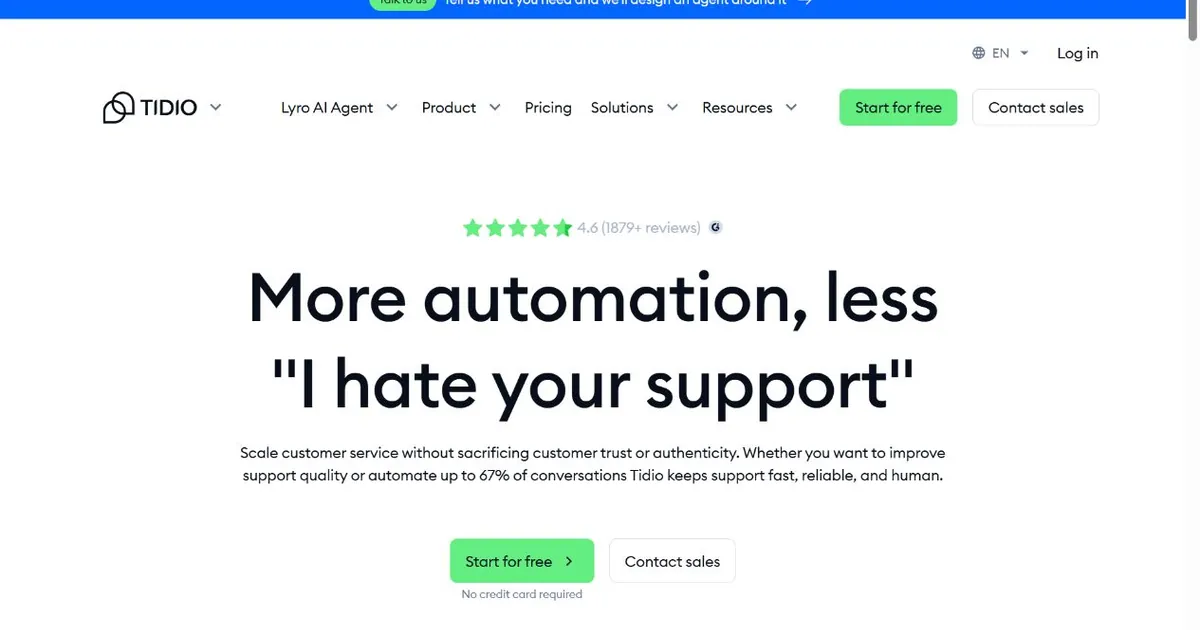
tidio.com | AI customer service platform combining live chat, Lyro AI agent, and chatbot automation for ecommerce businesses and growing support teams
Tidio has built a strong position in the ecommerce segment by being genuinely useful for the specific problems online stores face, rather than trying to be a universal platform for all customer conversation types. The Shopify native integration goes further than Freshchat's Shopify connector. Tidio can surface order status, recommend products, recover abandoned carts, and personalize responses based on what a visitor has in their cart or browsed previously, all without manual setup beyond connecting the store.
Lyro, Tidio's AI agent, reportedly resolves up to 67 percent of customer queries automatically when trained on a business's content. That resolution rate is competitive with Freshchat's Freddy AI Agent, but the billing model works differently. Lyro charges $39 per month for 100 conversations as an add-on to the base plan rather than per bot session with expiring allowances. For teams running steady conversation volumes, the predictability of a monthly conversation cap versus Freshchat's per-session model that resets without rollover is a meaningful practical advantage.
The free plan is genuinely usable for a small operation. It covers 100 conversations per month, supports unlimited agents, and includes the live chat widget and basic chatbot flows. Freshchat's free plan caps at 10 agents and limits several core features including canned responses and reporting. For a solo founder or a two-person team starting out, Tidio's free tier allows real testing before any money changes hands.
The main limitation for teams evaluating Tidio as a Freshchat replacement is that the platform is most naturally at home in ecommerce contexts. Service businesses, B2B teams, and support operations that do not involve product catalogues or order data will find Freshchat's feature set more tailored to their conversation patterns, even if Tidio's pricing structure is more favorable.
Pros
- Native Shopify integration with order lookups and cart recovery
- Free plan supports unlimited agents and 100 conversations monthly
- Lyro AI resolves up to 67% of queries automatically
- 300,000 plus businesses using the platform with active community
- Predictable conversation-based AI pricing, no expiring session allowances
Cons
- Strongest for ecommerce, less natural fit for B2B or service businesses
- Lyro AI and Flows automation billed as separate add-ons
- Advanced analytics and multi-channel features require higher tiers
- Cannot combine Lyro AI and custom Flows in the same conversation
Pricing
Best for: Ecommerce businesses, particularly Shopify stores, that want AI-powered customer support alongside live chat, with a generous free tier, predictable AI conversation pricing, and native store data integration that Freshchat does not offer.
Need leads from your website, not a support inbox?
Zappiq AI qualifies every visitor automatically, with AI included in every plan and no per-agent pricing to worry about. It reads your site and starts working the same day.
Start Free Trial >No credit card | No developer needed | No branding on any plan
3. Intercom (Fin): Best for SaaS Teams Needing In-App Messaging and AI at Scale
Intercom (Fin)
intercom.com | AI-first customer service platform with in-app messaging, proactive campaigns, Fin AI agent, and a 400 plus integration ecosystem
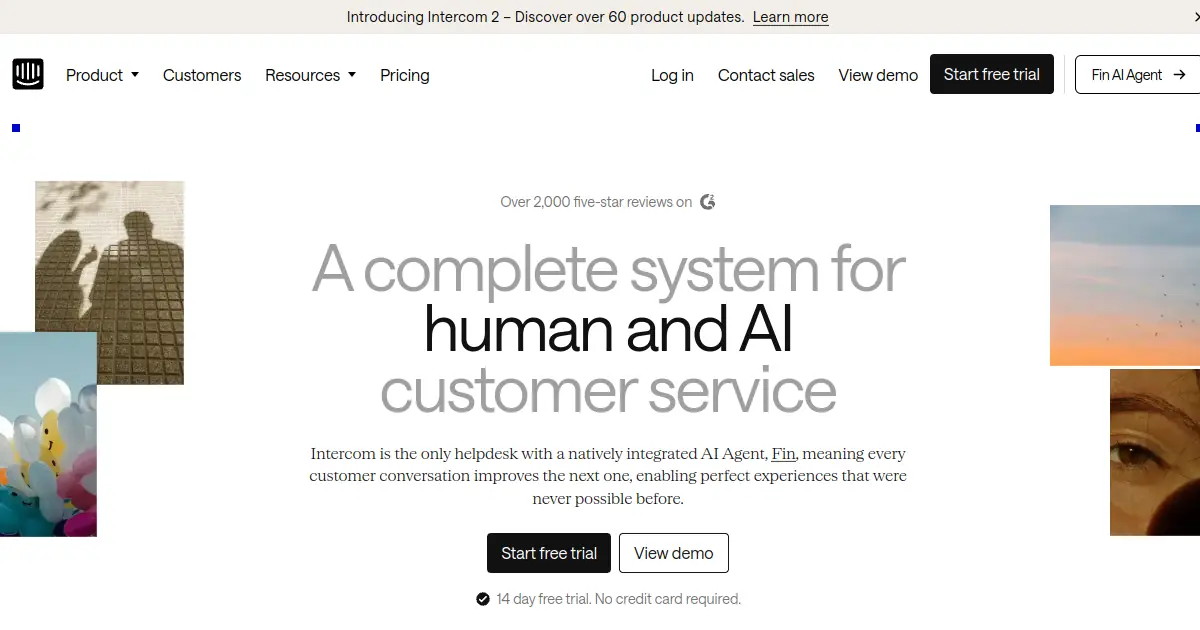
Intercom rebranded at the company level to Fin in May 2026, naming itself after its AI agent, which says something about where the product's center of gravity has moved. The Fin AI Agent is now the most prominent feature in every sales conversation and marketing asset. It handles common customer questions by pulling from your help center content, charges $0.99 per resolved conversation, and only bills when it actually completes a support interaction rather than charging for every exchange regardless of outcome.
That resolution-based pricing model is meaningfully different from Freshchat's bot session approach. Freshchat's Freddy AI Agent sessions count against your allowance whether the bot resolved the issue or handed it off to a human. Intercom's Fin charges nothing if the AI fails to resolve. For teams with high bot resolution rates, that model can cost more per resolved ticket but aligns incentives more honestly with what the AI is actually delivering.
Where Intercom clearly outperforms Freshchat is in proactive messaging and product-led engagement. The ability to send targeted in-app messages, trigger onboarding flows based on user behavior, and run product-specific campaigns based on feature usage data is a capability set Freshchat simply does not have. For SaaS companies where customer success and support overlap with product education and activation, Intercom covers both jobs from a single platform in a way Freshchat's more reactive model cannot.
Salesforce signed a definitive acquisition agreement for Intercom in June 2026 for approximately $3.6 billion. For teams evaluating Intercom as a long-term platform, that acquisition creates the same roadmap question that Workday's Flowise acquisition raised. Enterprise alignment may bring resource and compliance advantages. It may also shift the platform's priorities away from the mid-market teams that make up a significant portion of Intercom's current customer base.
Pros
- Fin AI Agent charges $0.99 per resolved conversation, not per session attempt
- Proactive in-app messaging for SaaS product engagement
- 400 plus native integrations, significantly more than Freshchat
- Advanced reporting and custom analytics on higher-tier plans
- WhatsApp, SMS, email, and phone in one unified inbox
Cons
- No free plan, Essential starts at $29 per seat per month
- Five-agent team costs $145/mo before any AI resolution fees
- Salesforce acquisition creates long-term roadmap uncertainty
- Steeper learning curve than Freshchat for non-technical teams
Pricing
Best for: SaaS and digital product companies that need proactive in-app messaging, a large integration ecosystem, and an AI agent that charges per successful resolution rather than per session, and whose customer success and support functions overlap significantly.
4. Help Scout: Best for Small Teams That Want Simple, Predictable Pricing
Help Scout
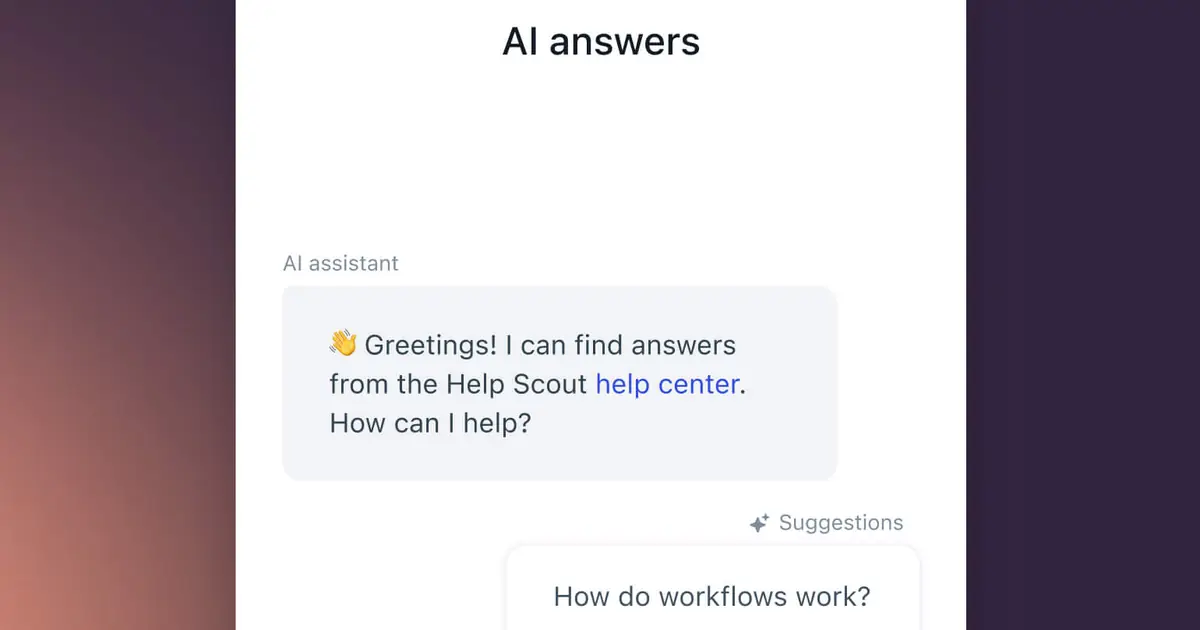
helpscout.com | Email-first customer support platform with a shared inbox, live chat, knowledge base, AI tools, and contact-based pricing that scales with customers helped, not team size
Help Scout's most distinctive characteristic is how it charges. While Freshchat, Intercom, Tidio, and most competitors bill per agent seat, Help Scout switched to a contact-based model where you pay based on the number of unique customers you help per month rather than the number of agents on your team. A five-person support team and a twenty-person support team pay the same amount if they are helping the same number of contacts. That structure is genuinely unusual in this market and directly addresses one of the most common complaints about Freshchat: the cost that accumulates as agent headcount grows.
The free plan covers up to 50 contacts per month with unlimited agents. The Standard plan at $50 per month handles 100 contacts with unlimited agents. For small professional services businesses, accounting firms, clinics, or agencies where the owner and one or two colleagues handle support together, Help Scout's pricing means adding team members to the inbox does not trigger a proportional cost increase.
AI tools are included in every Help Scout plan without an add-on fee. Thread summarization, response drafting, translation, and suggested replies are available at the standard tier pricing. This is a direct contrast to Freshchat's model where Freddy Copilot for agents is billed separately. Help Scout's AI is not as autonomous as Freshchat's bot session model, it is more of an agent assistance layer than a fully autonomous responder, but for teams that primarily want AI to speed up human replies rather than replace them entirely, the built-in approach is better value.
Help Scout added WhatsApp as a native channel in March 2026, closing a meaningful gap with Freshchat's multi-channel capability. The platform's emphasis on clean inbox design and simple workflows rather than feature density means the learning curve is genuinely shallow, which matters for small teams where onboarding time is a real cost.
Pros
- Contact-based pricing, adding agents does not increase the monthly bill
- AI tools included in every plan at no additional charge
- Free plan for up to 50 contacts per month with unlimited agents
- WhatsApp native channel added March 2026
- Clean, simple interface with shallow learning curve
Cons
- Contact cap model means costs grow as customer volume increases
- AI is agent assistance, not autonomous resolution like Freshchat's Freddy
- Less automation depth than Freshchat's Flows or Intercom's workflows
- Smaller app integration catalog than LiveChat or Intercom
Pricing
Best for: Small professional services teams, agencies, and service businesses where multiple people share a support inbox and where per-seat pricing makes growth disproportionately expensive, and where AI assistance for agents matters more than fully autonomous bot resolution.
Growing your website traffic but not your lead count?
Zappiq AI turns that gap into a system. It qualifies every visitor automatically, captures the ones worth following up with, and sends you every lead by email with the context you need to close.
Start Free Trial >No credit card | AI included on every plan | No branding ever
crisp">5. Crisp: Best for Startups Wanting a Complete Toolset at a Fair Price
Crisp
crisp.chat | Multi-channel customer messaging platform with live chat, AI agents, email campaigns, knowledge base, chatbot builder, and a CRM for startups and small businesses
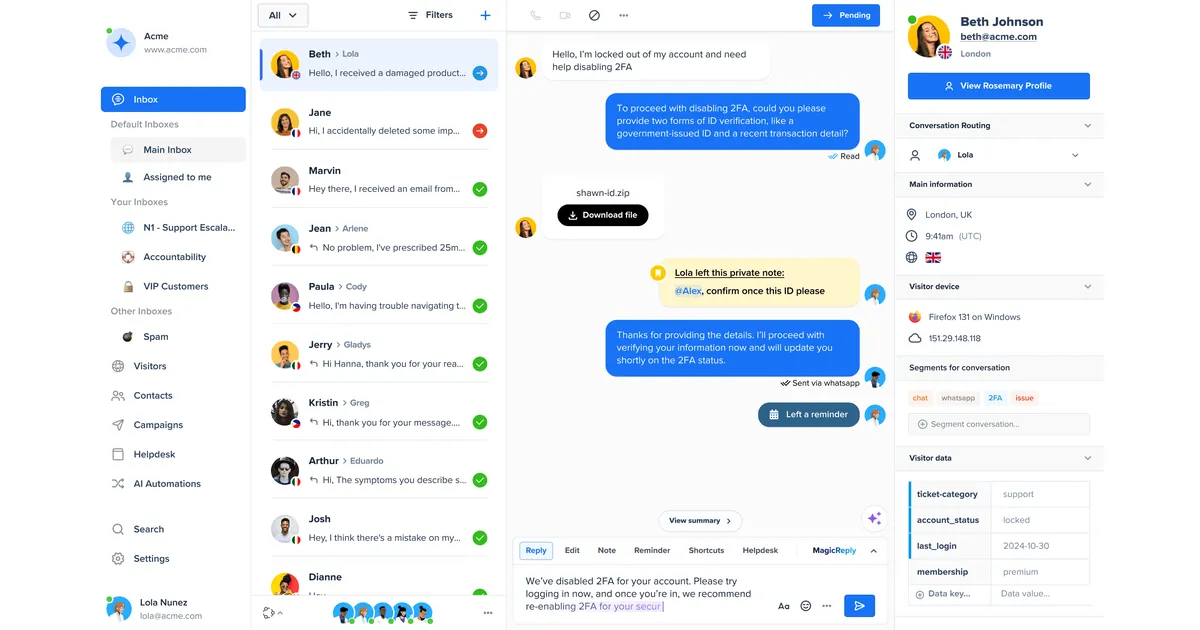
Crisp occupies an interesting position in this comparison. It covers more surface area than most live chat tools at a lower price point than most platforms that try to do the same thing. The free tier includes two-agent live chat, a basic chatbot builder, contact history, mobile apps, and the chat widget with a reasonable feature set. The paid Mini tier at $45 per month adds unlimited agents, chatbot automation, and email campaigns. At that price, you get what would cost several times more on Freshchat's per-agent pricing once you start adding seats.
The chatbot builder in Crisp allows teams to create automated response flows for common questions without a developer. The AI agent layer, available on paid plans, goes further and can answer questions based on your knowledge base content. Neither capability requires an add-on purchase. They are part of the paid plan price, which keeps Crisp's total cost of ownership more predictable than Freshchat's structure where Freddy functionality is layered on separately.
One detail worth mentioning for businesses that care about visitor engagement: Crisp has an embedded video game in its widget for situations where an agent is slow to respond or unavailable. The game is designed to reduce bounce rates by giving visitors something to do while they wait. It is a quirky feature and not everyone will use it, but it reflects an approach to the waiting-room problem that most live chat tools simply ignore. Whether that matters depends heavily on the kind of business running it.
The main gaps compared to Freshchat are in the WhatsApp Business integration depth and the analytics layer. Crisp's reporting is more limited than Freshchat's Pro tier reporting, and teams that rely on WhatsApp as a primary customer channel may find Freshchat's native WhatsApp Business setup more polished. For teams where those gaps are not priorities, Crisp's breadth at its price point is hard to argue against.
Pros
- Free plan with two agents, chatbot builder, and live chat widget
- Paid plans cover unlimited agents plus email campaigns and AI
- Broad toolset: chat, email, knowledge base, CRM, chatbot in one platform
- AI agent included in paid plans without a separate add-on fee
- Unique visitor engagement features like the embedded widget game
Cons
- WhatsApp Business integration less polished than Freshchat's native setup
- Reporting and analytics not as deep as Freshchat Pro or Intercom
- Smaller integration ecosystem than LiveChat or Zendesk
- Customer support reputation more mixed than established platforms
Pricing
Best for: Startups and lean SMBs that want live chat, email campaigns, a knowledge base, and a chatbot builder in a single platform without assembling separate tools for each, and where per-agent seat costs from Freshchat or Intercom make scaling the team expensive.
6. LiveChat: Best for Teams That Prioritize Integrations and Notification Reliability
LiveChat
livechat.com | Established live chat platform with 200 plus third-party integrations, customizable widget, detailed reporting across all plans, and 24/7 agent support
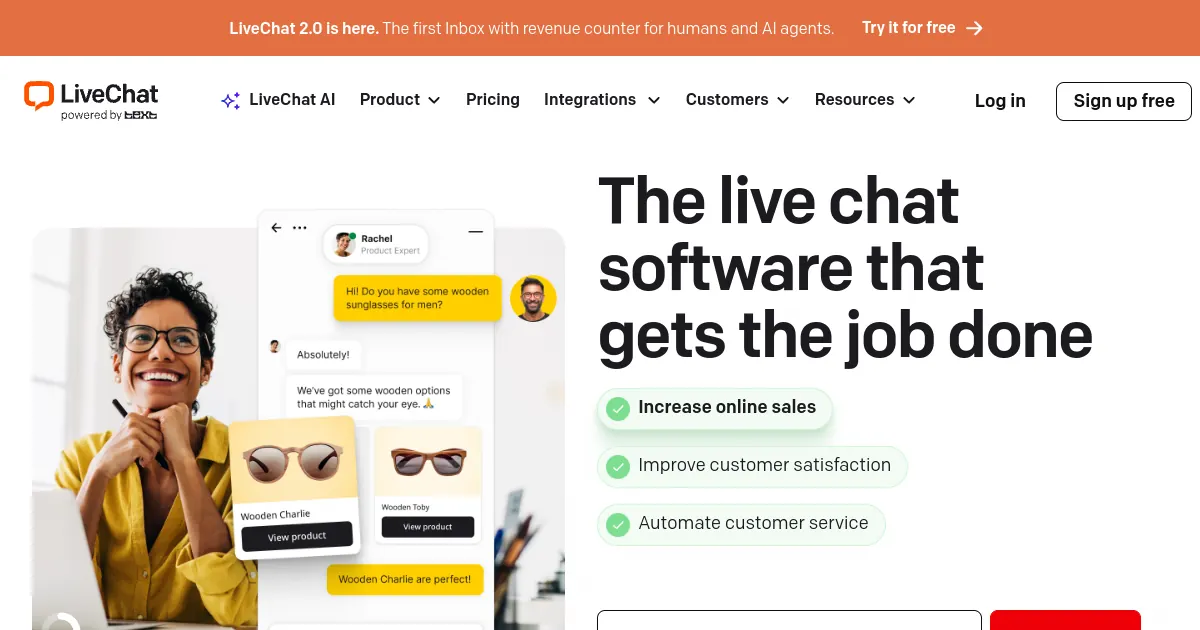
LiveChat's argument as a Freshchat alternative rests on two things it does more consistently than most of its competitors: integrations and notification reliability. The 200 plus native app connections cover a significantly broader range of business tools than Freshchat's 18 native integrations. Teams that rely on tools outside the Freshworks ecosystem, CRMs, marketing platforms, analytics, ecommerce, and helpdesk tools that are not Freshdesk, will find LiveChat's connection library considerably deeper.
Notification reliability is a less glamorous selling point but a practically important one. Several Freshchat reviews on G2 and Capterra cite missed notifications as a consistent friction point, where chat requests either arrive late or are not flagged to agents in time. For a tool where every missed message is a potential customer who gave up and left, that is a meaningful operational gap. LiveChat's reputation on this specific point is considerably stronger, and the 24/7 support availability reinforces the platform's positioning as a reliable production tool rather than an infrequent-monitoring chat widget.
Reporting is available across all LiveChat plans, not gated behind higher tiers the way Freshchat's analytics are. Custom reporting and data export are available at the Business plan level, but the core performance metrics, conversation volume, agent response times, customer satisfaction scores, and chat duration averages, are accessible from the entry-level Starter plan. Teams coming from Freshchat's Growth tier and finding the analytics too shallow will step into LiveChat and immediately have more usable data.
AI capabilities in LiveChat work through a separate ChatBot product from the same company rather than being natively built into the live chat platform. That architecture means you are effectively subscribing to two products if you want both, which is worth factoring into cost comparisons with platforms where AI is more deeply embedded.
Pros
- 200 plus native app integrations, the broadest catalog in this comparison
- Reporting available across all plans, not gated behind premium tiers
- Consistent notification reliability cited as a key differentiator
- 24/7 support availability starting from the first plan
- Extensive widget customization options
Cons
- AI chatbot requires a separate ChatBot product subscription
- No free plan, only a 14-day trial
- Per-agent pricing makes larger teams progressively more expensive
- Less multi-channel messaging depth than Freshchat's WhatsApp integration
Pricing
Best for: Teams that rely on a broad stack of third-party tools and need chat to integrate reliably with all of them, where notification consistency and reporting access across all plan levels matter more than multi-channel messaging depth or native AI chatbot capability.
zendesk">7. Zendesk: Best for Enterprise Teams Managing High Ticket Volume
Zendesk
zendesk.com | Enterprise customer service platform with ticketing, live chat, help center, SLA management, and deep analytics for high-volume support operations
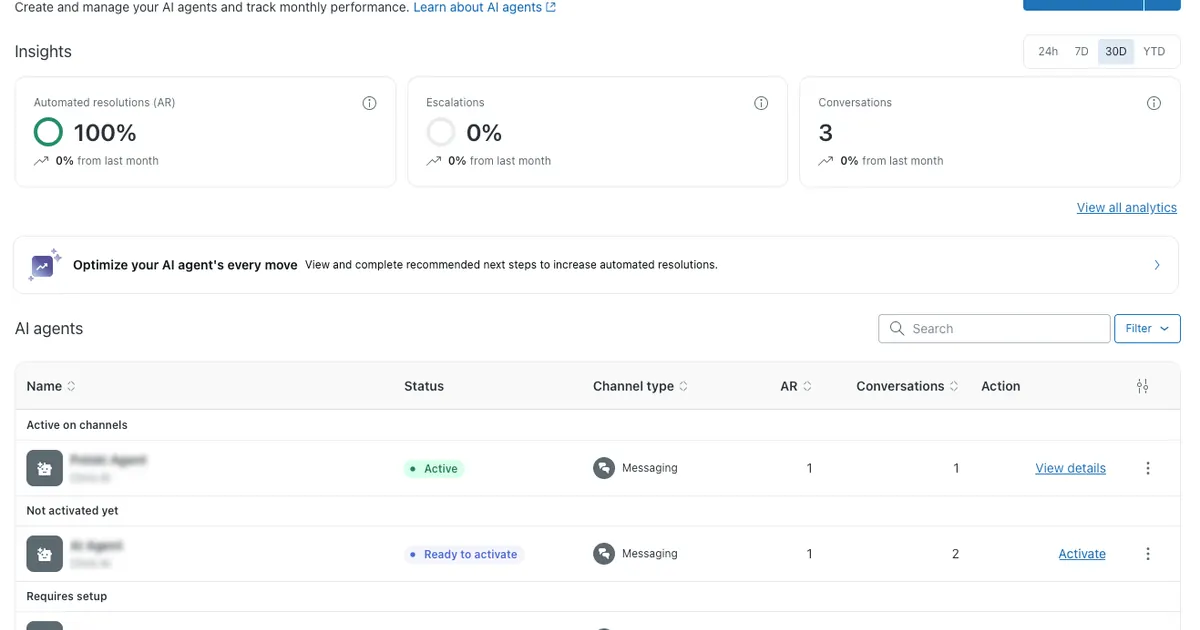
Zendesk operates at a different scale than most of the tools in this comparison. Where Freshchat is positioned as an accessible messaging tool for growing businesses, Zendesk is an enterprise platform built around the operational requirements of large support organizations: SLA enforcement, workforce management, compliance controls, advanced routing logic, and the kind of reporting depth that lets a support director understand performance across teams, regions, and channels at once.
For teams currently on Freshchat's Enterprise tier at $69 per agent per month and finding themselves bumping against reporting limits, automation constraints, or the inability to enforce service level agreements at the ticket level, Zendesk is the most natural upgrade path. The Support Professional plan at around $55 per agent per month provides SLA management, business hours policies, multilingual content, and skill-based routing that Freshchat's Enterprise tier does not fully cover.
The AI story in Zendesk has developed significantly in 2026. The AI agent layer can handle complex multi-step support workflows, not just simple FAQ deflection, and the analytics layer covers AI performance metrics alongside traditional support reporting in a unified view. For enterprise operations teams making decisions based on data, that visibility into what AI is handling versus escalating is a meaningful capability that Freshchat's Freddy reporting does not yet match in depth.
The practical constraint is cost and complexity. Zendesk is priced and architected for organizations with dedicated support operations teams. A 10-person support team moving from Freshchat to Zendesk will find a substantially more powerful platform alongside a substantially heavier implementation and administration overhead. Teams below a certain operational complexity threshold tend to find Zendesk more platform than they need, which is a legitimate reason to stay on something simpler even if Zendesk's feature list is technically superior.
Pros
- SLA management and business hours enforcement across all ticket types
- Deep analytics and reporting available at mid-tier plans
- Advanced routing with skill-based assignment and priority queuing
- Compliance and audit logging for regulated industries
- AI agent handles complex multi-step support workflows
Cons
- Heavier implementation overhead than Freshchat or most alternatives
- Per-agent pricing escalates quickly for larger teams
- More platform than most small and mid-size teams actually need
- No free plan, trial required to evaluate properly
Pricing
Best for: Enterprise and mid-market support teams managing high ticket volumes across multiple channels, where SLA management, advanced routing, compliance controls, and deep operational analytics are requirements rather than nice-to-haves, and where the implementation investment is justified by the operational scale.
How to Pick the Right Freshchat Alternative
Start with the job: The tools in this list cover three genuinely different jobs. Lead capture and qualification (Zappiq AI). Customer support conversations with live agents (LiveChat, Crisp, Help Scout). Enterprise support operations with ticketing and SLA management (Zendesk, Intercom). Freshchat tries to span categories two and three. Matching the tool to your actual job is more important than comparing feature lists across all seven options.
If Freshchat's Freddy AI add-on cost is the specific issue, the clearest paths are Tidio, where Lyro AI is a separate but predictably priced add-on at $39 per month for 100 conversations, or Help Scout, where AI assistance is included in every plan at no additional charge. Both give you AI without the session-based expiring allowance model that makes Freshchat's Freddy cost difficult to predict month to month.
If per-seat pricing is the problem and your team is growing, Help Scout's contact-based model removes the per-agent growth penalty entirely. Crisp's paid tiers include unlimited agents, so adding a third or fifth person to the inbox does not change the monthly bill. Both give meaningfully better economics than Freshchat's per-agent structure once a team has more than a handful of agents.
If the March 2026 reliability concern is driving the evaluation, LiveChat's strong notification consistency record and 24/7 support structure address that directly. Help Scout has a comparable reliability reputation for email-first support teams. Both have longer operational track records than Freshchat in maintaining consistent uptime across their core features.
If you are comparing Freshchat to something with more enterprise depth, Zendesk is the clear destination. The pricing difference between Freshchat Enterprise at $69 per agent per month and Zendesk's Professional tier at $55 per agent per month is smaller than most teams expect, and the operational capability gap between the two platforms at that level is substantial.
Before switching from Freshchat: Export your conversation history and canned responses before deactivating your account. Most platforms can import canned response libraries in CSV format, which saves meaningful setup time on the new tool. If you are using Freshchat's WhatsApp Business integration, confirm the number portability process with the new platform before cancelling the Freshworks subscription, as WhatsApp Business number migrations have specific timing requirements.
Frequently Asked Questions
It depends on what your small business actually needs from the tool. If the goal is capturing leads from website traffic rather than managing support conversations, Zappiq AI is the best fit because it is built specifically for that job, includes AI in every plan, and does not charge per agent seat. If the goal is a lightweight support inbox with predictable pricing, Help Scout's contact-based model or Crisp's per-workspace tiers serve small teams better than Freshchat's per-agent structure. For ecommerce businesses specifically, Tidio's Shopify integration and generous free plan make it a stronger starting point than Freshchat at the small business level.
The most consistent reasons are Freddy AI being a paid add-on rather than included in the base plan, making the real cost higher than the advertised per-agent price suggests. Reporting depth on Growth and Pro tiers is limited for teams that need detailed operational analytics. The March 2026 outage that disrupted live chat, WhatsApp, and social channels simultaneously for multiple days raised reliability concerns for teams where those channels are mission-critical. And for teams not already running Freshdesk or Freshsales, the integrations outside the Freshworks ecosystem are less seamless than the marketing suggests.
Freshchat has a free plan for up to 10 agents that includes a chatbot builder, mobile SDK, and integrations with WordPress, Freshdesk, and Shopify. However, the free plan cannot connect directly to Freshdesk for ticketing, does not include business hours settings, canned responses, or reporting dashboards, and Freddy AI bot sessions and Freddy Copilot are not included. The Growth plan at $15 per agent per month unlocks those features, and Freddy AI usage is charged separately on top of any paid plan.
Freshchat is more affordable at the entry level, with the Growth plan at $15 per agent per month compared to Intercom's Essential plan at $29 per seat per month. Intercom has a significantly larger integration catalog (400 plus versus 18 native integrations), deeper proactive messaging capabilities for SaaS in-app engagement, and the Fin AI Agent charges per resolved conversation rather than per session attempt. Freshchat integrates more naturally with the Freshworks ecosystem, making it a better choice for teams already on Freshdesk or Freshsales. For teams outside that ecosystem, Intercom's broader capability set and outcome-based AI pricing are typically worth the higher entry price.
Help Scout's free plan covers up to 50 contacts per month with unlimited agents and includes AI tools, making it the strongest free offering for small support teams. Tidio's free plan covers 100 conversations per month with unlimited agents, which is better than Freshchat's free tier cap of 10 agents. Crisp's free plan includes two agents with live chat, a basic chatbot builder, and contact history. Zappiq AI offers a free trial with no credit card required, though it serves lead generation rather than inbound support. Among the support-focused options, Help Scout's unlimited agents and AI inclusion at the free tier level make it the most practically useful starting point.
The Bottom Line
Freshchat earns its place on many teams' shortlists. The Growth tier pricing is accessible, the multi-channel coverage across web, mobile, and WhatsApp is solid, and the native integration with Freshdesk and Freshsales creates genuine operational efficiency for teams already committed to the Freshworks stack. If that description fits your situation and the issues in this article do not apply to how you use the platform, switching is unlikely to be worth the migration cost.
The situations where switching makes sense are more specific. If Freddy AI is important to your workflow but the add-on model is making costs unpredictable, Tidio's conversation-based Lyro pricing or Help Scout's included AI tools solve that problem more cleanly. If per-agent pricing is creating cost pressure as your team grows, Help Scout's contact-based model or Crisp's per-workspace pricing changes the economics substantially. If the March 2026 outage triggered a reliability review and you need stronger guarantees on notification delivery and uptime, LiveChat's track record addresses that concern directly. And if your operation has grown to the point where SLA management, advanced routing, and enterprise-grade reporting are requirements rather than aspirations, Zendesk is where those needs are served properly.
For small businesses where the real problem is not managing support conversations but generating more qualified leads from existing website traffic, Zappiq AI removes the cost and setup structure that makes Freshchat a complicated fit. There is no per-agent pricing or separate AI add-on; each plan has a defined monthly conversation allowance. The chatbot reads your website, qualifies your visitors by intent, and sends you every lead with full context while the conversation is still fresh. That is a different tool solving a different problem, and for a significant number of businesses evaluating Freshchat, it is the more accurate description of what they actually need.
The free trial for Zappiq AI is at zappiqai.com. No credit card required, no developer needed, and no branding placed on your widget at any plan level.
Try the alternative built for lead capture, not support tickets
Zappiq AI reads your website, qualifies every visitor, and delivers leads to your inbox while they are still interested. No per-agent fees, no AI add-ons, no outage risk to your primary lead channel.
Start Free Trial >No credit card | AI included on every plan | No branding ever
References
- G2. "FreshChat Pricing 2026: Plans, Limits and Features." g2.com.
- Capterra. "Freshchat Software Pricing, Alternatives and More 2026." capterra.com.
- Macha AI. "Best Freshchat Alternatives 2026." getmacha.com.
- Featurebase. "Freshdesk Pricing 2026: Is It Worth It?" featurebase.app.
- LiveChat. "Best Freshchat Alternative in 2026 for Customer Support and Sales Teams." livechat.com.
- Featurebase. "Intercom Pricing 2026: Is It Worth It?" featurebase.app.
- Featurebase. "Help Scout vs Intercom: 2026 Head-to-Head Comparison." featurebase.app.
- G2. "Top 10 FreshChat Alternatives and Competitors in 2026." g2.com.
- HappyFox. "Tidio vs Intercom 2026: Features, Pricing and Who Wins." happyfox.com.
- Jotform. "10 Best LiveChat Alternatives for Customer Support in 2026." jotform.com.

Ansar Ali
Ansar Ali founded Zappiq AI after recognizing that most small service businesses were using tools built for customer support teams when their real problem was converting website visitors into qualified enquiries. He works on qualification logic, ad attribution, and making sure Zappiq stays fast and unobtrusive on any site it runs on, and writes these comparisons from that practical angle.