
Quick Summary
- Zappiq AI is the best Botpress alternative for small and medium business websites focused on lead generation. No developer needed, no LLM cost variables, auto-trains on your site from day one.
- SiteGPT is the best no-code Botpress alternative for FAQ and support deflection, with flat pricing and automatic website resyncing.
- Voiceflow is the best alternative for product and UX teams who need collaborative conversation design with voice channel support.
- Typebot is the best open-source no-code alternative for lead capture forms and structured data collection, self-hostable and free.
- Flowise is the best open-source alternative for technical teams building custom LLM pipelines and multi-agent workflows without fully committing to a cloud platform.
- Rasa is the best alternative for enterprises with ML engineers who need full self-hosted control and regulatory compliance.
- Tidio is the best no-code alternative for ecommerce and Shopify stores that need live agent handoff alongside AI chat.
- Botsify is the best fit for agencies that want white-label AI agents, client packaging, and resale control.
- Crisp is a practical alternative for teams that need a shared inbox and collaborative customer conversations.
Why Businesses Switch from Botpress
Botpress is genuinely well built. The visual flow editor, the Autonomous Node that lets an LLM decide how to handle inputs dynamically, the knowledge base integration, the multi-channel support, and the open-source community are all real strengths. For developer-led teams building production AI agents, it competes with the best tools in the market.
The friction points that drive people to look elsewhere are structural, not product quality issues.
The first is developer dependency. Botpress's visual builder works for basic flows. The moment you need a custom integration, business logic beyond simple conditional routing, or anything that connects to an external data source, you need JavaScript. Independent reviews consistently note that real-world Botpress deployments require developer involvement not just at setup but at every subsequent change. Update a pricing page, add a new service, change a policy. Someone technical needs to touch the bot each time. A chatbot that needs a developer to stay current is a project, not infrastructure.
The second is the LLM cost structure. Botpress bills the underlying AI model usage separately from the platform plan. The Plus plan is $89 per month plus AI Spend. The Team plan is $495 per month plus AI Spend. On paper, Botpress passes LLM costs through at provider rates without markup, which is transparent. In practice, it makes monthly budgeting genuinely difficult. A traffic spike, a campaign that drives more conversations than usual, or switching from a cheaper model to a more capable one can double or triple the AI Spend component without warning. Independent analyses put realistic all-in costs for a small business running a production Botpress bot at $170 to $400 per month for the Plus tier, not $89.
Botpress Real Cost: Plus Plan in Practice
The third issue is that Botpress was built for developers who want to own the full behavior of an AI agent. That is a specific use case. Most small businesses, service businesses, local businesses, and even many mid-market companies do not have that in-house capability and do not want to pay for it externally. They want a chatbot that answers visitor questions, captures leads, and notifies them. For that use case, Botpress is considerably more platform than the job requires.
Complexity snapshot: Botpress, Flowise, and Rasa offer more control but require more technical resources than no-code alternatives such as Zappiq AI, SiteGPT, Typebot, and Tidio.
Quick Comparison: 9 Botpress Alternatives
| Tool | Starting Price | Developer Needed | LLM Costs Separate | Setup Time | Best For |
|---|---|---|---|---|---|
| Zappiq AI | 100 free / $27/mo (1,500) / $69/mo (5,000) | No | No (flat rate) | Under 5 min | SMB lead generation |
| SiteGPT | $39/mo | No | No (flat rate) | 10 to 30 min | FAQ bots, support deflection |
| Voiceflow | Free / credit-based | Partial | Yes (credits) | Hours to days | Product teams, voice agents |
| Typebot | Free (self-hosted) / $39/mo | No | No | 30 to 60 min | Lead capture forms, open-source |
| Flowise | Free (self-hosted) / $35/mo | Yes | Yes (LLM API) | Hours to days | Custom LLM pipelines, RAG |
| Rasa | Free (self-hosted) | Yes (Python/ML) | Depends on setup | Days to weeks | Enterprise, full self-hosted control |
| Botsify | Agency resale | White-label AI agents | Verify official agency terms | Days to launch | Agencies and consultants |
| Crisp | Workspace inbox | Team chat and automation | Verify current tiers | Minutes to hours | Collaborative support teams |
| Tidio | $29/mo + AI add-on | No | No | 1 to 2 hours | Ecommerce, live chat + AI |
1. Zappiq AI: Best for Lead Generation on SMB Websites
Zappiq AI
zappiqai.com | AI lead generation chatbot built for small and medium business websites, no developer required
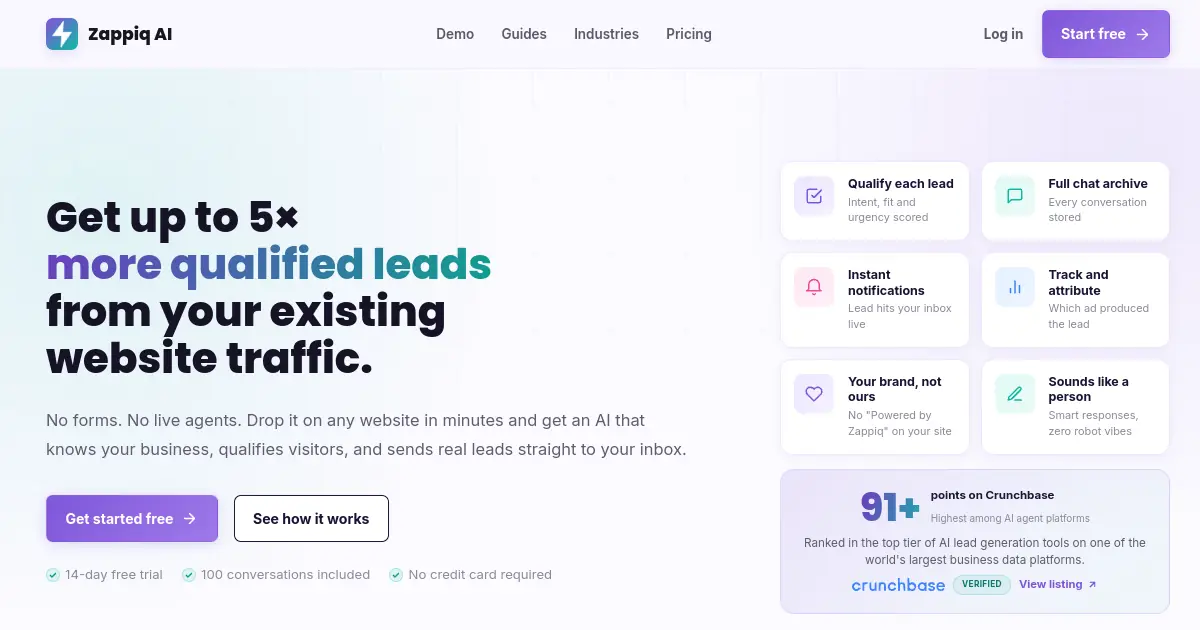
Botpress and Zappiq AI are solving different problems for different buyers. Botpress gives a developer team the tools to build any conversational AI behavior they can imagine. Zappiq gives a business owner a chatbot that captures and qualifies leads from their website starting today, with no configuration required and no ongoing developer involvement.
The setup experience makes the difference clear. Botpress requires understanding node types, flow logic, JavaScript for integrations, and LLM configuration before you can do anything useful. Zappiq reads your website the moment you sign up and trains the chatbot automatically on your services, pages, and common questions. There is a working assistant ready before you finish creating your account.
Pricing is flat by conversation volume, and LLM costs are absorbed rather than passed through as a separate unpredictable line item. If a campaign drives more traffic than usual one month, your bill does not change. The chatbot does not go offline. You do not receive an invoice for AI Spend overage.
Lead qualification works automatically. The chatbot asks about intent, urgency, and fit before it ever requests contact details, without you designing that logic. The moment a visitor qualifies, Zappiq sends an email notification with their details and the full conversation history so you can follow up with context while the lead is still warm.
Ad attribution is a capability Botpress does not include in its core product. Zappiq connects each captured lead back to the campaign, keyword, or channel that brought the visitor in. For businesses running paid traffic, that closes the loop between ad spend and actual qualified leads rather than just click counts.
There is no "Powered by" branding on any plan, including the free trial. Installation is a single asynchronous script tag that works on WordPress, Shopify, Webflow, Wix, Squarespace, and any custom HTML site without affecting page load speed or Core Web Vitals.
Webhook integrations: Zappiq supports Zapier, Make, and n8n webhooks, so captured leads can be routed automatically to any CRM, Slack channel, or tool in your existing stack without any additional development work.
Pros
- Zero developer involvement at any stage
- Auto-trains on your website from day one
- Flat pricing: no LLM cost surprises
- Lead qualification built in, no flows to design
- Instant email alerts with full conversation context
- Ad tracking: each lead connected to its source
- No branding on any plan
- Asynchronous script, no page speed impact
- White-label capable for agencies
Cons
- Not built for custom multi-step agent workflows
- No visual flow builder for power users
- No voice channel support
- Newer platform, smaller community than Botpress
Why Zappiq AI is simpler than Botpress for SMB lead capture
Ad tracking: See which campaign, keyword, or channel produced each qualified enquiry, so paid traffic can be measured against real leads.
Email lead delivery: Get contact details, qualification answers, source data, and the full conversation together in your inbox.
No branding: Keep the widget focused on your business without a third-party badge competing with your brand.
Automatic website training: Zappiq learns from the pages you maintain, so you can answer visitor questions without configuring nodes, flows, or model instructions.
Natural qualification: The chatbot asks about intent, urgency, and fit before requesting contact details, without custom JavaScript logic.
Simple installation: Add one asynchronous script to your existing website and start collecting leads without a developer-led Botpress build.
Pricing
Best for: Small and medium business websites where the goal is capturing and qualifying leads, not building a custom AI agent. Service businesses, local businesses, agencies, real estate, dental, legal, home services, and any SMB running paid traffic campaigns.
2. SiteGPT: Best No-Code FAQ and Support Alternative
SiteGPT
sitegpt.ai | Website-trained AI chatbot with flat pricing, automatic content resyncing, and human handoff
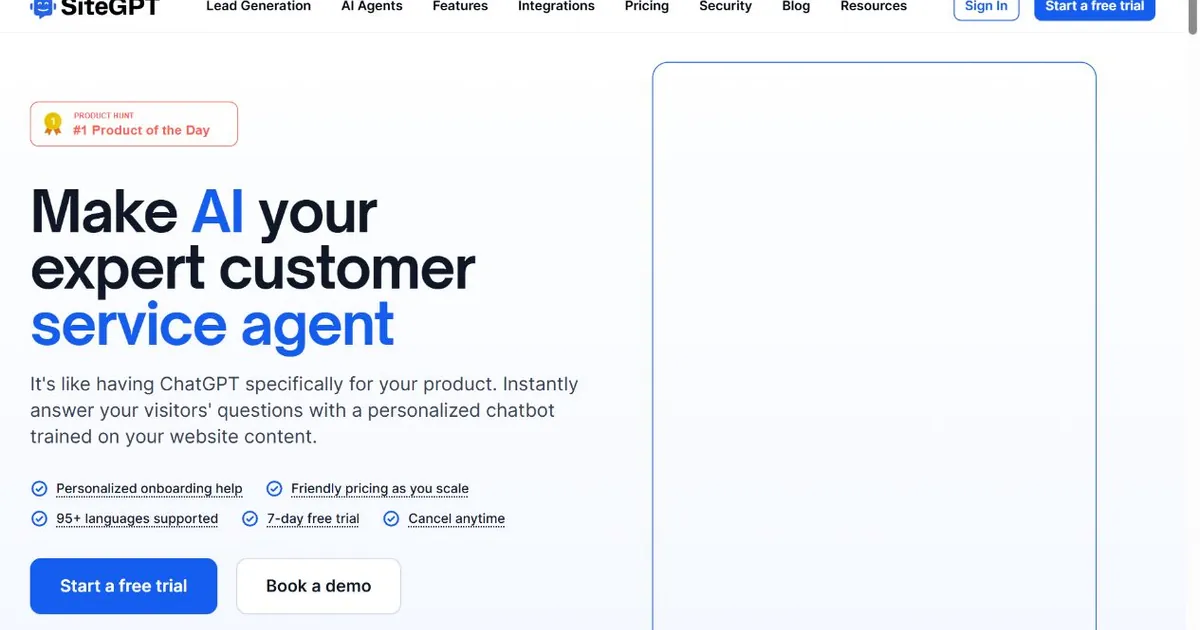
SiteGPT is the most accessible no-code path away from Botpress for teams whose primary need is a chatbot that answers questions from their website content. Paste a URL, wait a few minutes while the pages are ingested, and embed the widget. No flow builder, no JavaScript, no LLM cost to model separately.
The flat pricing structure is one of the clearest differences from Botpress. SiteGPT's Starter plan is $39 per month covering 500 pages and 2,000 messages. Growth is $79 per month. There are no separate AI Spend charges layered on top. For teams that found Botpress's billing structure difficult to predict, that predictability alone is a significant reason to consider switching.
Automatic resyncing is a practical feature that Botpress does not offer in the same way. When a page on your website is updated, SiteGPT detects the change and retrains on the updated content without any manual intervention. For businesses that regularly update their services, pricing, or FAQ content, this removes a maintenance burden that compounds over time.
Human handoff is built into the product. When a visitor's query exceeds what the AI can handle, the conversation escalates to a live agent with full history attached. Botpress offers this on the Plus plan and above, but setting it up requires configuration. In SiteGPT, it is available from standard plans without additional setup.
The limitation compared to Botpress is depth. SiteGPT is built for answering questions from content, not for custom multi-step agent workflows, complex conditional routing, or integrations with external business systems beyond what Zapier can handle. For those use cases, Botpress or Flowise remain the more capable options.
Pros
- No developer required at any stage
- Flat pricing from $39/mo, no LLM cost variables
- Automatic website resyncing when content changes
- Human handoff built in
- Trains on URL, PDFs, Notion, and help docs
- 14-day free trial, no credit card
Cons
- Not built for custom agent workflows or complex logic
- No ad attribution or lead qualification workflows
- Widget customization is limited compared to Botpress
- Branding removal requires higher-tier plans
Pricing
Best for: Non-technical teams who want a Botpress-level FAQ bot without developer involvement, and need flat, predictable pricing with automatic content resyncing.
3. Voiceflow: Best for Product Teams Building Voice and Chat Agents
Voiceflow
voiceflow.com | Collaborative AI agent builder for product teams, with voice channel support and strong UX design tools
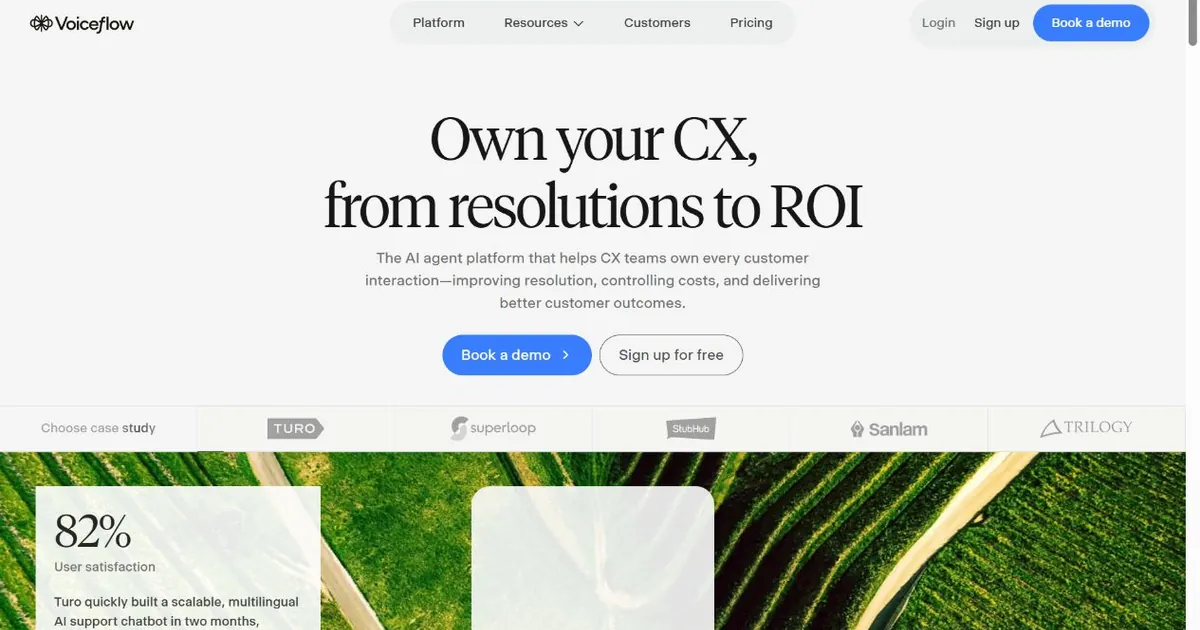
Voiceflow sits between Botpress and fully no-code tools on the complexity spectrum. It provides a visual conversation builder that product teams, conversation designers, and UX researchers can use without writing code, while still allowing API integrations and LLM connections for teams with some technical support available.
The differentiator is voice. Voiceflow was originally built for designing Alexa and Google Assistant skills, and that heritage shows in the maturity of its voice agent capabilities. Native telephony integration, voice-optimized conversation flows, and concurrent call handling are features no other tool in this comparison offers at the same level. For businesses that need a voice-first or voice-plus-chat agent, Voiceflow is the most capable option that does not require enterprise pricing.
The collaboration layer is also a genuine advantage over Botpress for product teams. Multiple editors can work on the same agent simultaneously, with version history, commenting, and shared component libraries. Botpress offers real-time collaboration on the Team plan at $495 per month. Voiceflow makes this available at lower tiers.
The billing structure is worth understanding carefully before signing up. Voiceflow now operates on a hybrid model of seats plus usage credits. Each additional editor seat costs $50 per month on top of the base plan. A five-editor team running 50,000 monthly messages can expect to pay $450 to $500 per month, not the $60 or $150 headline tier pricing would suggest. When credits run out, agents stop responding immediately, similar to Chatbase's behavior. There is no mid-cycle top-up option.
Credit stop behavior: Like Chatbase, Voiceflow agents stop responding immediately when monthly credits are exhausted. Voice agents consume credits faster than chat. If you are running voice deployments, model your expected usage carefully before committing to a plan tier.
Pros
- Best voice and telephony support in this category
- Strong collaborative design tools for product teams
- Visual builder accessible to non-developers
- Supports multiple LLMs: GPT, Claude, Gemini
- Knowledge base supports up to 3,000 sources
- Free tier available for prototyping
Cons
- Credits stop agents entirely when exhausted, no fallback
- $50/mo per additional editor seat raises real team costs fast
- Voice channel billed separately via Twilio or Vonage
- Not suitable for non-technical solo operators
- Enterprise features require custom pricing
Pricing
Best for: Product teams and UX designers iterating on chat and voice conversational agents collaboratively, particularly where voice or telephony support is a requirement.
Need a chatbot running on your site today, without a developer?
Zappiq AI trains itself on your website, qualifies visitors automatically, and emails you every lead. No LLM cost variables. No flow builder. No JavaScript.
Start Free Trial >No credit card | No developer needed | No branding on any plan
4. Typebot: Best Open-Source No-Code Alternative for Lead Capture
Typebot
typebot.io | Open-source visual chatbot builder for lead capture forms, surveys, and structured data collection
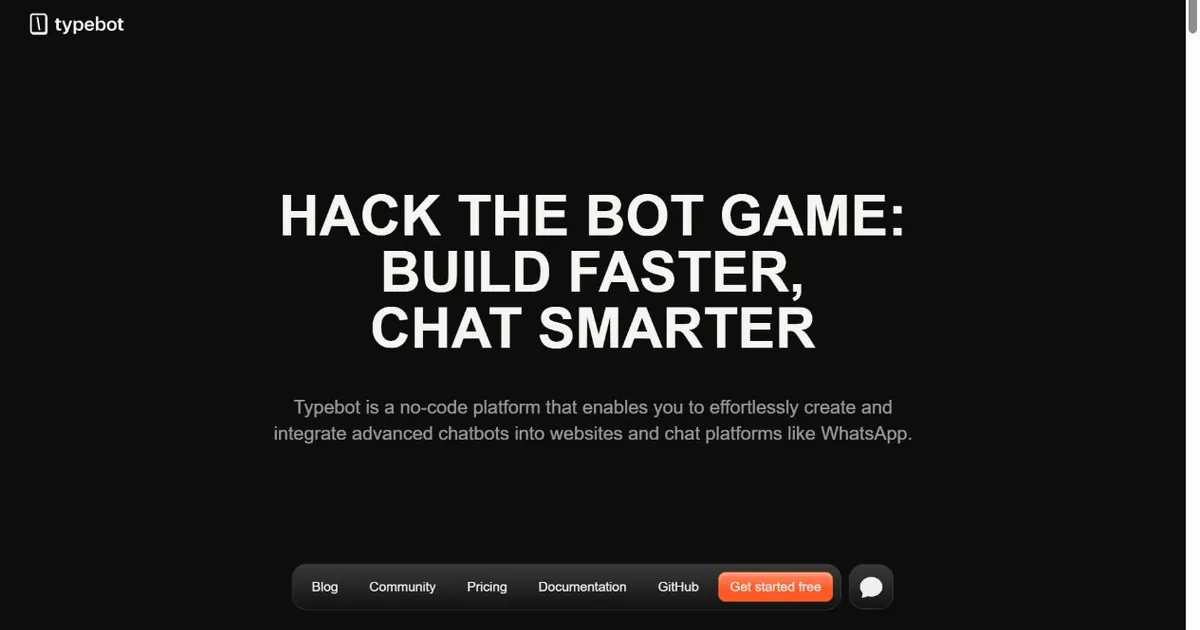
Typebot takes a different approach from most tools in this comparison. Rather than building a general-purpose conversational AI, it reframes form-based data collection as a chat-style interaction. A lead qualification questionnaire, an onboarding survey, a quote request form, or a booking intake process all become multi-step chat conversations rather than static form fields. Research consistently shows that conversational forms outperform static forms on completion rate, often significantly.
The product is open-source and fully self-hostable at no cost beyond your server expenses. For businesses with technical resources and a preference for owning their infrastructure, that is a meaningful option. For those who want a managed cloud version without the infrastructure overhead, cloud plans start at $39 per month with no per-message credits on the platform side.
Typebot does not have built-in NLU or intent recognition in the traditional sense. Visitors follow the paths you design. For free-form conversation handling, you can connect an OpenAI block to specific steps, though that requires API configuration. If you need a chatbot that can handle unpredictable, natural language inputs from the start without configuration, Typebot is not the best fit. If your primary use case is structured lead capture, surveys, or intake flows where you know what questions to ask, it delivers that cleanly and at very low cost.
It integrates natively with Google Sheets, Airtable, Notion, Slack, email providers, and webhooks for CRM routing. The landing page and embed options are flexible enough for most campaign or website use cases.
Pros
- Free self-hosted option with full feature access
- Cloud plans from $39/mo with no per-message credits
- No developer required for standard flows
- Conversational forms outperform static forms on completion
- Native integrations with Google Sheets, Airtable, Notion, Slack
- Open-source: full code access, no vendor lock-in
Cons
- Not a free-form AI chatbot: visitors follow designed paths
- NLU and intent handling requires manual OpenAI API setup
- No built-in ad attribution or lead qualification AI
- Self-hosting requires server setup and maintenance
Pricing
Best for: Teams that need structured lead capture, intake forms, or surveys rendered as a conversational chat experience, and want an open-source option with no per-message pricing.
5. Flowise: Best Open-Source Alternative for Custom LLM Pipelines
Flowise
flowiseai.com | Open-source visual builder for LangChain-based AI agents, RAG pipelines, and multi-agent workflows
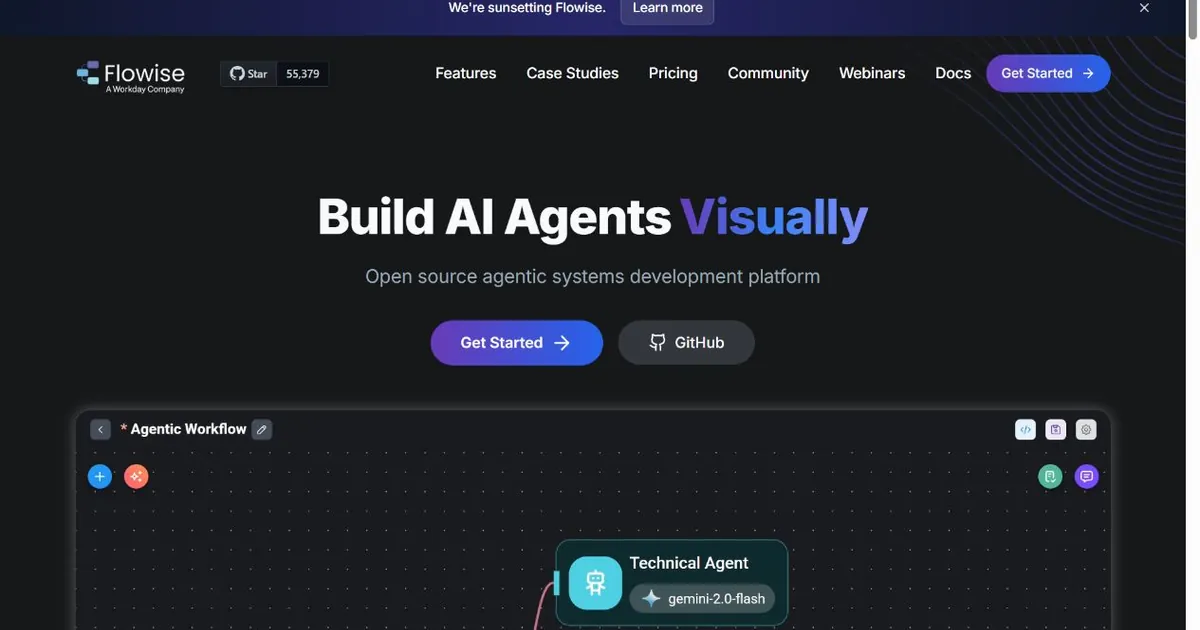
Flowise is the closest open-source alternative to Botpress for developer and technical teams who want visual tooling for building LLM pipelines without fully committing to a proprietary cloud platform. It uses LangChain as the underlying framework, providing a visual node editor for connecting document loaders, embeddings models, vector databases, retrieval chains, and LLM providers in ways that would otherwise require significant custom code.
The open-source self-hosted version is free beyond server and LLM API costs. A cloud-hosted version starts at $35 per month. Like Botpress, LLM API costs are billed directly at provider rates on top of any platform fees, so real costs depend on usage volume and model selection.
Where Flowise fits particularly well is in building the AI backend layer for a product, rather than a customer-facing chatbot widget. Internal knowledge bases, RAG-powered document search, multi-step reasoning agents, and tool-calling workflows are all areas where Flowise's node editor accelerates what would otherwise be manual LangChain development. It is not primarily a customer-facing widget tool, and its production deployment and observability tooling is more limited than Botpress or Voiceflow for that use case.
Teams evaluating Flowise should be comfortable with LLM concepts, vector databases, and at least basic Python or JavaScript for anything beyond the visual editor's defaults. The learning curve is lower than Botpress for pure LLM pipeline work, but higher than any no-code tool in this list.
Pros
- Free self-hosted option with full LangChain access
- Best visual tooling for RAG and multi-agent pipelines
- Open-source, no vendor lock-in
- Cloud version from $35/mo
- Supports all major LLMs and vector databases
- Active open-source community
Cons
- Requires developer resources for production deployment
- LLM API costs billed separately on top of platform fees
- Limited production observability and versioning compared to Botpress
- Not suitable as a standalone customer-facing chatbot widget
Pricing
Best for: Technical teams building custom LLM pipelines, RAG applications, or multi-agent workflows who want visual tooling and open-source flexibility without Botpress's proprietary cloud dependency.
6. Rasa: Best for Enterprises Requiring Full Self-Hosted Control
Rasa
rasa.com | Open-source conversational AI framework for ML engineers, with full self-hosted deployment and enterprise compliance
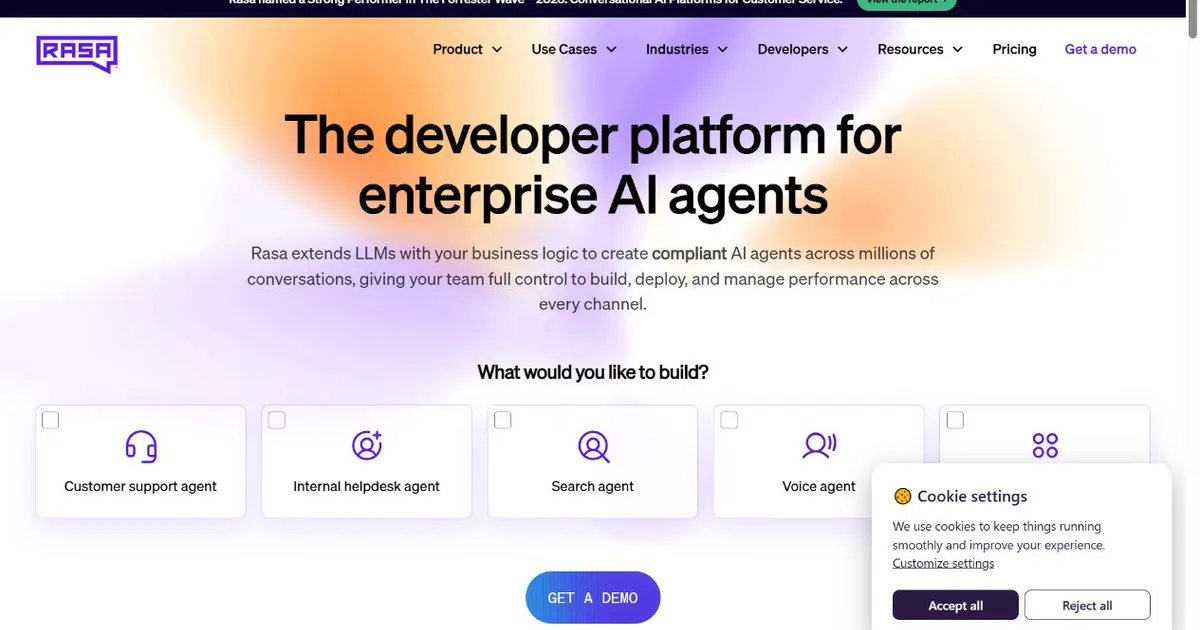
Rasa occupies the far end of the developer-required spectrum. It is a code-first open-source framework for teams with Python and machine learning expertise who need full control over their conversational AI infrastructure. All data stays on your own servers. All models are trained and managed by your team. There are no usage fees from Rasa itself on the open-source version beyond what you pay for your own infrastructure.
For regulated industries where data sovereignty is a requirement, financial services, healthcare, and government organizations, that self-hosted architecture eliminates a class of compliance concerns that cloud platforms cannot fully address. A bank or hospital that cannot send customer conversation data to a third-party SaaS platform has fewer viable options, and Rasa is one of the most mature open-source frameworks in that space.
The tradeoff is the highest technical requirement of any tool in this comparison. Setting up a production Rasa deployment requires Kubernetes or comparable infrastructure, Python expertise, NLU model training, custom action server development, and ongoing model maintenance to prevent drift as language patterns change. Teams without dedicated ML engineers consistently underestimate the ongoing operational cost. This is not a platform for a marketing team to run without engineering support.
For businesses that do not need self-hosted infrastructure for compliance reasons, Rasa is considerably more work than the use case justifies. Botpress, Voiceflow, or Flowise offer comparable AI capabilities in managed or semi-managed form that reduces the operational burden significantly.
Pros
- Full data sovereignty: everything stays on your infrastructure
- Free open-source version with no usage fees
- Multi-agent orchestration built into the framework
- Best compliance posture for regulated industries
- Native voice support and telephony integration
- Mature open-source community, extensive documentation
Cons
- Requires Python/ML engineers for setup and maintenance
- Setup measured in days to weeks, not hours
- Infrastructure costs not included in the free plan
- Significantly overbuilt for most SMB chatbot needs
- Enterprise plan pricing is custom and typically high
Pricing
Best for: Enterprises and regulated-industry organizations that need full data sovereignty, self-hosted deployment, and have dedicated ML engineering teams to build and maintain the platform.
7. Tidio: Best No-Code Alternative for Ecommerce and Live Chat
Tidio
tidio.com | AI chatbot and live agent inbox combined, with native Shopify and WooCommerce integration
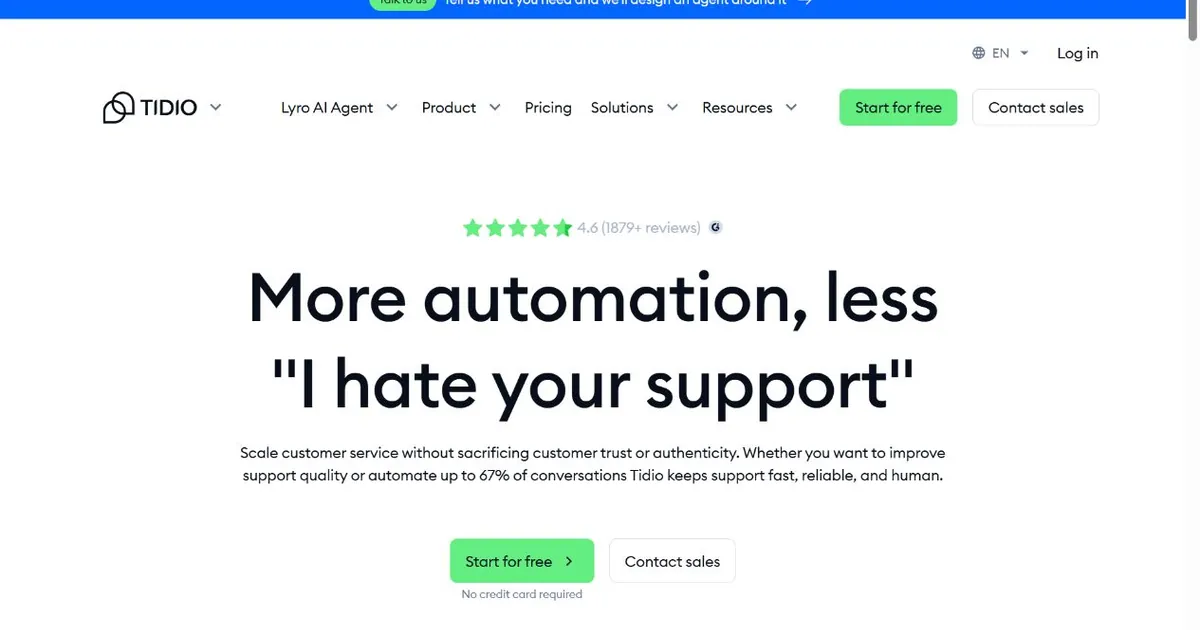
Tidio is the most practical no-code Botpress alternative for businesses that need two things at once: an AI chatbot for automated responses, and a live agent inbox for conversations that need a human. Botpress offers human handoff on the Plus plan, but it requires configuration. Tidio ships that combination as the core product experience with minimal setup.
The Shopify integration is Tidio's clearest differentiator in this list. Cart recovery flows, product recommendation scenarios, and order status queries are built into Tidio's ecommerce templates. For a Shopify store moving away from Botpress because the developer overhead was too high, Tidio is a strong no-code landing spot with Shopify-native functionality that Botpress requires custom development to replicate.
The pricing structure is worth understanding in full before signing up. Lyro AI, Tidio's actual AI chatbot, is sold as a separate add-on on plans below Tidio+. A business on the $59 per month Growth plan also paying for 200 Lyro conversations at $78 per month is spending $137 per month, not $59. There is also the Growth to Plus pricing gap: the Growth plan covers 250 conversations per month, and the next available tier is $749 per month with nothing in between. For a business expecting steady growth, that cliff is worth planning for before it arrives.
Pros
- No developer required for setup or operation
- AI chatbot and live agent inbox in one product
- Native Shopify and WooCommerce integration
- Ecommerce-specific templates built in
- Free plan available
- Large user community and documentation
Cons
- Lyro AI is a paid add-on, not included in base plans
- $59/mo Growth to $749/mo Plus gap with nothing in between
- Not built for service business lead generation workflows
- No ad attribution or source tracking
Pricing
Best for: Ecommerce businesses and Shopify stores switching from Botpress who need AI chat plus live agent handoff in one no-code platform, with native integration into their store data.
8. Botsify: Best for White-Label Agency AI Agents
Botsify
botsify.com | White-label AI agents and chatbot platform for agencies and consultants
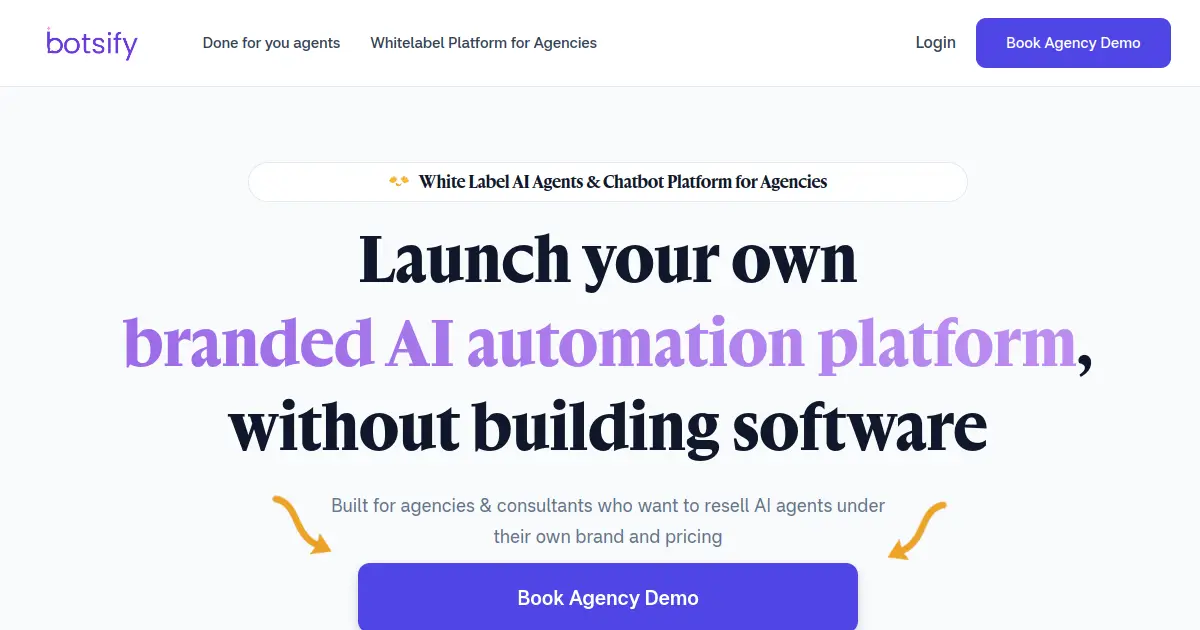
Botsify is a better Botpress alternative when the buyer is an agency that wants to build, brand, and resell AI agents for clients. Its official site focuses on white-label branding, custom domains, client packaging, flexible pricing, and deployment across channels such as web, WhatsApp, Instagram, and Slack.
The difference is the business model. Botpress gives technical teams control over custom agent behavior. Botsify gives agencies an operating layer for delivering AI agents as a branded service. That makes it a strong fit for consultants and agencies, but more platform than a single local business may need for one website lead-capture chatbot.
Pros
- White-label branding and custom domains
- Built for client packaging and resale
- Multi-channel agent deployment
- Useful for agencies scaling recurring services
Cons
- Agency-first features may be unnecessary for one business
- Current pricing depends on the deployment model
- Less focused on simple SMB lead attribution than Zappiq AI
Pricing
Best for: Agencies and consultants that want to sell white-label AI agents under their own brand and manage multiple client deployments.
9. Crisp: Best for Shared Inbox Collaboration
Crisp
crisp.chat | Team inbox for live chat, customer support, and collaborative conversations
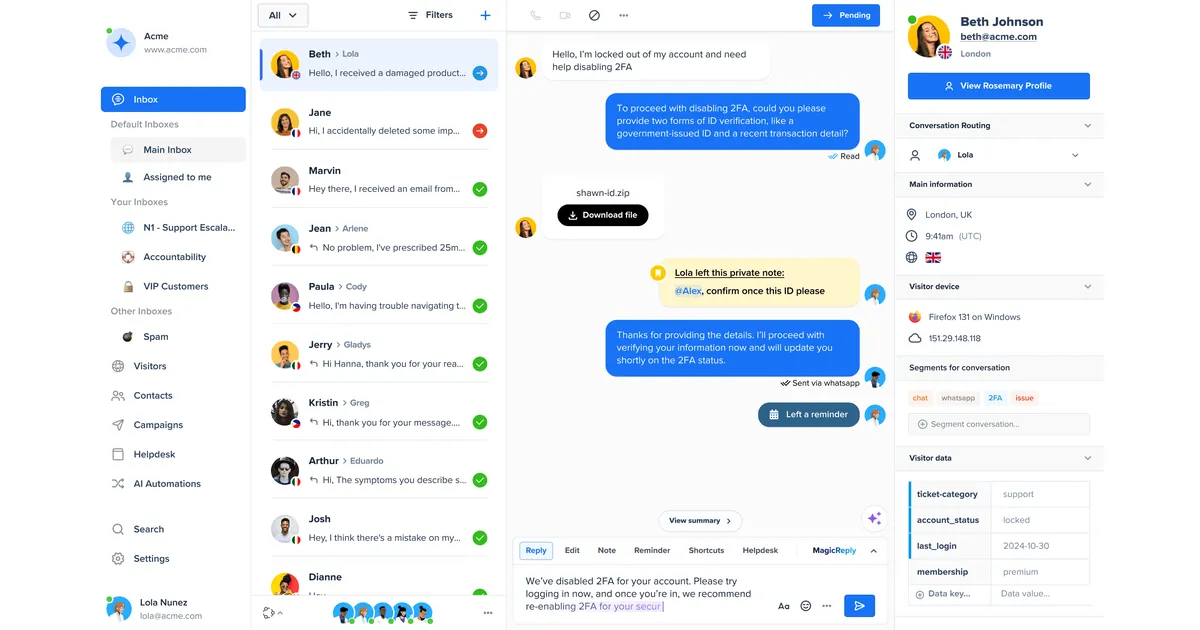
Crisp is a practical Botpress alternative for teams that care more about shared customer conversations than building custom AI agents. Several team members can work from the same inbox, assign conversations, and keep context together instead of passing screenshots or forwarding email threads.
Choose Crisp when collaboration and support operations are the main problem. Choose Zappiq AI when the main outcome is a qualified website lead with ad-source context and email delivery. Crisp is easier to understand for a support team, while Botpress remains more flexible for technical agent behavior.
Pros
- Shared inbox for collaborative support
- Live chat and automation in one workspace
- Good fit for customer conversation history
- Dedicated Crisp alternatives comparison available
Cons
- Not primarily an agency white-label platform
- AI and workspace limits vary by plan
- Lead attribution is not its main differentiator
Pricing
Best for: Support and customer-success teams that need a shared inbox with automation rather than a developer-controlled agent builder.
How to Choose the Right Botpress Alternative
Decision rule: Match the platform to both your technical resources and your primary use case before committing.
The most important question to answer before picking an alternative is whether you need a developer involved or not. That single answer narrows the field significantly.
If you do not have developer resources and your primary goal is capturing and qualifying leads from website visitors, Zappiq AI is the most targeted solution available. It requires zero technical involvement at any stage and was built specifically for that outcome, not adapted from a support or ecommerce tool. For FAQ and support deflection without a developer, SiteGPT is the clearest path, and Typebot covers structured lead capture and intake forms at very low cost including a self-hosted free option.
If you have developer resources and need custom logic or pipelines beyond what no-code tools support, the choice depends on what you are building. Voiceflow is the best option for product teams iterating on conversation design, especially if voice is a channel requirement. Flowise is the better choice if the work is primarily LLM pipeline architecture rather than customer-facing widget deployment. Rasa is the right answer if full data sovereignty and self-hosted compliance are non-negotiable requirements with ML engineering available to support it.
For Shopify stores moving away from Botpress specifically because of developer overhead, Tidio covers the ecommerce chatbot use case with no-code setup and native Shopify integration that would otherwise require custom Botpress development to replicate.
Before you migrate: Export your Botpress flow logic and knowledge base content before canceling. Most no-code alternatives in this list can ingest your FAQ and content data directly. Running a parallel deployment for two to three weeks before switching live traffic will surface any gaps in the new platform before your visitors encounter them.
Frequently Asked Questions
Zappiq AI is the best Botpress alternative for non-technical small and medium business owners who need lead generation from their website. It auto-trains on your site with no configuration, qualifies visitors automatically, and sends instant email alerts with zero developer involvement required at any stage. SiteGPT is the best no-code alternative for FAQ and support use cases, and Typebot is the best option for structured lead capture forms at low cost including a free self-hosted version.
The main reasons are developer dependency and unpredictable LLM billing. Botpress requires JavaScript for most real-world integrations beyond simple flows. LLM usage costs are billed separately on top of platform fees, making monthly costs genuinely difficult to predict. Setup and ongoing maintenance require a developer, meaning any change to a policy, service, or product page becomes a development task. Independent analyses put realistic all-in costs for the Plus plan at $170 to $400 per month, not the headline $89.
Yes. Zappiq AI offers a no-credit-card free trial with full features. Typebot is free to self-host. Flowise is free and open-source on self-hosted infrastructure. Rasa is free open-source with self-hosting costs. Chatbase has a limited free tier. SiteGPT has a 14-day free trial. Of these, only Typebot and Flowise require developer involvement to run on self-hosted infrastructure.
For basic flow testing on the free tier, no. For anything in production that connects to real business data, CRMs, or external services, yes. Real-world Botpress deployments almost always require JavaScript for integrations and custom logic. Any update to your services, policies, or products typically requires a developer to update the bot, which turns chatbot maintenance into a recurring development expense.
The Plus plan headline price is $89 per month. On top of that, LLM usage is billed separately at provider rates, which typically adds $60 to $150 per month for a small business in production. Developer time for initial setup and ongoing maintenance adds further cost. Independent analyses put the realistic all-in cost for a small business at $170 to $400 per month or more, not including any significant development time.
The Bottom Line
Botpress is a powerful platform and the right choice for developer teams building production AI agents with custom logic, complex integrations, and multi-step workflows. That description fits a specific buyer profile, and for businesses outside that profile, Botpress adds cost and complexity that the use case does not justify.
Most businesses looking for a Botpress alternative fall into one of two categories. The first is non-technical teams who chose Botpress because they heard it was capable, discovered the developer dependency mid-project, and now want a platform that works without engineering support. The second is technical teams who find the LLM billing unpredictability or the lack of a specific feature, voice, collaborative design, or full self-hosting, more suited to a different tool.
For the first group, particularly businesses where the primary goal is lead generation from website visitors, Zappiq AI removes every friction point Botpress adds: the developer requirement, the LLM cost variable, the flow-building overhead, and the branding fee. It auto-trains on your site, qualifies visitors automatically, and routes every captured lead to your inbox with full conversation context. That is the whole job done, without any of the platform management.
For the second group, the right answer depends on the specific requirement: Voiceflow for voice and collaborative design, Typebot for open-source structured forms, Flowise for custom LLM pipelines, Rasa for full self-hosted enterprise control, Tidio for ecommerce with live agent handoff, and SiteGPT for flat-rate FAQ bots without developer involvement.
The free trial for Zappiq AI is at zappiqai.com. No credit card required, no developer needed, and no branding added to your widget on any plan.
Try the Botpress alternative built for non-technical teams
Zappiq AI is live in under 5 minutes. Trains itself on your website, no flows to build, no LLM bills to model. Just leads in your inbox the moment they are captured.
Start Free Trial >No credit card | No developer needed | No branding on any plan
References
- SketricGen. "Botpress Alternatives for Small Business (2026)." sketricgen.ai.
- SiteGPT. "Botpress AI Review: Pricing, Features, Integrations and Better Alternatives 2026." sitegpt.ai.
- eesel AI. "Botpress Pricing Explained: A Guide to Plans and Hidden Costs." eesel.ai.
- AI Agent Square. "Botpress Review 2026: Features, Pricing and Verdict." aiagentsquare.com.
- Futurepicker. "Top 5 Botpress Alternatives 2026: AI Chatbot Builder Comparison." futurepicker.com.
- Rasa. "10 Best Botpress Alternatives for Enterprise AI Agents (2026)." rasa.com.
- Lindy AI. "Botpress Pricing: Plans, Costs, and Best Alternatives in 2026." lindy.ai.

Ansar Ali
Ansar Ali is the founder of Zappiq AI, a lead-capture platform built for small businesses that cannot afford to lose high-intent website visitors. He writes from hands-on experience building chatbot flows, attribution systems, and lead qualification workflows for service businesses, focusing on practical details that turn website conversations into qualified enquiries without developer involvement.